

More than a third of the global workforce regularly works over 48 hours per week, and an estimated 479 million workers, about nine percent of the world’s population, put in 55 hours or more each week.1 Those long hours have a measurable cost. In a joint study, the International Labour Organization and the World Health Organization attributed 745,000 deaths in a single year to heart disease and stroke caused by working 55 or more hours per week, a figure that had risen nearly 30 percent since the turn of the century.2 Behind those numbers is a simpler reality: across much of the modern economy, rest has become a privilege of the few, and sustained exhaustion has become the unremarkable condition of the many.
This is not a new problem. Across the long history of the Empires of Men, rest has typically belonged to the rulers and the rich, while the masses have been expected to labor without pause, as if they were machines rather than people. It is into that ancient pattern of restless extraction that Yahweh’s fourth commandment lands, and its shape is unlike anything else in the ancient legal world.
The Fourth Commandment
Having liberated the Israelites from Egypt and begun forming an alternative society in the wilderness, Yahweh issues a set of instructions at Sinai that define the shape of that new community. The fourth of the Ten Commandments reads:
Remember the Sabbath day by keeping it holy. Six days you shall labor and do all your work, but the seventh day is a sabbath to the LORD your God. On it you shall not do any work, neither you, nor your son or daughter, nor your male or female servant, nor your animals, nor any foreigner residing in your towns.
Exodus 20:8-10 NIV
The command is deceptively simple, but its reach is unusual. It does not carve out rest for a priestly class, a royal household, or a privileged tier of citizens. It draws a line through every household and declares that on one day of every seven, no one works: not the head of the house, not the children, not the household servants, not the livestock, not the foreigner who happens to be living in town. The scope is what makes it revolutionary.3
Sabbath and Creation

The Exodus version of the commandment anchors the practice in creation itself.
For in six days the LORD made heaven and earth, the sea, and all that is in them, but rested the seventh day; therefore, the LORD blessed the sabbath day and consecrated it.
Exodus 20:11
In this reading, rest is not an interruption of life but part of its original fabric. The God who made the world also rested within it, and that rest is then extended as a gift to everything made. Only a secure mind, at ease in its own authority, can rest without anxiety. The Sabbath portrays a God who is not driven, not worried, and not in need of ceaseless production to hold the world together. The created order is sustained by blessing, not by frantic labor.4
That picture matters because of who humans are said to be within it. In the Priestly account of creation, humans bear the image of God and share in a delegated responsibility for the earth.
Then God said, “Let us make humankind in our image, according to our likeness; and let them have dominion over the fish of the sea, and over the birds of the air, and over the cattle, and over all the wild animals of the earth, and over every creeping thing that creeps upon the earth.”
Genesis 1:26
Dominion here is not license to exploit. It is a stewardship patterned on the Creator whose image humans carry. If the Creator rests, then those entrusted with the earth are to ensure that rest reaches every creature placed in their care. The Sabbath is how that stewardship is exercised in practice.
Sabbath and Liberation
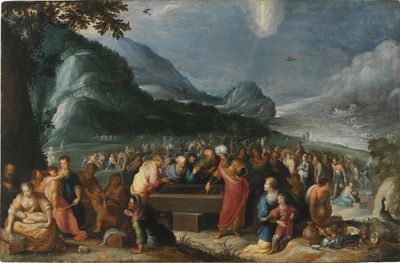
When the commandment is repeated in Deuteronomy, it is anchored not in creation but in history, in the concrete memory of slavery and release.
Remember that you were slaves in Egypt and that the LORD your God brought you out of there with a mighty hand and an outstretched arm. Therefore the LORD your God has commanded you to observe the Sabbath day.
Deuteronomy 5:15 NIV
The two versions of the commandment are not in competition. They reinforce each other. Creation sets the pattern: rest is woven into the order of things. Liberation applies that pattern to a specific history: a people who were once denied rest under an empire are now commanded to protect rest for everyone in their midst, beginning with those who most resemble their former selves. Deuteronomy’s framing carries a sharp ethical edge. A people who remembers slavery is not permitted to run a household on imperial terms.5
The Great Equalizer

Modern debates about the Sabbath often get stuck on which day of the week it should be observed or the mechanics of how one is expected to keep it. Those questions tend to obscure the feature that made the commandment genuinely unprecedented in its ancient setting: its refusal to make distinctions.
The commandment explicitly names “your son or daughter, your male or female servant, your animals, and any foreigner residing in your towns.” Every category a stratified society normally uses to decide who works and who rests is named, and then erased.6
Gender is named and included. A daughter rests as much as a son. A female servant rests as much as a male one. In a world where domestic labor was largely invisible and unending, the commandment makes that labor stop too.

Status is named and included. The household servant rests on the same day, in the same way, as the head of the house. The line between those who direct labor and those who perform it is suspended once a week, every week.
Ethnicity is named and included. The foreigner living within Israel’s towns is given the same protection as the citizen. A migrant worker rests as much as a landowner. In an ancient world where foreigners were routinely the first to be exploited, the commandment writes them into the covenant rhythm.

Even animal species are named and included. The ox and the donkey rest alongside their human counterparts. The animals on whose backs the household economy literally moved are granted the same one day in seven, and the household is forbidden from working them through it.

A parallel formulation in the Book of the Covenant makes the pastoral concern even clearer.
Six days you shall do your work, and on the seventh day you shall rest, that your ox and your donkey may rest, and the son of your female servant and the stranger may be refreshed.
Exodus 23:12 NKJV
Sabbath here is relational. It is a day of social solidarity. The commandment breaks the usual pattern of ancient household economies, where the rest of the master was often purchased by the tireless labor of those beneath him.

A Sign That Counters Empire’s Gods
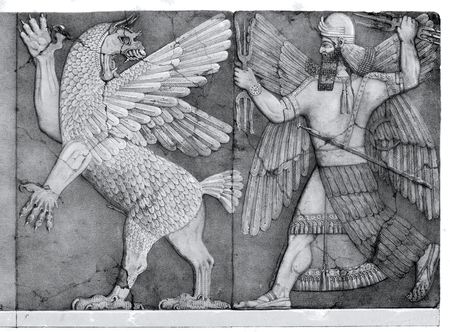
The distinctiveness of the Sabbath stands out most sharply against the religious imagination of Empires of Men. In the great Mesopotamian creation epics, humans are made precisely because the gods want to stop working. In the Atrahasis epic, the lesser gods revolt after generations of hard labor digging irrigation canals, and humanity is formed from clay and the blood of a slain god specifically to take over that drudgery. “I have done away with your heavy forced labor,” the mother goddess declares to the divine laborers. “I have imposed your drudgery on man.”7 The Enuma Elish tells a similar story from within the Babylonian imperial imagination: humans are created from the blood of a defeated god so that the gods may be released from toil.8

The theology of those myths is not accidental. They mirror the imperial societies that produced them. If the gods are restless taskmasters at the top of a cosmic hierarchy, then Pharaoh and his counterparts are simply following the divine pattern when they extract unending labor from those beneath them. The cosmos itself is structured as an empire, and human life is structured to sustain it.
Yahweh’s creation story inverts that logic at every point. Humans are not made from the blood of a rebellion to replace exhausted gods. They are made in the image of a God who is secure, who blesses, and who rests. Their place is not at the bottom of a cosmic pyramid of labor but in a delegated care of the earth and its creatures. And the seventh day, rather than intensifying labor, closes the week of creation with rest extended to all.9
Sabbath, then, functions as more than a weekly pause. It is a public sign of which kind of God Israel belongs to. The Priestly tradition says this explicitly:
You shall keep my sabbaths, for this is a sign between me and you throughout your generations, given in order that you may know that I, the LORD, sanctify you.
Exodus 31:13
Every Sabbath observed is a small public declaration that the world does not belong to the Pharaoh or the Emperor, that life is not defined by ceaseless production, and that the God who rescued Israel is unlike the gods who demanded their unrelenting labor.
The Severity of Sabbath
The seriousness with which the Sabbath is treated in the Scriptures can be jarring to modern readers. Violation is treated as a capital offense.

Six days shall work be done, but on the seventh day you shall have a holy sabbath of solemn rest to the LORD; whoever does any work on it shall be put to death. You shall kindle no fire in all your dwellings on the sabbath day.
Exodus 35:2-3
The narrative of the man gathering sticks in the wilderness, placed alongside the law, shows how that severity plays out.
When the Israelites were in the wilderness, they found a man gathering sticks on the sabbath day. Those who found him gathering sticks brought him to Moses, Aaron, and to the whole congregation. They put him in custody, because it was not clear what should be done to him. Then the LORD said to Moses, “The man shall be put to death.”
Numbers 15:32-35
Two observations help put the severity in context. The first is that the prohibition on kindling fire is not arbitrary, but rather extends the day’s rest into the kitchen. In a household economy where cooking and food preparation fell largely to women and household servants, a man who insisted on a hot meal on the seventh day effectively conscripted others into labor on his behalf. The fire ban closes that loophole. The man found gathering sticks is not punished for a trivial infraction; he is punished for initiating a chain of work that would have pulled the rest of the household out of their rest. The Sabbath protects those with the least power first, and the law treats the protection with full seriousness.10
The second observation is about the function of capital language in ancient legal texts more generally. Biblical laws frequently frame violations in the strongest possible terms as a way of signaling how much a given practice matters to the integrity of the community, without necessarily reflecting how often such penalties were actually carried out.11 The Sabbath is placed in the same register as idolatry and murder. The point is not cruelty; it is that a society that abandons weekly equality quietly slides back into the kind of extraction the people had only just escaped.
A Commandment Kept Together
The Sabbath is easy to misread as a private piety. Modern observance often settles into an individual ritual, where one person proudly rests while the wider society continues to run at full speed, and the question becomes whether a given believer has “kept” the day or not. The commandment as it stands in the biblical texts resists that reading. Its whole architecture is collective.
A head of household who rests while his daughter, his servant, his migrant worker, or his ox continues to toil has not kept the Sabbath at all; he has simply transferred his share of the work onto those with less power. If one person in the community cannot stop, no one has truly stopped. The law is framed as a shared obligation, and it is kept or broken as a society, not as an individual.12
That collective framing is exactly what Israel’s own prophets return to, again and again, when they look around and see the commandment being honored in form but violated in substance. Over time, the society that had been liberated from Egypt began to behave like the empires around it. Masters refused to let their servants rest. Merchants refused to let their customers rest. Households refused to let their women and animals rest. The weekly day was kept on the books while the economic and social habits of the other six days reproduced the very patterns the Sabbath had been designed to interrupt.
Amos, speaking to the prosperous northern kingdom in the eighth century BCE, pictures merchants who can scarcely tolerate the interruption of a single day:
Hear this, you that trample on the needy, and bring to ruin the poor of the land, saying, “When will the new moon be over so that we may sell grain; and the sabbath, so that we may offer wheat for sale? We will make the ephah small and the shekel great, and practice deceit with false balances, buying the poor for silver and the needy for a pair of sandals, and selling the sweepings of the wheat.”
Amos 8:4-6
The Sabbath in that indictment is not a day of rest at all. It is a frustrating pause in the cycle of exploitation, endured only because the calendar requires it, and then made up for with rigged scales and predatory pricing the moment the sun sets. The commandment has been reduced to a technicality, and its protective purpose for the poor has been inverted into a grievance against them.
Jeremiah, standing at the gates of Jerusalem on the eve of the Babylonian catastrophe, ties the fate of the city directly to its handling of the Sabbath:
Thus says the LORD: For the sake of your lives, take care that you do not bear a burden on the sabbath day or bring it in by the gates of Jerusalem. And do not carry a burden out of your houses on the sabbath or do any work, but keep the sabbath day holy, as I commanded your ancestors.
Jeremiah 17:21-22
Ezekiel, writing in exile, looks back over the same long history and treats the profaned Sabbaths as one of the most visible signs that the covenant community had quietly drifted into the religious and economic shape of its neighboring Empires (Ezekiel 20:12-24). And after the return from Babylon, Nehemiah walks through Jerusalem on a Sabbath and finds the pattern already reasserting itself:
In those days I saw in Judah people treading wine presses on the sabbath, and bringing in heaps of grain and loading them on donkeys; and also wine, grapes, figs, and all kinds of burdens, which they brought into Jerusalem on the sabbath day; and I warned them at that time against selling food. Tyrians also, who lived in the city, brought in fish and all kinds of merchandise and sold them on the sabbath to the people of Judah, and in Jerusalem. Then I remonstrated with the nobles of Judah and said to them, “What is this evil thing that you are doing, profaning the sabbath day?”
Nehemiah 13:15-17
The pattern across the prophets is consistent. Sabbath failure is not primarily described as a lapse in personal piety. It is described as a society sliding back into the logic of the Empires of Men. The loaded donkey, the open market, the grain heap brought in through the city gate, the merchant counting hours until the Sabbath ends: these are the small everyday signs that a people who had once been slaves were now running their own society on the terms of their former masters. Isaiah’s late oracle puts the diagnosis even more plainly, insisting that the Sabbath is only genuinely kept when it is lifted out of “your own interests” and oriented instead toward the release of the oppressed (Isaiah 58:6, 13-14).13
Looking Ahead
The Sabbath day is the weekly form of a much larger pattern. What begins as one day in seven expands outward in the Torah into the Sabbath Year, which rests the land, cancels debts, and releases bonded laborers, and then outward again into the Jubilee, which restores ancestral land to families who have lost it. The same logic that reached into the kitchen once a week reaches into the economy once a generation. The seed planted in the Manna Principle, where enough replaced more, grows here into a full social rhythm.
Centuries later, when that rhythm had been distorted by ritualism and the Roman Empire, Jesus would return to the Sabbath as one of the clearest signs of what the Kingdom of Yahweh actually looks like on the ground. The commandment meant to refresh the vulnerable had, in many quarters, been turned into a burden laid on them. His intervention belongs to a later stage of this story, and the series will return to it when it takes up the Lord of the Sabbath.
Read Next: The Sabbath Year Release
Footnotes
- International Labour Organization, Working Time and Work-Life Balance Around the World (Geneva: ILO, 2022). The report finds that, globally, more than one-third of workers regularly exceed 48 hours per week, with the proportion highest in Southern Asia and Eastern Asia. Source. ↩
- World Health Organization and International Labour Organization, “Long working hours increasing deaths from heart disease and stroke: WHO, ILO” (joint news release, 17 May 2021), summarizing Frank Pega et al., “Global, regional, and national burdens of ischemic heart disease and stroke attributable to exposure to long working hours for 194 countries, 2000-2016: A systematic analysis from the WHO/ILO Joint Estimates of the Work-related Burden of Disease and Injury,” Environment International 154 (2021): 106595. Source. ↩
- On the Sabbath commandment as a distinctive institution in the ancient Near East, with no close parallel in the legal collections of Israel’s neighbors, see Jon D. Levenson, Sinai and Zion: An Entry into the Jewish Bible (San Francisco: Harper & Row, 1985), pp. 17-23; and Moshe Greenberg, “Sabbath,” in Encyclopaedia Judaica, 2nd ed., ed. Michael Berenbaum and Fred Skolnik (Detroit: Macmillan Reference, 2007), vol. 17, pp. 616-620. ↩
- On divine rest as a sign of secure sovereignty rather than exhaustion, and on its contrast with the restless anxiety of Pharaoh, see Walter Brueggemann, Sabbath as Resistance: Saying No to the Culture of Now (Louisville: Westminster John Knox Press, 2014), pp. 1-16. ↩
- On the relationship between the two versions of the Sabbath commandment in Exodus 20 and Deuteronomy 5, and the ethical force of the Deuteronomic “remember” framing, see Patrick D. Miller, Deuteronomy (Interpretation: A Bible Commentary for Teaching and Preaching; Louisville: John Knox Press, 1990), pp. 81-85. ↩
- On the radical inclusivity of the Sabbath law within its ancient Near Eastern context, see Terence E. Fretheim, Exodus (Interpretation: A Bible Commentary for Teaching and Preaching; Louisville: John Knox Press, 1991), pp. 229-231; and Brevard S. Childs, The Book of Exodus: A Critical, Theological Commentary (Old Testament Library; Louisville: Westminster John Knox Press, 1974), pp. 413-418. ↩
- Atra-Hasis, Tablet I, lines 1-6 and 240-243, in Benjamin R. Foster, Before the Muses: An Anthology of Akkadian Literature, 3rd ed. (Bethesda: CDL Press, 2005), pp. 227-280. Standard critical edition: W. G. Lambert and A. R. Millard, Atra-Ḫasīs: The Babylonian Story of the Flood (Oxford: Clarendon Press, 1969). ↩
- Enuma Elish, Tablet VI, lines 5-8, 33-36, in Foster, Before the Muses, pp. 436-486. See also the discussion in Bernard F. Batto, Slaying the Dragon: Mythmaking in the Biblical Tradition (Louisville: Westminster John Knox Press, 1992), pp. 41-72. ↩
- On the Genesis creation account as a deliberate theological counter to the anthropology of the Mesopotamian creation epics, see Jon D. Levenson, Creation and the Persistence of Evil: The Jewish Drama of Divine Omnipotence (Princeton: Princeton University Press, 1988), pp. 3-25; and J. Richard Middleton, The Liberating Image: The Imago Dei in Genesis 1 (Grand Rapids: Brazos Press, 2005), pp. 185-219. ↩
- On the social logic of the fire prohibition and its function in protecting household labor performed primarily by women and household servants, see Nahum M. Sarna, Exodus (JPS Torah Commentary; Philadelphia: Jewish Publication Society, 1991), pp. 221-222; and the broader discussion of Sabbath household economics in Jon D. Levenson, “The Sabbath,” in The Jewish Study Bible, 2nd ed., ed. Adele Berlin and Marc Zvi Brettler (New York: Oxford University Press, 2014), pp. 2098-2101. ↩
- On the rhetorical function of capital formulations in biblical law and the scholarly discussion of how frequently such penalties were actually enforced, see Moshe Greenberg, “Some Postulates of Biblical Criminal Law,” in Studies in the Bible and Jewish Thought (Philadelphia: Jewish Publication Society, 1995), pp. 25-41. ↩
- On the communal and covenantal character of Sabbath observance, in contrast to later individualized framings, see Walter Brueggemann, Sabbath as Resistance: Saying No to the Culture of Now (Louisville: Westminster John Knox Press, 2014), pp. 17-44; and Abraham Joshua Heschel, The Sabbath: Its Meaning for Modern Man (New York: Farrar, Straus and Giroux, 1951), pp. 13-24. ↩
- On the prophetic tradition’s critique of Sabbath observance as formal compliance masking structural injustice, see Walter Brueggemann, The Prophetic Imagination, 2nd ed. (Minneapolis: Fortress Press, 2001), pp. 59-79; and John Barton, Amos’s Oracles Against the Nations (Cambridge: Cambridge University Press, 1980), and his later The Theology of the Book of Amos (Cambridge: Cambridge University Press, 2012), pp. 94-120, on the economic dimensions of Amos’s indictments. ↩




Do we present day Christians need to observe the Sabbath?
Where Jesus' favorite seven churches of Revelation sabbath keepers?