The previous post traced how Joseph’s crisis management in Egypt hardened into a permanent imperial arrangement: money, livestock, land, and finally bodies, all absorbed into Pharaoh’s house. By the time a new Pharaoh rose who “did not know Joseph,” the Israelites themselves had been reduced to forced labor for royal building projects (Exodus 1:8-14). That is the world into which Yahweh steps.
What follows is not a private rescue mission. Yahweh’s intervention in Egypt is a public, political confrontation with imperial power itself. And the society Yahweh begins to form in the wilderness after the liberation is designed, from the ground up, as an alternative to the imperial model that enslaved them.
Dismantling the Empire’s Gods
In the ancient world, Pharaoh was not merely a political ruler. He was considered a living god, the mediator between heaven and earth, the guarantor of cosmic order.1 The plagues that Yahweh sends against Egypt are therefore not random acts of destruction. They systematically dismantle the theological claims of the Egyptian state. The Nile, sacred to Egyptian religion, turns to blood. The sun, identified with the god Ra, is blotted out in darkness. The final plague strikes Pharaoh’s own household. Each act declares that the power Pharaoh claims does not, in fact, belong to him.2
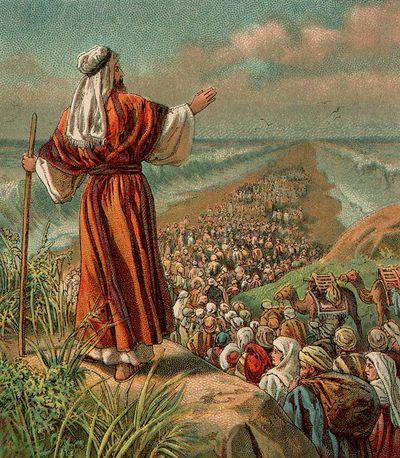
The liberation itself is narrated as a direct contest between two powers. Pharaoh says, “Who is the LORD, that I should heed him and let Israel go? I do not know the LORD, and I will not let Israel go” (Exodus 5:2 NRSV). By the end of the story, the answer to Pharaoh’s question has been delivered in full. Yahweh parts the sea, leads the enslaved people out on dry ground, and the entire imperial army is swallowed behind them.
“I will sing to the LORD, for he has triumphed gloriously; horse and rider he has thrown into the sea. The LORD is my strength and my might, and he has become my salvation.”
Exodus 15:1-2 NRSV
This song, one of the oldest poems in the Hebrew Bible, frames the Exodus as the defeat of an empire by a God who sides with the enslaved.3 It is a theological claim with political teeth: the true sovereign of the world is not the one who sits on the throne of Egypt, but the one who toppled it.
Covenant, Not Empire
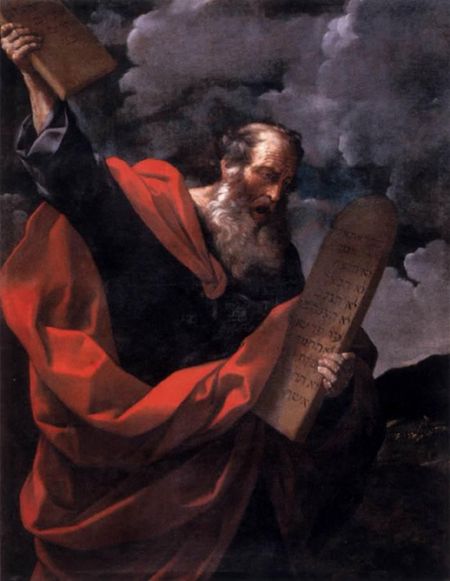
Once Yahweh brings the people out of Egypt, he does not install himself as a new Pharaoh. Instead, he establishes a covenant at Sinai. The difference matters. An empire imposes its will from above through coercion and threat. A covenant invites a relationship that carries mutual obligations. Yahweh identifies himself by what he has done for the people, not by the terror he can inflict upon them.
“I am the LORD your God, who brought you out of the land of Egypt, out of the house of slavery; you shall have no other gods before me.”
Exodus 20:2-3 NRSV
The opening line of the Ten Commandments is not an abstract theological statement. It is a liberation credential. The God who commands is the God who freed. And the commandments that follow are not the arbitrary decrees of a distant ruler; they are the blueprint for a community that refuses to replicate the patterns of the empire it has just escaped.4
The Sinai covenant redefines what it means to be a nation. In Egypt, the people existed to serve Pharaoh’s projects. Under the covenant, the people exist to serve one another and to care for the vulnerable in their midst. Yahweh’s laws repeatedly circle back to the same logic: “You know the heart of a stranger, for you were strangers in the land of Egypt” (Exodus 23:9). The memory of oppression is meant to become the engine of justice, not the fuel for vengeance or the excuse for repeating the cycle.
The Wilderness as Training Ground
Before the people even reach the land promised to them, Yahweh leads them through a long period of formation in the wilderness. Centuries later, the Deuteronomist would look back on those years and describe them as deliberate testing and discipline.
“Remember the long way that the LORD your God has led you these forty years in the wilderness, in order to humble you, testing you to know what was in your heart, whether or not you would keep his commandments… Know then in your heart that as a parent disciplines a child so the LORD your God disciplines you.”
Deuteronomy 8:2, 5 NRSV
The Hebrew word nasah, rendered “testing” here, carries the sense of proving or refining. The wilderness is not punishment. It is a space outside the reach of any empire where the people can begin to unlearn what imperial life taught them and practice a different way of being together.5
The tests are practical and communal. When hunger strikes, Yahweh provides manna with strict instructions: gather only what you need, do not hoard, and rest on the seventh day. When Yahweh gives his commandments at Sinai, the Sabbath extends rest to everyone in the community without exception: children, workers, strangers, and animals. Every seventh year, debts are released and the land itself is given rest. And every fiftieth year, the Jubilee returns families to their ancestral property and frees those trapped in debt servitude. Together, these laws form a system of periodic correction designed to prevent the kind of permanent consolidation that the Joseph narrative exposed in Egypt.
The details of each of these teachings unfold in the posts that follow. What matters here is the larger pattern: Yahweh is not simply rescuing a group of people from one bad ruler. Yahweh is building an alternative civilization whose fundamental logic contradicts the logic of empire.
Samuel’s Warning: What a King Will Do
The tension between Yahweh’s anti-imperial design and the pull of empire surfaces dramatically several centuries later, when the elders of Israel come to the aging prophet Samuel and demand a king.
“You are old and your sons do not follow in your ways; appoint for us, then, a king to govern us, like other nations.”
1 Samuel 8:5 NRSV
The phrase “like other nations” is the hinge of the entire passage. Israel was formed as an alternative to the nations and their imperial systems. To ask for a king “like other nations” is to ask for exactly the kind of power arrangement Yahweh’s covenant was designed to prevent. Yahweh himself interprets the request bluntly.
“Listen to the voice of the people in all that they say to you; for they have not rejected you, but they have rejected me from being king over them.”
1 Samuel 8:7 NRSV
Yahweh does not prevent the people from making this choice, but he instructs Samuel to warn them plainly about what a human king will actually do. Samuel’s speech is one of the most striking anti-imperial passages in all of Scripture, and it reads like a prophecy of every extractive monarchy the ancient world had known.
“These will be the ways of the king who will reign over you: he will take your sons and appoint them to his chariots and to be his horsemen, and to run before his chariots; and he will appoint for himself commanders of thousands and commanders of fifties, and some to plow his ground and to reap his harvest, and to make his implements of war and the equipment of his chariots. He will take your daughters to be perfumers and cooks and bakers. He will take the best of your fields and vineyards and olive orchards and give them to his courtiers. He will take one-tenth of your grain and of your vineyards and give it to his officers and his courtiers. He will take your male and female slaves, and the best of your cattle and donkeys, and put them to his work. He will take one-tenth of your flocks, and you shall be his slaves. And in that day you will cry out because of your king, whom you have chosen for yourselves; but the LORD will not answer you in that day.”
1 Samuel 8:11-18 NRSV
The repetition of “he will take” is devastating in its clarity. Samuel describes the imperial pattern that Yahweh’s laws were designed to prevent: a ruler who commandeers sons and daughters for his projects, who confiscates the best land and gives it to his inner circle, who turns free people into servants of the state. The word translated “slaves” at the end is the same Hebrew word, eved, used for Israel’s condition in Egypt.6 Samuel is telling the people that a human king will do to them what Pharaoh did. They will return to the very bondage from which Yahweh delivered them.
The people are unmoved.
“No! but we are determined to have a king over us, so that we also may be like other nations, and that our king may govern us and go out before us and fight our battles.”
1 Samuel 8:19-20 NRSV
Yahweh grants the request. And within a few generations, Samuel’s warning proves prophetic. King Solomon, for all his legendary wisdom, conscripts forced labor to build his palace and temple, imposing the same system of corvée that Pharaoh used on Israel’s ancestors (1 Kings 5:13-14; 9:15-22). He amasses horses and chariots from Egypt, stockpiles gold, and multiplies wives through political alliances with foreign powers (1 Kings 10:26-11:3). The writer of 1 Kings appears to measure Solomon’s reign against the very warnings of Deuteronomy 17:16-17, which prohibited Israel’s future king from multiplying horses, wives, or silver and gold.7 Solomon does all three.
When Solomon dies, the northern tribes revolt against his son Rehoboam precisely because of the burden of forced labor (1 Kings 12:3-4). The kingdom splits. The monarchy that was supposed to unite the people tears them in two. And the prophets who follow will spend centuries naming the injustice that flows from this arrangement.
The Prophets Sound the Alarm
As Israel’s and Judah’s kings drift deeper into the logic of empire, a succession of prophets rises to remind the people of Yahweh’s original design. Their voices are not gentle. They accuse kings, priests, and wealthy landowners of violating the very covenant that made Israel distinct.
Amos, speaking to the prosperous northern kingdom, indicts those who “trample on the needy, and bring to ruin the poor of the land” (Amos 8:4 NRSV). He denounces merchants who cannot wait for the Sabbath to end so they can resume cheating their customers (Amos 8:5). Isaiah condemns those who “join house to house, who add field to field, until there is room for no one but you” (Isaiah 5:8 NRSV), a direct violation of the Jubilee principle that land must periodically return to its original families. Micah asks what Yahweh truly requires: “to do justice, and to love kindness, and to walk humbly with your God” (Micah 6:8 NRSV), a summary that stands in sharp contrast to the royal court’s appetite for tribute and display.
Jeremiah, confronting the last kings of Judah, challenges them directly: “Did not your father eat and drink and do justice and righteousness? Then it was well with him. He judged the cause of the poor and needy; then it was well. Is not this to know me? says the LORD” (Jeremiah 22:15-16 NRSV). In Yahweh’s vocabulary, “knowing God” and “doing justice for the poor” are the same thing. A king who exploits the vulnerable does not know God, no matter how many sacrifices he offers in the temple.
But the prophets are largely ignored. And the consequences Samuel warned about arrive in full.
Empire after Empire
The story of God’s people after the Exodus is, in many ways, a story of successive imperial domination. Once the monarchy fails and the prophets’ warnings go unheeded, the people find themselves caught in the machinery of one empire after another. Each empire brings its own version of the same extractive logic: wealth flowing upward, bodies conscripted for the ruler’s projects, local identity absorbed into the imperial program.
Babylon
In 586 BCE, the Babylonian Empire under Nebuchadnezzar destroys Jerusalem and its temple and deports large portions of the population to Babylon. The exile is not only a military defeat; it is a theological crisis. The land Yahweh promised, the temple where Yahweh’s presence was said to dwell, the Davidic monarchy that was supposed to endure forever: all of it is stripped away.8 The psalmist captures the grief in haunting terms: “By the rivers of Babylon, there we sat down and there we wept, when we remembered Zion” (Psalm 137:1 NRSV). Yet even in exile, the prophets insist that Yahweh is not finished. Ezekiel envisions dry bones coming back to life (Ezekiel 37). Jeremiah writes to the exiles telling them to seek the welfare of the city where they have been carried, because Yahweh has plans for a future and a hope (Jeremiah 29:7, 11). The imperial pattern of extraction and displacement is real, but it does not have the final word.
Medo-Persia
When Persia under Cyrus the Great conquers Babylon in 539 BCE, the exiles are permitted to return and rebuild the temple. The book of Ezra records this moment as the fulfillment of prophetic hope (Ezra 1:1-4). But the return does not mean freedom from empire. The people rebuild under Persian oversight, paying tribute to a foreign court. Nehemiah, a Jewish official serving in the Persian administration, travels to Jerusalem and is grieved to find the walls in ruins and the community demoralized (Nehemiah 1:3-4). Even under a comparatively tolerant empire, the people live at the pleasure of a distant ruler. The book of Esther, set in the Persian court, dramatizes how quickly imperial power can turn from tolerance to genocide when political interests shift.9
Greece
After Alexander the Great’s conquests in the late fourth century BCE, the Greek-speaking Seleucid dynasty inherits control of the region. The crisis reaches its peak under Antiochus IV Epiphanes, who in 167 BCE desecrates the Jerusalem temple by erecting an altar to Zeus in its courts, bans the practice of Torah, and executes those who resist.10 The book of Daniel, shaped in part by this crisis, envisions a succession of beastly empires rising from the sea, each devouring and trampling, until “one like a son of man” receives an everlasting kingdom from God (Daniel 7:1-14). The message is stark: empires are predatory by nature, but they are not permanent. Yahweh’s kingdom will outlast them all.
The Maccabean revolt succeeds in reclaiming the temple, and for about a century, a semi-independent Jewish state exists under the Hasmonean dynasty. But the Hasmoneans themselves eventually become entangled in power politics, internal rivalries, and the very imperial habits they once resisted.11
Rome
In 63 BCE, the Roman general Pompey marches into Jerusalem and absorbs the region into Rome’s expanding domain. By the time of Jesus’ birth, Herod the Great rules as a Roman client king, and after his death, Roman governors administer the province directly or through Herod’s successors. Caesar holds the title of lord, savior, and son of god. Roman roads, coins, taxes, and military garrisons ensure that no one forgets who is in charge.12
The pattern Samuel described centuries earlier is alive and visible: the empire takes sons for its armies, takes the produce of the land in taxes, takes the best of everything for its officials, and the people cry out under the burden. The next stage of this series will explore how it is into precisely this Roman-occupied world that Jesus arrives, announcing that the Kingdom of God is at hand.
Why This Matters
The sweep of Israel’s story reveals something essential about the Bible’s vision. Yahweh does not simply oppose one particular empire. Yahweh opposes the imperial pattern itself: the concentration of wealth and power in the hands of a few, the exploitation of the masses, the reduction of people to instruments of the state, and the theological claim that this arrangement is natural, inevitable, or divinely sanctioned.
From the Exodus through the prophets, the consistent witness is that Yahweh sides with the enslaved, the dispossessed, and the forgotten. The laws given at Sinai, the Sabbath, the debt release, the Jubilee: all are structural interventions designed to prevent what empires always produce. And when the people’s own kings begin to behave like Pharaoh, Yahweh sends prophets to name the betrayal.
The story does not end in despair. Even after exile, after one empire replaces another, the prophetic hope persists: a day is coming when Yahweh’s justice will be fully established, when the pattern of extraction and domination will be broken for good, and when the whole earth will be ordered by the same neighbor-love that the covenant at Sinai was always pointing toward.
What did that alternative society look like in practice? The next posts in this series trace the specific laws Yahweh gave to shape life in the wilderness: the Manna Principle, the Sabbath Rest, the Sabbath Year Release, and the Jubilee Year Liberty.
Read Next: The Manna Principle
Footnotes
- On Pharaoh’s divine status and the theological dimensions of the Exodus plagues, see Terence E. Fretheim, Exodus (Interpretation: A Bible Commentary for Teaching and Preaching; Louisville: John Knox Press, 1991), pp. 105-112. ↩
- For scholarly discussion of the plagues as a systematic dismantling of Egyptian religious claims, see Ziony Zevit, “Three Ways to Look at the Ten Plagues,” Bible Review 6, no. 3 (1990): 16-23, 42. ↩
- The Song of the Sea (Exodus 15:1-18) is widely regarded as one of the oldest poetic compositions in the Hebrew Bible. See Frank Moore Cross and David Noel Freedman, Studies in Ancient Yahwistic Poetry (Grand Rapids: Eerdmans, 1975/1997). ↩
- On the Sinai covenant as a counter-imperial charter, see Walter Brueggemann, The Prophetic Imagination, 2nd ed. (Minneapolis: Fortress Press, 2001), pp. 7-19. ↩
- The Hebrew verb nasah (נָסָה) means “to test, try, or prove.” See Ludwig Koehler and Walter Baumgartner, The Hebrew and Aramaic Lexicon of the Old Testament (HALOT), s.v. “נסה.” ↩
- The word eved (עֶבֶד) is used both for Israel’s slavery in Egypt (Exodus 5:15-16) and in Samuel’s prediction of what the king will do (1 Samuel 8:17). See HALOT, s.v. “עבד.” The verbal echo is deliberate and functions as a literary warning that monarchy risks replicating the Egyptian condition. ↩
- On the Deuteronomistic evaluation of Solomon’s reign against the “Law of the King” in Deuteronomy 17:14-20, see Walter Brueggemann, Solomon: Israel’s Ironic Icon of Human Achievement (Columbia: University of South Carolina Press, 2005), pp. 131-154. ↩
- For a comprehensive treatment of the Babylonian destruction of Jerusalem and its theological implications, see Rainer Albertz, Israel in Exile: The History and Literature of the Sixth Century B.C.E. (Atlanta: Society of Biblical Literature, 2003), pp. 77-136. ↩
- On the Persian period and the situation of Jewish communities under Achaemenid rule, see Lester L. Grabbe, A History of the Jews and Judaism in the Second Temple Period, Vol. 1: Yehud, the Persian Province of Judah (London: T&T Clark, 2004). ↩
- For the crisis under Antiochus IV Epiphanes and the Maccabean revolt, see 1 Maccabees 1:41-64 and 2 Maccabees 6:1-11 in the deuterocanonical/apocryphal literature, and the scholarly discussion in John J. Collins, Daniel (Hermeneia; Minneapolis: Fortress Press, 1993), pp. 274-324. ↩
- On the Hasmonean dynasty’s eventual adoption of imperial practices, see Seth Schwartz, Imperialism and Jewish Society, 200 B.C.E. to 640 C.E. (Princeton: Princeton University Press, 2001), pp. 19-48. ↩
- On Roman imperial ideology, the divine titles of Caesar, and their significance for understanding the New Testament context, see Richard A. Horsley, Jesus and Empire: The Kingdom of God and the New World Disorder (Minneapolis: Fortress Press, 2003), pp. 15-54. ↩