



Tag church history

Revelation 20:5 – A Maliciously Inserted Delay
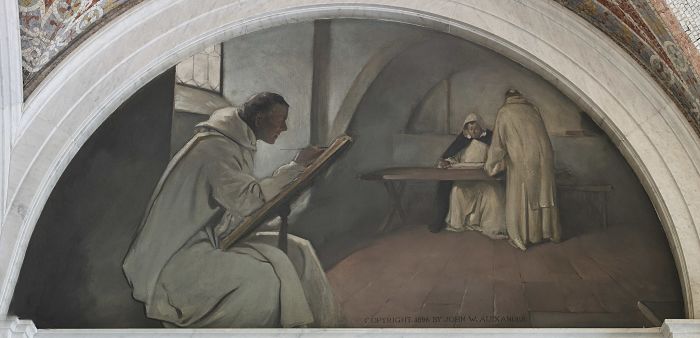
Scriptures state that Christ's kingdom that is to come on the Earth has a specific purpose. Christ and his proven followers will reign over the rest of the resurrected mankind for those thousand years and teach them righteousness. But one verse in Revelation (20:5) seems to contradict all the other Scriptures in claiming that the rest of mankind does not wake up during that time. What's the story there?

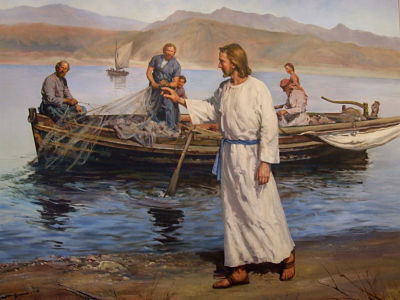
The Calling of the Chosen

The New Testament warns that distortion can arise from within the community itself, and history shows how easily faith can be reshaped into a tool of human power, offering surface-level comfort while quietly training fear, rivalry, and distrust. Across the centuries, these patterns have appeared in different forms: in long institutional eras, in reform movements that corrected some abuses while repeating other control patterns, and in modern spiritual “technologies” that can still divide people while sounding deeply reassuring. That is why many churches today carry a mixture of teachings, some faithful, some distorted, that can pull people away from the relational heart of original Christianity. So what is a true biblical believer to do in such a time, not to become another faction, but to rebuild trust, heal relationships, and practice a love that is strong enough to make community possible again?

Prosperity Theology

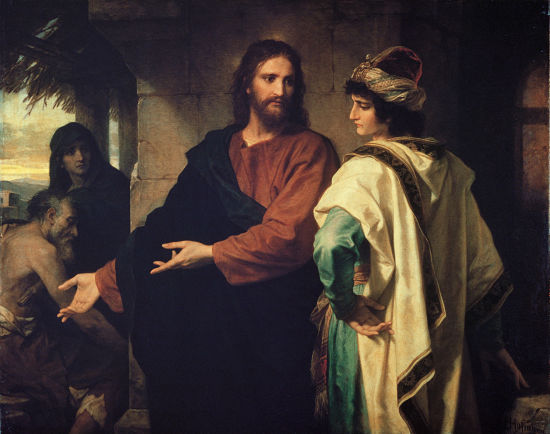
In many places, prosperity preaching sounds like a survival promise: “God wants you to succeed, to be well, to have enough.” People are invited to repeat selected Bible promises aloud, to answer with “Amen,” and to speak as if blessing is already guaranteed. Often the message includes an appeal to give—sometimes framed as a tithe or a “seed”—with expectation that God will return it in measurable ways. For those carrying sickness, debt, or social shame, that language can feel like comfort with handles, even if the comfort is temporary. But is this how Scripture is meant to be used? And what did Jesus actually teach about wealth, security, and the kind of life God’s Kingdom is bringing?

Morality Police

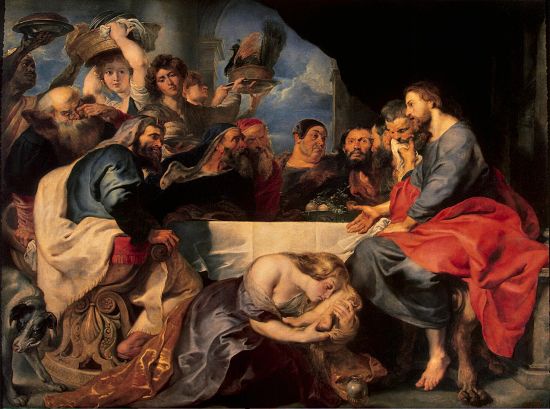
Many young people feel that church has become less like a place of healing and more like a moral checkpoint, where belonging is guarded by reputation and rule-keeping. But is that the shape of Jesus’ own ministry? Did he train his followers to rank people as “clean” and “unclean,” or did he cross those lines, sharing tables with the socially suspect and describing his mission as a doctor for the sick? In the Gospels, the tension is clear: will we imitate boundary-policing religion, or will we follow the restoring welcome of Christ?

Pentecostalism

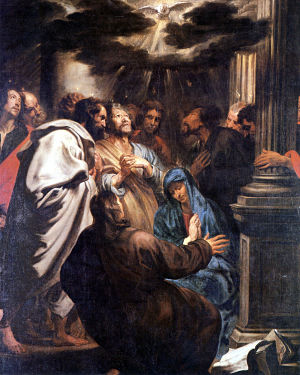
Pentecostalism is a modern movement that rose in the early 20th century and has become one of the most influential forms of Christian worship worldwide. It is often marked by deep expectancy of God’s nearness and a strong emphasis on the gifts of the Holy Spirit, especially speaking in tongues. Many people today associate “tongues” with unintelligible speech because that is what they often encounter in contemporary worship settings. But in the New Testament’s first “tongues” moment at Pentecost, the emphasis falls on intelligible witness: people from many places hearing the message in their own languages. This raises careful questions worth exploring: what did the early church understand spiritual gifts to be for, why were signs and healings so closely tied to the gospel’s public witness, and how did Paul guide believers to value what lasts most - faith, hope, and love?

Daughters of Babylon

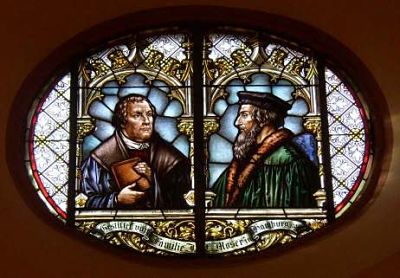
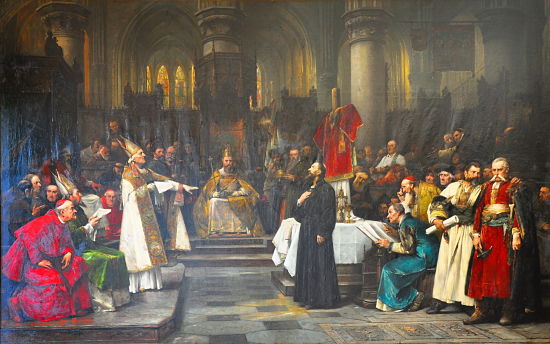
The Reformation is often remembered as a brave return to Scripture. But it also unfolded in a world where faith and government were tightly bound together. So what should we make of the churches that emerged during that era? What did they renew, and where did political pressures pull faith communities back into old patterns of power and rivalry? And when Revelation warns about religion becoming entangled with rulers, does it offer a lens for reading that period of history with both honesty and hope?

The Man of Lawlessness

2 Thessalonians warns that a “man of lawlessness” will arise as the day of the Lord approaches, exalting himself within God’s “temple.” Many today read that warning as a single future end-time ruler, while others locate its main horizon in the first-century Roman world. This article follows a historicist line of reading that treats the image as a recurring pattern: when political power and religious authority fuse, faith can be remade into court religion, and communities can be pressured to give ultimate loyalty where it belongs to Christ alone. Do these prophecies invite us less to guess a name, and more to test where our allegiance is being trained?

The Great Apostasy

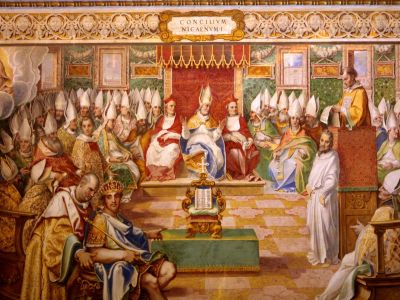
The New Testament gives serious warnings about drift after the Apostles. Paul cautions that “savage wolves” can arise even “from among your own selves,” drawing disciples after themselves. This article explores one way Christians have described that long drift: a “Great Apostasy” (2 Thessalonians 2:3) in which the Jesus movement, once a minority faith, learned to speak in the categories of public institutions and philosophical schools as it moved into the orbit of Roman power. The aim is not to question the sincerity of believers, but to trace how those pressures reshaped Christian language over time, and to invite a return to Scripture’s own horizon of resurrection, restored creation, and God’s Kingdom on earth.

Spiritualism: All in the Mind?

Spiritualists theorize that the Kingdom is just in the spiritual realm. They usually quote Luke 17:21 to claim the Kingdom is "within" people. Did Jesus really tell the Pharisees that his Kingdom was within their hearts? What did he actually tell them? How can his statement be harmonized with the rest of the Bible?

Fundamentalism – Earth to End?

Fundamentalists claim the Earth is to be destroyed. Is that scripturally correct? Why does Jesus say the meek shall inherit the Earth? And why do Scriptures say 'the Earth abideth forever'? Is there a difference between the end of the age and the end of the world? Why does the Bible predict interesting events that happen on the Earth after the "fire" of God's jealousy devours the planet?

Scriptures, unless otherwise indicated, are taken from THE HOLY BIBLE, NEW INTERNATIONAL VERSION®, NIV® Copyright © 1973, 1978, 1984, 2011 by Biblica, Inc.® Used by permission. All rights reserved worldwide. Scriptures indicated NASB are taken from the NEW AMERICAN STANDARD BIBLE®, Copyright © 1960,1962,1963,1968,1971,1972,1973,1975,1977,1995 by The Lockman Foundation. Used by permission. Scripture quotations marked (NLT) are taken from the Holy Bible, New Living Translation, copyright © 1996, 2004, 2007 by Tyndale House Foundation. Used by permission of Tyndale House Publishers, Inc., Carol Stream, Illinois 60188. All rights reserved. Scripture quotations marked HCSB are taken from the Holman Christian Standard Bible®, Copyright © 1999, 2000, 2002, 2003, 2009 by Holman Bible Publishers. Used by permission. Holman Christian Standard Bible®, Holman CSB®, and HCSB® are federally registered trademarks of Holman Bible Publishers. Wherever indicated NCV, scripture taken from the New Century Version®. Copyright © 2005 by Thomas Nelson, Inc. Used by permission. All rights reserved.