
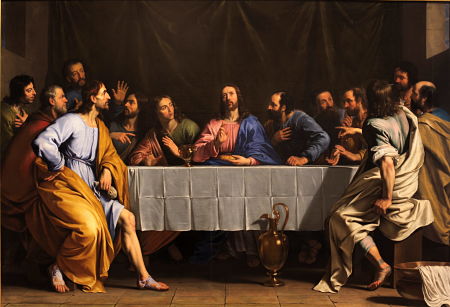
Theme Text– ‘‘I tell you, I will not drink from this fruit of the vine from now on until that day when I drink it new with you in my Father’s kingdom.” (Matthew 26:29)
We see that the main message of Jesus during his ministry was a Kingdom of Heaven (i.e. governed from Heaven) to be established on the Earth. We also see church history showing us how theological beliefs have changed regarding the kingdom over the course of time. And we realize that two of the present-day mainstream theories regarding the Kingdom – Modernism, Fundamentalism – do not seem to hold water when put to the scriptural test. Now let us see if the third theory i.e. Spiritualism has any biblical support.
1) Some say the kingdom is just in the spiritual realm quoting John 18:36. What about that view?
John 18:36 – ‘My kingdom is not of this world: if my kingdom were of this world, then would my servants fight’. The ‘world’ here is the Greek ‘kosmos’ (world order). Jesus was simply stating his kingdom would not come during this world order, as it has to be destroyed for the kingdom to be established.
2) What about Luke 17:21 that says ‘the kingdom of God is within you’?
Luke 17:20-21 KJV: ‘When he [Jesus] was demanded of the Pharisees when the kingdom of God should come, he answered them and said: The kingdom of God cometh not with observation: Neither shall they say, Lo here! Or, lo there! for, behold, the kingdom of God is within you’. Based on this, some believe the term kingdom is just the transforming influence that it creates in the hearts of believers – essentially some sort of mystic spiritual kingdom. But the problem is that the entire Bible defines the Kingdom as a literal kingdom.
3) So can Luke 17:21 be understood in harmony with the rest of the Bible?
Of course. The ‘within you’ is a translation of the Greek word ‘entos’. This word can also be translated ‘among you’ or ‘in the midst of you’. In this context, ‘among you’ or ‘in the midst of you’ is the more appropriate translation, since nowhere else does the Bible support a mystical Kingdom of God.
And Jesus says this to the Pharisees (Luke 17:20). If we take ‘within you’ as the proper translation, then does Jesus mean that the Kingdom was within them? Didn’t Jesus elsewhere call them “hypocrites” and “vipers” and told them what was actually within them – ‘greed and wickedness’?
That’s why reputed translations render it as –
‘Behold, the kingdom of God is in the midst of you’ (RSV).
‘For the Kingdom of God is among you’ (NLT).
4) But isn’t the kingdom to be established in the future? How can it be among them right then?
Let revisit Luke 17:20-21 – Having been questioned by the Pharisees as to when the kingdom of God was coming, He answered them and said, ‘The kingdom of God is not coming with signs to be observed; nor will they say, ‘Look, here it is!’ or, ‘There it is!’ For behold, the kingdom of God is in your midst’ (NASB).
The first thing we notice is that Jesus portrays the coming of the Kingdom as a future event. The Emphatic Diaglott renders Verse 21 as, ‘God’s Royal Majesty is among you’, showing Jesus, the Royal king anointed by God, present among the Pharisees. Essentially it refers to the kingdom in present form as the king. This kind of usage is even applied to the present-day followers of Christ as they have been chosen to rule as kings alongside Jesus Christ. He is indeed King of kings.
For the kingdom of God is not meat and drink; but righteousness, and peace, and joy in the Holy Spirit – Rom 14:17 Who hath delivered us from the power of darkness and hath translated us into the kingdom of his Son – Col 1:13.
Today’s faithful (the Body of Christ) would join with their Head (Jesus) to rule the future kingdom. As Jesus promises them – ‘To the one who does my will to the end, I will give authority over the nations’ (Rev. 2:26).
5) Is there another straightforward explanation?
When Jesus says the kingdom will come with no visible signs, some could assume there might be confusion in recognizing its arrival then. He wants to negate that assumption. His point is – You won’t need any signs! So he predicts, ‘Nor will people say, ‘Lo, here it is!’ or, ‘There it is!’ Then he goes on to forecast what people will actually say – ‘Lo for, the majesty of the God in the midst of you is’.
Note the two ‘Lo’s. The first ‘Lo’ denotes what people will not say in the future –
i.e. they will not be going around in confusion whether the Kingdom has arrived here or there.
The second ‘Lo’ refers to what people will say in the future. Here’s a better rendering:
‘nor will they say: Lo here, or, or there; Lo for [will they say], the majesty of the God in the midst of you is’.
The establishment of the Kingdom of God is going to be a dramatic event accompanied by the destruction of this world order and the resurrection of the dead. So essentially Jesus’ point is this:
‘You won’t need any signs. You won’t have any confusion! You’ll know it’s arrived!’
And it all begins with the return of the rightful king!



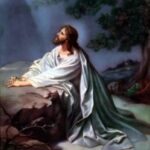


The Kingdom of heaven was “with” or “among” the Pharisees, in that Jesus, the one designated by God to rule as King, was standing before them and they took no notice