

Theme Text – “For as in Adam all die, so in Christ all will be made alive.” (1 Corinthians 15:22 NIV)
The Promise of Rescue – What God Intends
Scripture holds together two truths: humanity “falls asleep” in death through Adam, and yet “in Christ all will be made alive.” The promise begins in Eden, where God announces a counter-strike against the serpent: “He [the woman’s seed] shall bruise thy head.” (Genesis 3:15 ASV). From the start, God purposes a Messiah / the Christ, an Anointed Deliverer, to undo the serpent’s work and redeem Adam’s family.
The Ransom – How God Fulfills The Promise
Long before the cross, God declared how he will break death’s claim: “I will ransom them from the power of the grave; I will redeem them from death: O death, I will be thy plagues; O grave, I will be thy destruction: repentance shall be hid from mine eyes.” (Hosea 13:14)
A New Testament letter shows this promise coming to fullness in the Messiah: “[God] will have all men to be saved, and to come unto the knowledge of the truth. For there is one God, and one mediator between God and men, the man Christ Jesus; Who gave himself a ransom for all, to be testified in due time.” (1 Timothy 2:3–6)
The pattern is clear: one God, one mediator, one ransom – made known at the appointed time – for the rescue of all.
The Logic of the Ransom – Why It Works

In the New Testament, ransom renders the Greek antilýtron – an “equivalent, corresponding price.”[1] God’s Law frames this as a principle of just equivalence: “life for life, eye for eye, tooth for tooth.” (Exodus 21:23–24).
Father Adam, created as a perfect human with no inherited corruption or defect, broke God’s command. When he sinned, the consequence of death fell not only on him but on all who were still “in his loins”: the whole human family that would come from him. “In Adam” we all inherit a bent away from loving our neighbor, thus missing the mark and hence face mortality – a condition that runs through our life and blood, our very genes/DNA.
To redeem Adam’s family within the terms of God’s justice, an equivalent human life, whole and unstained, had to be offered in place of Adam (and his race).[2]
Why No Ordinary Human Could Pay
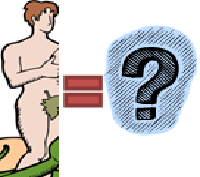
As Adam’s children we participate in sin and mortality; none of us is able to offer the equivalent life. The Psalmist is blunt: “No man can by any means redeem his brother, or give to God a ransom for him.” (Psalm 49:7 NASB). We inherit a bent toward missing the mark (cf. Psalm 51:5), and so we cannot purchase life for another.
The Only Fitting Redeemer
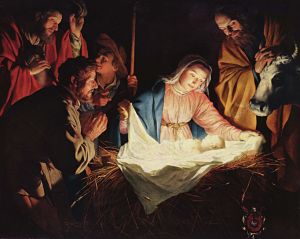
The prophets foresaw the Servant who would bear our griefs (Isaiah 53:4–6). Jesus, bearing the name that means “Yahweh saves”, is that Messiah/the Christ. Before his human birth he is spoken of as the Logos (“Word of God,” John 1:1) and the “firstborn of all creation” (Colossians 1:15; cf. Revelation 3:14 NASB).
He is the one through whom God created all things (Colossians 1:16), hence he is called God’s only begotten Son. And “God so loved the world, that he gave his only begotten Son” (John 3:16) as that ransom for Adam!
God transformed the mighty Logos into a virgin’s (Mary’s) womb (John 1:14). Jesus entered our history as a true human, not bound by Adam’s inherited mortality, but as a perfect human who could have lived forever on earth. Yet he relinquished that right to pay Adam’s ransom.
What the Messiah Accomplished
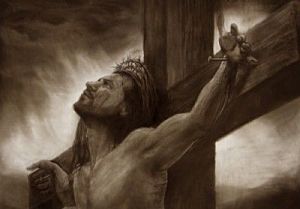
He remained “holy, harmless, and undefiled, separated from sinners.” (Hebrews 7:26). He proclaimed God’s salvation and the kingdom that is to come, and, in the fullness of time, allowed himself to be handed over to the imperial Roman rulers who tortured and crucified him in 33 C.E. By his death on the cross, he gave himself “a ransom for all.” (1 Timothy 2:3–6).
The Johannine Epistle addresses Jesus’ followers: “He is the atoning sacrifice for our sins, and not only for ours [believers’] but also for the sins of the whole world.” (1 John 2:2 NIV). “He tasted death for every man.” (Hebrews 2:9).
By dying in place of Adam, he bought Adam (and all his descendants) a second shot at life:
- “For since by a man [Adam] came death, by a man [Jesus] also came the resurrection of the dead.” (1 Corinthians 15:21 NASB).
- “By ONE man [Adam] sin entered into the world, and death by sin; and so DEATH passed upon ALL men.… even so by the righteousness of ONE [Jesus] the free gift came upon ALL men unto justification of LIFE.” (Romans 5:12, 18).
This is good news for each and every one born of Adam, announced as “good tidings of great joy, which shall be to ALL people.” (Luke 2:10). Jesus died for Adam and Adam’s race, opening the way to resurrection and the Kingdom’s restorative justice for the world.[3]
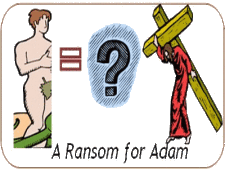
How was this ransom enacted? Not in private, but in public: Jesus freely yielded his life under Rome’s sentence so that Adam’s death-story meets God’s love in the most visible place. The cross shows our failure to love; the ransom shows God’s greater love for all Adam’s family.
How the Ransom Was Paid: Crucified by Empire
This is how the ransom was carried out: the Roman Empire executed Jesus by crucifixion, a public, political death used to shame and deter. It functioned as state terror and social spectacle.[5][6] In the Passion stories, imperial power, local leadership, and a stirred-up crowd converge. More than personal failure, this is our shared social failure to love – fear, scapegoating, rivalry, and dehumanizing violence – putting the Christ on the cross.
Yet, precisely there, God turns the world’s verdict into saving gift. The ransom is not a private transaction detached from history; it confronts and heals the deeply social nature of sin. The One who is righteous stands with the shamed and the powerless, bearing their lot, and breaks the cycle by refusing retaliatory violence. In resurrecting Jesus, God vindicates the condemned victim and opens a new social future. Where Adam’s failure to love brought death, the cross exposes it; where death ruled, the resurrection begins restoration for Adam’s family.
Jesus died with the “weak” and rose to form a welcoming community: honor given downward, patient welcome, and burden-bearing (Romans 14–15). Where Adam’s family spread death by failing to love our neighbor, the ransom is to remake us into a people who build one another up so that life can spread.[7]
“To Be Testified in Due Time”
“All will be made alive” names the scope of resurrection promised “in Christ,” not an automatic bestowal of eternal life. Scripture consistently locates life in the crucified-and-risen Christ (John 14:6; Acts 4:12). The promise is that Adam’s family is raised and brought under the Christ’s truthful rule, where righteousness shall be taught and learned, so that love and justice take root.[8]
In 1 Timothy 2:3–6, “to be testified in due time” renders the Greek phrase kairois idiois: “at his own appointed times.” The witness to the one ransom unfolds across God’s timing: proclaimed through apostles in the first century (cf. v. 7) and ultimately made plain to all under Christ’s judging and healing rule (2 Timothy 4:1), when instruction and justice reach the nations (cf. Isaiah 26:9). This aligns with the prayer Jesus taught: “Your kingdom come; Your will be done on earth as it is in heaven.” (Matthew 6:10).[4]
- All men to be saved – redeemed and awakened from Adamic death.
- And to come unto the knowledge of the truth – after awakening, to be instructed in the truth about God and the Messiah, learning righteousness (cf. Isaiah 26:9).
Against Empire’s Scarcity: The Scope of the Good News
Messages that imagine salvation for only a narrow in-group mirror human empires’ scarcity logic. The scriptural proclamation announces a ransom for all and a Kingdom that heals, frees, and restores, on earth as in heaven.
The gospel’s claim is not that people are abandoned to despair, but that Christ’s ransom for all leads to resurrection, truthful instruction, and just judgment in God’s Kingdom.
Read Next – The Times of Restitution of All Things
References
- On antilýtron (“ransom”): see a standard Greek lexicon entry (e.g., Thayer’s / Strong’s G487). Public-access overview:
Blue Letter Bible – G487.
↩︎ - On equivalence and the “eye for eye” (lex talionis) principle that limits and measures retaliation: survey of Deut 19:21; Exod 21:23–25; Lev 24:19–20.
Bible Odyssey – “Retribution.”
↩︎ - On the Jubilee/new-creation frame of restoration and its connection to the Kingdom:
Bible Odyssey – “Jubilee Year.” | Bible Odyssey – “Paul and the Kingdom.”
↩︎ - On “to be testified in due time” (τὸ μαρτύριον καιροῖς ἰδίοις): lexical sense of kairos (“fitting/appointed time”) and classic grammatical note.
Mounce – Greek Dictionary: kairos | A.T. Robertson, Word Pictures (PDF)
↩︎ - Primary-source evidence for crucifixion as public imperial execution: victims “crucified before the wall of the city.”
Josephus, War 5.449 (Whiston transl.) | U. Chicago – War Book V (online)
↩︎ - Crucifixion as public deterrence/terror (spectacle to overawe): note Josephus’s aim of breaking resistance and a modern scholarly synthesis.
Josephus, War 5.449–450 (deterrent effect) | John Granger Cook, Crucifixion in the Mediterranean World
↩︎ - On Romans 14–15 (welcome/honor downward) and broader commentary context: Robert Jewett, Romans: A Commentary (Hermeneia). Stable catalog entries:
WorldCat – Jewett, Romans (2007) | Publisher retail listing (Fortress imprint)
↩︎ - On the scope of resurrection (“all will be made alive”) and kingdom hope: accessible summaries in
Bible Odyssey – “Resurrection” and “Paul and the Kingdom.”
↩︎







Very Useful to me
Jesus' body was especially prepared by God (Hebrews 10:5), so that it could be offered to God for our sins. (Hebrews 10:10) This the way that God provided the ransom price necessary; there is nothing in the faith once delivered that says that Mary had to be made sinless BEFORE she gave birth to Jesus. Like every one else, Mary is justified due to the ransom sacrifice of Jesus.
God is not like humans hypocritical in judgement. He has pure judgement in all things.
This is very useful and Truth
Smrt SINA –
od Boga Jedinoga Oca JHVH,
Gospodina Yehoshue Pomazanika:
===========================================
TO je bio PLAN Boga Oca JHVH, kako spasiti Zemljane!
—————————————————————————
Zato se NIJE žrtvovao BOG Otac JHVH,
nego je Bog Otac JHVH
DAO svoga Sina Yehoshuu kao žrtvu pomirnicu
—————————————————
IVAN 3,16
Uistinu, BOG je tako ljubio svijet te je
DAO SVOGA SINA Jedinorođenca
da nijedan koji u njega vjeruje ne propadne,
nego da ima život vječni.
……………………………………………………………………..
1. IVANOVA 4,10
U ovom je ljubav: ne da smo mi ljubili Boga,
nego – on je ljubio nas i
POSLAO SINA SVOGA KAO POMIRNICU ZA GRIJEHE naše.
,,,,,,,,,,,,,,,,,,,,,,,,,,,,,,,,,,,,,,,,,,,,,,,
Bog je Otac JHVH
Bog Otac JHVH je POSLAO Gospodina Yehoshuu na Zemlju.
Bog Otac JHVH je DAO svog Sina Yehoshuu kao ŽRTVU pomirnicu.
——————————————————————————————
1. IVANOVA 2,2
ON je POMIRNICA za grijeha naše,
i ne samo naše, nego i svega svijeta.
,,,,,,,,,,,,,,,,,,,,,,,,,,,,,,,,,,,,,,,,,,,,,,,
IZAIJA 53,10
Al` se JHVH SVIDJE DA GA PRITISNE BOLIMA.
Žrtvuje li život svoj za NAKNADNICU,
vidjet će potomstvo, produžit` sebi dane i
JHVH će se volja po njemu ispuniti.
———————————————————–
EFEŽANIMA 5,2
i hodite u ljubavi kao što je i Krist ljubio vas i sebe predao za nas
KAO PRINOS I ŽRTVU BOGU NA UGODAN MIRIS.
———————————————————–
RIMLJANIMA 8,32
TA ON NI SVOJEGA SINA NIJE POŠTEDIO,
NEGO GA JE ZA SVE NAS PREDAO!
Kako nam onda s njime neće sve darovati?
Why do say that ..?
Because he can read
Amen! I seldom read anything I can totally agree with! Some might say, but where’s the weeping and gnashing of teeth? Why upon “the judgment” – foreshadowed and typified by great Day of Atonement (Yom Kipper) His first advent fulfilling the Spring Holy Days (Lev.23) perfectly, certainly His long second one will perfectly fulfill the Fall ones – and their pattern.
The Lord said, “All in graves will come forth.. in a resurrection of eonian life, or of eonian correction (Gr. kolazo” Jn.5:28; Mt.25:46).
[No hell. No lost.]
I expect the repentance, reconciliation and renewal of those in the resurrection that’s “after the thousand years” to be much like we all believers have experienced.. After all we did do the choosing! Very good article! Thank you!
The second resurrection happens during the thousand year kingdom. Not after.
Rev 20:5 has a spurious text that was inserted centuries later essentially nullifying the purpose of the kingdom.
Read more: https://christianityoriginal.com/mp/index.php/ind…
Guys just sharing, I've found this interesting! Check it out! https://www.recursosevangelicos.com/