

Theme Text – “If a man dies, will he live again?” (Job 14:14)
Roughly 170,000 people die each day worldwide[1]. Scripture names death an enemy (1 Cor 15:26), yet it also shows how death’s reign spreads wherever “love your neighbor as yourself” collapses. From the first human family forward, death is a consequence of un-love: rivalry, domination, and the refusal to seek the other’s good. Empires learn to weaponize that fear of death to control populations; by contrast, God’s Kingdom is the public promise that un-love will not have the last word.

Death Is Not “Natural” for Humans
Animals die, but humans are described as made in God’s image and entrusted with wise stewardship of the earth (Genesis 1:26–28). Ecclesiastes says God has “set eternity in the human heart” (Eccl 3:11), which helps explain why death feels alien to our vocation and our inner life. Our grief testifies that we were meant for durable communion with God and neighbor, not for fracture and loss.
Why Mortality Enters the Story
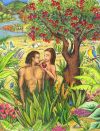
God warns Adam [the first Human], ‘You may freely eat the fruit of every tree in the garden [Eden], except the tree of the knowledge of good and evil. If you eat its fruit, you are sure to die.’ (Genesis 2:16-17, NLT).
A rival voice counters to Eve [the first Woman], “You won’t die!” (Genesis 3:4). Adam and Eve disobey the one and only command of their Creator, and this human refusal of God’s wisdom immediately spills into brotherly-harm and death in the family: Cain murders Abel (Genesis 4:8).

Paul summarizes the human condition this way: “Wherefore, as by one man [Adam] sin entered into the world, and death by sin; and so death passed upon all men, for that all have sinned.. By the offence of ONE [Adam] judgment came upon ALL men to condemnation (Romans 5:12, 18).
Every one of us carries more than Adam’s bloodline. We carry his pattern. Woven into our very DNA is what Scripture calls sin: literally missing the mark our Creator set for us. And what is that mark? To love our neighbor as ourselves.
Each time we withhold compassion, exploit, or look away from another’s need, we repeat Adam’s choice in our own way. Sin runs in the human family like a genetic code: we are born with it, and we each confirm it by our actions. Adam is responsible, yet we are all Adam, sharing his likeness, his failure, and his fate. Every child of humanity enters life under that ancient sentence: “In Adam all die” (1 Corinthians 15:22, NIV).
“A Fruit?” Why the Consequences Fit the Story
The “fruit” was not a triviality; it was a test of trust and the doorway into a world where we define good and evil on our own terms. God’s commands are designed to protect us from hurting each other (Job 35:5–8; Matthew 22:39). Once trust is broken, the social fabric unravels: envy, violence, exploitation. Mortality can be read as a severe mercy – God’s allowance that life not stretch for millennia under our present injustice, compounding harm without relief. Our shared consequences reflect our deep interconnection: no one’s un-love remains purely “private.”
What Death Is: Scripture’s Language of “Sleep”
Across the Bible, death is described as sleep, a state of unawareness and powerlessness. When Abraham died, he “was gathered to his people” (Genesis 25:8). Abraham’s people were not believers in God, but the faithful Abraham slept with them in death. David too “slept with his fathers” and so slept Solomon (1 Kings 2:10; 11:43); When Stephen was martyred, he “fell asleep” (Acts 7:60).

Ecclesiastes says “the dead know nothing” (Eccl 9:5), and the psalmist adds: “when their breath departs … in that very day their thoughts perish” (Psalm 146:4). The dead have no thoughts. They cease to think. Both mind and body perish.
Jesus speaks of Lazarus “sleeping,” then awakens him from death: “the man who had died came forth” (John 11:11, 44). Scripture doesn’t say he who was in hell or heaven returned. It simply says, he who had died i.e. he who had been in the sleep of death as Jesus had mentioned, was awakened and came forth.
Luke 23:43 – Jesus’ Promise To The Thief On The Cross
The reading often hinges on punctuation added in later manuscripts. Rendered, “Truly I say to you, today you will be with me in Paradise,” it appears to deny the sleep motif. Read as, “Truly I say to you today, you will be with me in Paradise,” it harmonizes with the rest of Scripture: the promise stands; the timing is the resurrection, when the dead will be awakened.
“Absent from the Body … Present with the Lord”
Paul’s hope (2 Cor 5:8; Phil 1:23) is not an immediate heavenly consciousness but to be clothed with resurrection life. Between death and resurrection, Scripture’s consistent witness speaks of sleep/unconsciousness. For the believer, that interval is experienced as an instant, like going to sleep and waking to the Lord’s day.
Science Agrees with the Bible’s Definition
Scientific definitions echo Scripture’s finality: death is the “permanent cessation of all vital functions”[2]. In medicine and law, death means the irreversible end of circulation/respiration or the irreversible loss of all functions of the entire brain (including the brainstem), which entails permanent loss of consciousness[3]. That alignment is significant.
Soul & Spirit — Clearing the Confusion

Common but mistaken view: Humans have an indestructible “soul” (or “spirit”) that remains conscious and immortal at death.
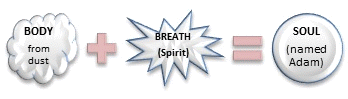
Scripture’s definitions (succinct): In Genesis, the human becomes a living soul when God breathes into dust. The LORD God formed man of the dust of the ground, and breathed into his nostrils the breath of life; and man became a living soul (Genesis 2:7). Yes, Adam became a living soul. He did not possess a soul. Rather he himself was the soul. “Soul” is the whole living person, a life that can be harmed or ended (Jeremiah 2:34; Joshua 11:11).
Spirit translates “breath/wind” (Heb. ruach), the God-given life-power that returns to God at death (Eccl 12:7; Ps 104:29). It’s impersonal. As John Goldingay notes, “The life of a human being came more directly from God, and it is also evident that when someone dies, the breath (Psalm 104:29) or the life (Gen. 35:18) disappears and returns to the God”[4].
Explicit biblical verdict: “The soul that sins, it shall die” (Ezekiel 18:20). Adam, the first “living soul”, died; we too die (Rom 5:12; 1 Cor 15:22). The Bible does not teach an inherently immortal human soul that remains consciously alive apart from God’s act to restore life (which will be at the resurrection).
Why do many think otherwise today? Ideas of an “immortal soul” entered through cultural influences and selective readings. Genesis also preserves a rival claim – “You won’t die” (Genesis 3:4) – that contradicts God’s warning and still echoes in popular belief as “Only your body dies, your soul won’t die!”.

Hope: Mercy within Judgment, Life beyond Death
We name death honestly: it ends the life we know and breaks our hearts. Yet within judgment, God’s mercy sets a boundary. Mortality refuses to immortalize cruelty. The Good News is not that an inner ghost escapes, but that God will raise the dead and renew creation, healing relationships broken by un-love (John 11; 1 Cor 15).
Job didn’t ask, ‘If a man dies, is he really dead?’ Instead he asks, “If a man dies, will he live again?” (Job 14:14). That question leads directly to the answer of resurrection.
Read Next — Is there a solution?
References
- Our World in Data — “How many people die and how many are born each year?” (global totals; e.g., ~62M deaths/year ≈ ~170k/day).
↩︎ - Merriam-Webster, “death.” “a permanent cessation of all vital functions: the end of life.”
↩︎ - Uniform Determination of Death Act (UDDA) — death is either irreversible cessation of circulatory/respiratory functions, or of all functions of the entire brain (including the brain stem).
↩︎ - John Goldingay, Old Testament Theology, Volume 2: Israel’s Faith (Downers Grove, IL: IVP, 2006), esp. pp. 640, 644; publisher page: IVP.
↩︎







Amazing writing.
Nice
என்னில் விசுவாசம் கொள்பவன் இறப்பினும் வாழ்வான். ஒரு போதும் சாகான்.
3 யோவான் 2ஆம் வசனம்…."உன் ஆத்துமா வாழ்கிறதுபோல"……
உன் ஆத்துமா என்று உனக்குள்இருக்கும் ஆத்துமா.
ஆத்துமாவே அந்த மனிதன் என்பதாக இது அர்த்தப்படவில்லையே.
Here are a couple of questions…not to argue, but to gwt an answer:
What does it mean whene the Bible says that when we are absent from the body we are present with the LORD?
Who are thw great cloud of witnesses spoken of in Hebrews? Doesnt seem like the writer was talking about angels
In Jesus parable of the rich man, who and where were the rich man and poor man dweilling? Where was the rich man being tormented? How was he consciously thinking about warning the people he had left behind in death?
What is our inner man?
What does it mean whene the Bible says that when we are absent from the body we are present with the LORD?
yeah, you die, sleep unconscious, and when Jesus returns you will wake up and be with him. you won't feel any time pass when you sleep unconscious. it'll be as if you died and woke up right away. if someone put you under anesthesia and you're unconscious for 10 hours, do you feel those 10 hours? not at all. it'll be as if you woke up right after you fell unconscious.
-Who is the great cloud of witnesses in Hebrews?
why is this relevant to this context? witnesses were alive. they are dead and asleep now. they will wake up.
-what is our inner man?
your thoughts and stuff. your thoughts perish when you die says the Psalmist.
-In Jesus parable about Lazarus and the rich man, where was the rich man being tormented and the poor man being comforted at? How would an unconscious person experience any sort of torment and experience the desire to warn his living loved ones?
it's a parable, not a real story. please read the bible study on what it means: https://christianityoriginal.com/mp/index.php/hel…
At 2 Corinthians 5:1, Paul refers to his death and speaks of an “earthly house” that is “dissolved.” Paul believed that man is a soul, not that he has a soul. (Genesis 2:7; 1 Corinthians 15:45) Paul was a spirit-anointed Christian whose hope, like that of his first-century brothers, was ‘reserved in the heavens.’ (Colossians 1:5; Romans 8:14-18) His ‘earnest desire,’ therefore, was to be resurrected to heaven as an immortal spirit creature at God’s appointed time. (2 Corinthians 5:2-4) Speaking of this hope, he wrote: “We shall all be changed . . . during the last trumpet. For the trumpet will sound, and the dead will be raised up incorruptible, and we shall be changed.”—1 Corinthians 15:51, 52.
1. SOLUNJANIMA 5,23
A sam Bog mira neka vas posvema posveti i
cijelo vaše biće –
DUH vaš
i
DUŠA
i
TIJELO
,,,,,,,,,,,,,,,,,,,,,,,,,,,,,,,,,,,,,
Čovjek se sastoji od 3 komponente
1.
Jedna je DAH/DUH ŽIVOTA – od kojeg smo živi
životna energija koju Bog daje i oduzima
2.
Druga je TIJELO – materija
koja je sada – raspadljiva
3.
Treća je DUH – osobnost, memorija, soft ware, karakter, intelekt,….
čovjeka koji počinje egzistirati rođenjem
taj DUH je vječan
taj DUH spava kad se umre
taj DUH je u nesvjesnom stanju
taj DUH budi Bog na uskrs
taj DUH spaja Bog na uskrs sa novim tijelom
7 – இதோ, மேகங்களுடனே வருகிறார்; கண்கள் யாவும் அவரைக் காணும், அவரைக் குத்தினவர்களும் அவரைக் காண்பார்கள்; பூமியின் கோத்திரத்தாரெல்லாரும் அவரைப் பார்த்துப் புலம்புவார்கள். அப்படியே ஆகும் ஆமென்
intha nerathulayum yellarukum jeeva suvasam marupadiyum varuma
நம்புங்கள் தவறில்லை
விசாரித்த பின் நம்புங்கள்
அதற்கு தான் அறிவு வழங்கப்பட்டு இருக்கிறது .
பைபிள் சரியாக சொல்கிறது.
வசனங்களை படித்து அதற்கு விளக்கம் தருவது என்பது தங்களின் அனுபவ கருத்தே ஒழிய. அந்த வசனத்தை சொன்வர் எந்த அர்த்தத்தில் சொன்னார் என்பது அறிய இயலாது
வாக்கிய அர்த்தம் ஆன்மீகத்திற்கு பொருந்தாது
அந்த வார்த்தை எந்த அர்த்தத்தில் அங்கே சொல்லப்படுடுள்ளது என்பதை வழிவழியாக வந்த குரு பரம்பரையே அறியும்
குரு வழியாக பு
சத்திய வார்த்தைகள் தெளிவாகவும் புரிந்துகொள்ள சுலபமாக இருக்கிறது நன்றி
1 Samuel 28:11-20….talks about the spirit of Samuel interacting with king after a medium invocation!!
Really need more clarification on this…thanks in anticipation
Odgovorno tvrdim da niste dovoljno proucili pismo ,covjek ili dusa se moze naci gol tojest bez tijela ali potpuno svjestan i ceka buduce tijelo izvor sveto pismo koje sam i sam izucavao poz svima