
This page continues the Scripture-first series on worship and identity. The previous page focused on the LORD God Almighty and Scripture’s insistence that worship belongs to God. Here the focus turns to the identity of Jesus Christ as the New Testament presents him, and to why his titles, mission, and kingdom message carried public weight in a first-century world trained by Roman imperial ideology.
Before considering Jesus’ titles in the public world of empire, Scripture asks readers to begin with a more basic claim: Jesus was no ordinary religious teacher who rose by talent or ambition. He speaks of himself as the one sent from above, acting under the Father’s commission: ‘For I came down from heaven, not to do mine own will, but the will of him that sent me’ (John 6:38 KJV). With that claim in place, “Lord,” “Son of God,” and “Christ” are not mere honorifics borrowed from the ancient world; they become a testimony that heaven’s authority has entered history, and that a different kingdom is being announced.
The Scriptural confession: one God and one Lord
‘For even if there are so-called gods whether in heaven or on earth, as indeed there are many gods and many lords, yet for us there is but one God, the Father, from whom are all things and we exist for Him; and one Lord, Jesus Christ, by whom are all things, and we exist through Him’ (1Corinthians 8:5-6 NASB).
Paul speaks plainly about the crowded religious and political landscape of the ancient world: people named many “gods” and many “lords,” and those names demanded loyalty. Then he draws a sharp line for the assemblies: the Father is confessed as the one God, and Jesus Christ is confessed as the one Lord through whom life and worship are to be ordered.
Because English Bibles can make important words look similar, one small translation convention helps the sentence read more clearly. When many English translations print LORD (all capitals), they are usually signaling God’s covenant name (Yahweh). In 1 Corinthians 8:6, however, Paul uses “Lord” as a title, translating the Greek kurios, a word used for a master, ruler, or one with rightful authority. The confession, then, does not blur Father and Son into the same identity; it names the Father as God Almighty, and it names Jesus as the Lord whom God appoints and honors for the life of the world.
Jesus’ titles in the public world of empire
In the Roman world, titles were not merely private language for personal devotion. Rome maintained its rule not only by force and revenue, but also by shaping what felt sacred, normal, and inevitable through public honors, images, civic rituals, and imperial worship systems.1 That context matters, because several New Testament titles for Jesus were also heard in imperial propaganda.
For example, “Son of God” was not a neutral phrase in the Roman public imagination. Augustus’ public “Divi Filius” (“son of a god”) claim was tied to Julius Caesar’s deification and appears in the language of imperial coinage and public self-presentation.2 Imperial announcements could also speak of “good news,” name the emperor “savior,” and frame the emperor’s reign as the hinge of history and the foundation of peace.3
Against that backdrop, when the New Testament calls Jesus “Son of God” and “Lord,” the words do more than identify him. They redirect loyalty, redefine peace, and announce a different public horizon, one that refuses to treat domination, hierarchy, and spectacle as sacred. Yet Scripture also presses further than titles alone, because Jesus’ central message was not simply that he should be honored, but that God’s kingdom was arriving and demanding a new way of life.
The Anointed King and the Kingdom of God
Jesus is called “Christ” because he is the anointed one, the Messiah, and the Gospels frame that anointing in royal terms. The angel announces a kingship rooted in Israel’s hope, not in Caesar’s claims: ‘He shall be great, and shall be called the Son of the Highest: and the Lord God shall give unto him the throne of his father David: And he shall reign over the house of Jacob for ever; and of his kingdom there shall be no end’ (Luke 1:32-33 KJV).
When Jesus begins his public ministry, he does not present the kingdom as a distant metaphor. He proclaims it as God’s decisive answer to the world’s empires: ‘The time is fulfilled, and the kingdom of God is at hand: repent ye, and believe the gospel’ (Mark 1:15 KJV). He repeats this purpose as the reason he was sent: ‘I must preach the kingdom of God to other cities also: for therefore am I sent’ (Luke 4:43 KJV).
This is why the early Christian proclamation sounded politically dangerous to some hearers. In Acts, the accusation is explicit: ‘And these all do contrary to the decrees of Caesar, saying that there is another king, one Jesus’ (Acts 17:7 KJV). The point is not that Jesus imitates Caesar with a better brand of domination. The point is that God’s anointed king inaugurates a different kind of rule, one that exposes the fragility of every “inevitable” human empire.
Jesus trains his followers to pray for a kingdom that reaches earth, not merely private spirituality: ‘Thy kingdom come. Thy will be done in earth, as it is in heaven’ (Matthew 6:10 KJV). And he defines the character of that kingdom as good news for the poor, release for captives, and healing for the crushed: ‘The Spirit of the Lord is upon me, because he hath anointed me to preach the gospel to the poor; he hath sent me to heal the brokenhearted, to preach deliverance to the captives, and recovering of sight to the blind, to set at liberty them that are bruised, To preach the acceptable year of the Lord’ (Luke 4:18-19 KJV).
Messiah promised in Israel’s Scriptures
Israel’s Scriptures had long spoken of God’s promised agent, the one through whom God would speak, act, and restore:
- Moses told the Israelites, ‘The LORD thy God will raise up unto thee a Prophet from the midst of thee, of thy brethren, like unto me; unto him ye shall hearken’ (Deuteronomy 18:15 KJV).
- Elsewhere God said, ‘Behold my servant, whom I uphold; mine elect, in whom my soul delighteth; I have put my spirit upon him’ (Isaiah 42:1 KJV).
The New Testament opens by placing Jesus within that promised story: ‘The book of the generation of Jesus Christ, the son of David, the son of Abraham’ (Matthew 1:1 KJV). He is the Messiah, not as a private spiritual label, but as God’s anointed king whose mission brings God’s reign into the world.
The Word of God and the Son of God
Scripture does not present Jesus as merely an ordinary servant among many. John identifies him with the mighty Word of God, the Logos (John 1:1), and the New Testament repeatedly names him the Son of God. In a world where rulers claimed sacred honor, this language anchors Jesus’ authority in the Father’s purpose and saving work, not in propaganda, violence, or spectacle.
Only Begotten Son: unique origin and unique sonship
John speaks of the Father giving the Son (John 3:16), and Scripture also describes Jesus as first in relation to creation:
- ‘He is the image of the invisible God, the firstborn of all creation’ (Colossians 1:15 NASB1995).
- ‘…the Beginning of the creation of God…’ (Revelation 3:14 NASB1995).
- ‘The LORD possessed me in the beginning of his way, before his works of old’ (Proverbs 8:22 KJV). (See also 1Corinthians 1:24.)
Read together, these passages are understood here as describing Jesus as uniquely related to God and to the beginning of creation, and therefore as the Son in a category by himself. This is why he is described here as the Only Begotten Son, and why the New Testament can speak of him with titles that no empire can claim without distortion.
Creation through the Son: agency over every authority
God created everything else through the Son, and Scripture deliberately includes the world of rank and power within that claim:
- ‘For by Him all things were created, both in the heavens and on earth, visible and invisible, whether thrones or dominions or rulers or authorities—all things have been created through Him and for Him’ (Colossians 1:16 NASB).
- ‘All things came into being through Him, and apart from Him nothing came into being that has come into being’ (John 1:3 NASB).
- When He [God] established the heavens, I was there, When He inscribed a circle on the face of the deep, When He made firm the skies above…When He marked out the foundations of the earth; Then I was beside Him, as a master workman; (Prov 8:27-30 (NASB) Also, refer 1Corinthians 1:24 – Christ, the wisdom of God).
This is not abstract poetry. It is a direct reordering of what counts as ultimate. If “thrones,” “rulers,” and “authorities” are named as creatures, then even Caesar is not the source of reality, the measure of peace, or the final judge of human worth. Scripture adds, with quiet intimacy, that the Son’s authority is rooted in the Father’s love: ‘For the Father loves the Son, and shows Him all things that He Himself is doing;’ (John 5:20 NASB).
Redemption through the Son: the rescue plan fulfilled
When Adam sinned, God set a rescue plan in motion (Genesis 3:15), promising the Christ. In the fullness of that promise, God sent his Son for the redemption of Adam’s race (John 3:16). John speaks of the Word becoming flesh (John 1:14), and the Gospels insist that this divine mission entered human history through Mary’s womb, not through imperial courts, armies, or inherited privilege. In that sense, Jesus holds a singular status not because he mirrors empire, but because he is the Christ (the Anointed One) sent by God for the healing of the world.
Faithful obedience and priestly appointment
- Jesus learned obedience through suffering and was designated by God as high priest (Hebrews 5:8-10).
- Jesus offered prayers and petitions with cries and tears and was heard because of his reverent submission (Hebrews 5:7).
- He was faithful to the One who appointed him and was found worthy of greater honor than Moses (Hebrews 3:2-4).
Exaltation as Lord: authority expressed as healing rule
When Jesus proved faithful in obedience, God exalted him and invested him with supreme authority. Scripture even uses royal-anointing language: ‘God, even thy God, hath anointed thee with the oil of gladness above thy fellows’ (Hebrews 1:9 KJV).
‘For this reason also, God highly exalted Him, and bestowed on Him the name which is above every name, so that at the name of Jesus EVERY KNEE WILL BOW, of those who are in heaven and on earth and under the earth, and that every tongue will confess that Jesus Christ is Lord, to the glory of God the Father’ (Philippians 2:9-11 NASB).
Under Roman imperial ideology, sacred titles were often used to glorify power and normalize hierarchy. Scripture turns that logic inside out. God exalts Jesus as Lord through faithful obedience, suffering love, and the rescue of others, and Jesus exercises kingly authority as the advance of God’s kingdom, a reign that heals rather than exploits. In that light, worship becomes more than words; it becomes a public allegiance, shaped by justice, mercy, and restored relationships, and it refuses to treat any human empire as ultimate.
Read Next: The Father and the Son
Footnotes
- On the imperial cult and emperor worship as a public system across the Roman Empire, see Stefan Pfeiffer, “The Imperial Cult in Egypt,” in The Oxford Handbook of Roman Egypt, ed. Christina Riggs (Oxford University Press), accessed December 30, 2025, Oxford Academic (chapter page). For wider framing on ritual, public religion, and emperor cult as a formation system, see Simon Price, Rituals and Power: The Roman Imperial Cult in Asia Minor (Cambridge: Cambridge University Press, 1984), and Mary Beard, John North, and Simon Price, Religions of Rome, 2 vols. (Cambridge: Cambridge University Press, 1998). ↩︎
- On Augustus’ “son of a god” claim in public imperial messaging, see British Museum, “coin” (museum no. 1995,0401.1), curator’s comments noting “the title Divi F[ilius],” accessed December 30, 2025, British Museum Collection. See also Roman Provincial Coinage Online, RPC I, 1, which lists the obverse inscription “IMP AVG DIVI F” and translates it “Emperor Augustus, son of the divine,” accessed December 30, 2025, RPC I, 1. ↩︎
- On the Priene decree’s imperial “good news” language describing Augustus as “savior” and presenting his birthday as the beginning of “good tidings” for the world, see Craig A. Evans, “Mark’s Incipit and the Priene Calendar Inscription: From Jewish Gospel to Greco-Roman Gospel,” Journal of Greco-Roman Christianity and Judaism 1 (2000): 67–81, PDF, accessed December 30, 2025: https://jgrchj.net/volume1/JGRChJ1-5_Evans.pdf. ↩︎



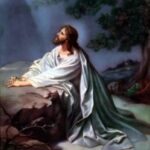


_-_James_Tissot.jpg)

ஆதியிலே வார்த்தை இருந்தது, அந்த வார்த்தை தேவனிடத்திலிருந்தது, அந்த வார்த்தை தேவனாயிருந்தது.
யோவான் 1:1
இங்கு கிறிஸ்து தேவனாயிருந்தார் என்று கூறப்பட்டுள்ளதே?
தமிழ் மொழியாக்கம் தவறு. கிரேக்கத்தில் லோக்காஸ் என்பதே உள்ளது. தமிழ் வேதாகமத்தைப் மட்டும் படிப்பதால் வந்த குழப்பம் இது. முடிந்தால் கிரேக்க,எபிரேய வேதாகமங்களைப் படிக்கவும்.
I like your website and there are many things I agree with. However, I cannot agree with your understanding about 'Who is Jesus' that He is the first of God's creation. This understanding is clearly contrary to the Bible and contradicts all the the three scriptures Col 1:16, Proverb 8:27-30 and John 1:3 which you have used to support the biblical truth that He is God's only begotten Son. You are adding to the Word of God when you say "God created everything else through his Son using him as an agent". The scriptures DO NOT say that God created EVERYTHING ELSE, but He created EVERYTHING through Jesus.
Yes indeed as John 1:3 says,"Through him [Jesus] all things were made; without him nothing was made that has been made." Since this is true, then Jesus could not possibly be a CREATED son. Jesus was literally God's only BEGOTTEN son, through whom, HIs Father created absolutely ALL things in heaven and earth.
The question is, do the passages which say the Almighty God will not share His glory refer to anyone or anything or does it refer to other gods which shall not be put before Him? Why is this the question? It is because Jesus claims that he has given the glory the Father gave him to his disciples. Not only is God the Father's glory being shared with Jesus, but it is being shared with all those who will be His children.
Joh 17:20-24 "I do not ask on behalf of these alone, but for those also who believe in Me through their word; (21) that they may all be one; even as You, Father, are in Me and I in You, that they also may be in Us, so that the world may believe that You sent Me. (22) "The glory which You have given Me I have given to them, that they may be one, just as We are one; (23) I in them and You in Me, that they may be perfected in unity, so that the world may know that You sent Me, and loved them, even as You have loved Me. (24) "Father, I desire that they also, whom You have given Me, be with Me where I am, so that they may see My glory which You have given Me, for You loved Me before the foundation of the world.
Wow. God bless you.