
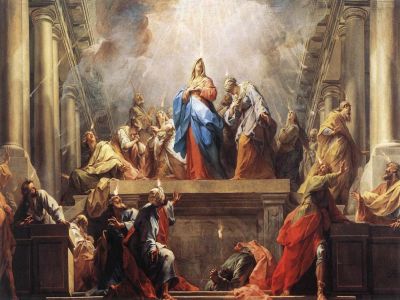
We studied about God Almighty and Jesus Christ, and explored questions on their relationship and origin. Now let us learn more about the Holy Spirit, not as an abstract puzzle, but as the living way God strengthens his people to announce his Kingdom in a world shaped by the Empires of Men.
The power of kings, and the power of God
Scripture is honest about how human empires work. They promise “security,” but their power often grows by taking from the many to protect the few. When Israel demanded a king “like the nations,” Samuel did not romanticize that request. He warned them about what royal power tends to do: it drafts, taxes, confiscates, and turns neighbors into tools.
“This is what the king who will reign over you will claim as his rights: He will take your sons and make them serve with his chariots and horses, and they will run in front of his chariots. Some he will assign to be commanders of thousands and commanders of fifties, and others to plow his ground and reap his harvest, and still others to make weapons of war and equipment for his chariots. He will take your daughters to be perfumers and cooks and bakers. He will take the best of your fields and vineyards and olive groves and give them to his attendants. He will take a tenth of your grain and of your vintage and give it to his officials and attendants. Your male and female servants and the best of your cattle and donkeys he will take for his own use. He will take a tenth of your flocks, and you yourselves will become his slaves.” (1 Samuel 8:11–17 NIV)
That is one kind of “power”: power-over, power-that-takes. God’s power is shown differently. God’s power creates life, heals what is broken, gathers outsiders, forgives enemies, and forms a people who practice justice and mercy. That is why the Holy Spirit matters. The Spirit is not given so believers can rule like the nations, but so believers can witness to God’s Kingdom and live its pattern.
“Spirit” in Scripture: breath, wind, life, and influence
In the Bible, the basic words for spirit (Hebrew: ruach; Greek: pneuma) carry the everyday sense of breath or wind, and then widen to describe life, inner disposition, and active influence.1 Like breath, spirit is not something you can hold in your hand, but you can see what it does: it animates, strengthens, moves, and changes.
That is why Scripture can speak about “spirit” in more than one way:
- Life-breath: the gift of life that makes living beings living.
- Power and influence: for example, people recognized Elijah’s prophetic power resting on Elisha (2 Kings 2:15), and Paul contrasts “the spirit of the world” with God’s Spirit (1 Corinthians 2:12).
- Disposition that shapes people: Scripture can describe a “spirit” that leads toward wisdom and courage, or toward fear, error, bondage, or stupor (for example, Romans 11:8).
What is the Holy Spirit
The Holy Spirit is God’s Spirit, God’s own holy breath and active presence at work among his people. Scripture speaks this way repeatedly, and it keeps the focus practical: what God does, what God gives, and what God forms.
God’s Spirit is called holy because God is holy, the source of holiness itself: “Great and marvelous are your deeds, Lord God Almighty. Just and true are your ways, King of the nations. Who will not fear you, Lord, and bring glory to your name? For you alone are holy.” (Revelation 15:3–4 NIV)
So when the Bible speaks of God giving his Spirit, it is not presenting a second god competing with God, but God sharing his own power and presence with his people, in a way that changes how they live under empire pressure.
Pentecost: power for witness, not power over others
Jesus did not prepare his followers to seize thrones. He prepared them to bear witness. He described the coming gift as “power from on high,” and he tied that power to the mission of the Kingdom.
“But you will receive power when the Holy Spirit comes on you; and you will be my witnesses in Jerusalem, and in all Judea and Samaria, and to the ends of the earth.” (Acts 1:8 NIV)
Empires expand by conquest, propaganda, and fear. The Holy Spirit expands God’s Kingdom by truth, courage, healing, repentance, and a community life that refuses exploitation. In Acts, the Spirit repeatedly pushes the gospel outward, across boundaries that empires love to harden: language boundaries, ethnic boundaries, class boundaries, and purity boundaries.
God does not answer imperial violence with a bigger sword. God answers with a Spirit-gifted people who announce good news, practice justice, and learn to live as a single family under one Father.
The Advocate and the Spirit of truth
During the last Passover, Jesus spoke about the Spirit’s role using rich, pastoral language. He called the Spirit an Advocate (or comforter), because the Spirit would strengthen the disciples, teach them, and steady them when opposition came.3
Jesus also described the Spirit as proceeding “from the Father,” highlighting that the Spirit is God’s own Spirit at work: “When the Advocate comes, whom I will send to you from the Father—the Spirit of truth who goes out from the Father—he will testify about me.” (John 15:26 NIV)
Some readers notice that the Gospel of John uses “he” language for the Spirit in places (for example, John 16:13). Here is a simple way to think about it. In Greek (the language John wrote in), words often have grammatical gender, meaning they are labeled “masculine,” “feminine,” or “neuter” even when the thing is not a male or female person. Many Romance languages (like Spanish, French, Italian, and Portuguese) work the same way. That is different from natural gender, which is about actual male and female beings. So when English translations use “he” in these passages, it can be because the grammar is pointing that direction. John’s main point is not to give the Spirit a body, but to show the Spirit’s work: guiding, teaching, and strengthening disciples to testify to the truth.2
How Scripture describes the Spirit being given
Across the Bible, God’s Spirit is described as a gift that is “poured out” on people (Acts 2; Acts 10; Joel 2; Zechariah 12). That language fits well with the Bible’s emphasis on God’s generosity: God shares, God supplies, God strengthens.
It also fits Jesus’ simple instruction about prayer. If God gives the Spirit, then God is the one to ask:
“How much more will your Father in heaven give the Holy Spirit to those who ask him!” (Luke 11:13 NIV)
In other words, the Holy Spirit is not a replacement for the Father, and not a distraction from Jesus. The Spirit is God’s gift that keeps believers anchored in Jesus’ message, strengthened for faithful witness, and shaped into a Kingdom community that refuses the “taking” logic Samuel warned about.
The Spirit builds a Kingdom community under empire pressure
Empires train people to compete, distrust, and climb. God trains people to welcome, share, forgive, and heal. This is the practical fruit of the Holy Spirit. The Spirit forms:
- Truth-telling courage, so believers can testify without fear.
- Kingdom ethics, so the community resists exploitation and practices justice.
- Unity across boundaries, so “ends of the earth” is not a slogan, but a lived widening of God’s family.
- Healing and help, so God’s power is recognized not by domination, but by restoration.
This is a hopeful message. The Empires of Men do not get the final word. God’s Kingdom is proclaimed through Spirit-given power that lifts burdens, repairs relationships, and gathers people into a shared life of love.
Read Next: John 1:1 – The Word & God
Footnotes
- For standard lexical discussions of ruach and pneuma (including “wind, breath, spirit” senses), see Ludwig Koehler and Walter Baumgartner, The Hebrew and Aramaic Lexicon of the Old Testament (Leiden: Brill, 1994–2000), s.v. רוּחַ; Walter Bauer, Frederick W. Danker, William F. Arndt, and F. Wilbur Gingrich, A Greek-English Lexicon of the New Testament and Other Early Christian Literature, 3rd ed. (Chicago: University of Chicago Press, 2000), s.v. πνεῦμα. ↩
- On grammatical gender and pronoun agreement in Koine Greek, and why English pronouns can mislead readers when translating Greek, see Daniel B. Wallace, Greek Grammar Beyond the Basics (Grand Rapids: Zondervan, 1996). ↩
- For the sense-range behind “Advocate/Helper/Comforter,” see Bauer, Danker, Arndt, and Gingrich, Greek-English Lexicon (BDAG), 3rd ed., s.v. παράκλητος. ↩



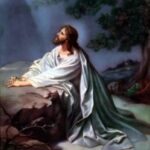


_-_James_Tissot.jpg)

well said
This is enlightening.. So we all have believedand was taught were totally unbiblical.. Thank you
Sveti Duh je Duh OD Boga Jedinoga Oca YHWH
YHWH je SVET pa je i Njegov DUH – SVET – zato se kaže Sveti Duh!
svako biće ima svoj duh
G Yehoshua ima svoj Duh
Čovjek ima svoj duh
DUH je OSOBNOST te osobe – a NE posebna Osoba
Svaka Osoba ima i svoje Osobno IME
Koje je Osobno Ime Svetom Duhu?
NEMA! – Jer – NIJE Osoba!
—————————————————————————
SD je sastavni dio Boga YHWH
1. IVANOVA 5,7
Jer su trojica, što svjedoče u nebu:
"Otac, Riječ i DUH SVETI; i ova su trojica jedno,
—————————————————————————
Sveti Duh je YHWH Duh
JHVH je Osoba koja ima svoju Osobnost
a TO je: Memorija, Intelekt, Osjećaji,….
IZAIJA 11,2
Na njemu će DUH YHWH počivat`,
duh mudrosti i umnosti,
duh savjeta i jakosti,
duh znanja i straha Gospodnjeg.
DUH SVETI je DUH od Boga Oca JHVH
============================================
IZAIJA 63,10
Ali se oni odmetnuše, OŽALOSTIŠE SVETI DUH NJEGOV.
Zato im je postao neprijatelj i sam je na njih zavojštio.
………………………………………………………………………….
IZAIJA 63,11
Spomenuše se tad davnih dana i sluge njegova Mojsija:
"Gdje li je onaj koji izvuče iz vode pastira stada svojega?
Gdje je onaj koji UDAHNU U NJEGA DUH SVOJ SVETI?
………………………………………………………………………………..
IZAIJA 63,14
Poput stoke što silazi u dolinu,
DUH JAHVIN VODIO IH POČIVALIŠTU.
Tako si ti vodio narod svoj i slavno ime sebi stekao.
Aniya bashai or tongues pls explain