
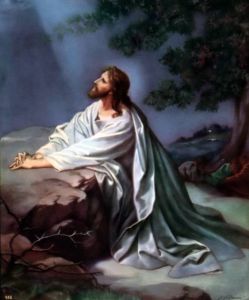
Theme Text: “the Father is greater than I.” (John 14:28 NASB)
This page continues the Scripture-first series on worship and identity. The previous pages focused on God Almighty and Jesus Christ. This page asks a focused question: when Jesus speaks about God, what does he say about his relationship to the Father, and how does that shape worship?
Scripture does not present Jesus as “ordinary.” He is portrayed as the One sent from heaven, acting with heaven’s authority while living in faithful obedience on earth. Jesus says: “For I have come down from heaven, not to do My own will, but the will of Him who sent Me.” (John 6:38 NASB)
That combination matters: Jesus comes from heaven, receives honor from God, and yet consistently points beyond himself to the Father. This is not a denial of Jesus’ greatness. It is a map of how the Son reveals the Father, and how true authority looks in God’s Kingdom rather than in human empires.
Why this matters in an empire-shaped world
In the ancient world, empires trained loyalty not only through armies and taxes, but also through public worship, sacred titles, and “good news” announcements that celebrated rulers as bringers of peace and salvation.1 In Asia Minor, a famous imperial decree even tied the calendar to Augustus Caesar’s birthday and framed his birth as “good tidings” for the world.2
The New Testament’s language about gospel, kingdom, lordship, and peace lands in that kind of world. So when Jesus refuses self-exaltation and keeps directing attention to the Father, Scripture is quietly re-forming the imagination of worship. Authority is not seized. Honor is not self-bestowed. Dominion is not maintained by spectacle or coercion. The Son receives, obeys, and serves.
Jesus speaks of the Father as his God
Across the Gospels, Jesus speaks of God with reverence and dependence, including language that places the Father as “greater.” He says: “the Father is greater than I.” (John 14:28 NASB)
After his resurrection, Jesus speaks to Mary with clarity about shared worship of the Father: “I am ascending to My Father and your Father, and My God and your God.” (John 20:17 NASB)
In other words, Christian faith is not pulled away from the God of Israel into emperor-style worship of a human ruler. It is anchored in the Father whom Jesus himself worships, praises, and obeys.
The Gospel of John records a moment where there’s a strong reaction to Jesus’ words: They said, “First Jesus was breaking the law about the Sabbath day. Now he says that God is his own Father, making himself equal with God!” (John 5:18 NCV) When we read carefully, we notice that John is not quoting Jesus, but is rather describing how some listeners interpreted Jesus’ words. We also should not miss how Jesus immediately responds to that reaction, not by asserting independent equality, but by emphasizing dependence and obedience: “Truly, truly, I say to you, the Son can do nothing of Himself, unless it is something He sees the Father doing; for whatever the Father does, these things the Son also does in like manner.” (John 5:19 NASB)
Jesus receives honor; he does not seize it
Some readers wonder: if God exalted Jesus, does that mean Jesus becomes equal to the Father in the same way imperial rulers claimed divine status? Scripture draws a different picture. Jesus is exalted above creation, but his glory is presented as received from God, not claimed as self-given.
Hebrews uses priestly language to make the point: “And no one takes the honor for himself, but receives it when he is called by God, just as Aaron also was.” (Hebrews 5:4 NASB) It then applies the pattern directly to Christ: “So too Christ did not glorify Himself in becoming a high priest, but it was He who said to Him, ‘You are My Son, Today I have fathered You’” (Hebrews 5:5 NASB)
This is a Kingdom pattern. Human empires celebrate rulers who announce their own greatness. Augustus Caesar, for example, publicly narrated his achievements and described surpassing others in influence, even while insisting his formal powers were no greater than his colleagues.3 A later Roman governor also described a loyalty test that required suspects to offer worship to the emperor’s image and the gods.4 Scripture’s picture of Jesus moves in the opposite direction: the Son’s honor is real, but it is received from the Father and lived out as obedient love.
Jesus wants the world to learn his obedience
Jesus even frames his obedience as something the world must learn. He says: “but so that the world may know that I love the Father, I do exactly as the Father commanded Me.” (John 14:31 NASB)
That is a direct reversal of empire’s classroom. In imperial ideology, subjects learn to praise the ruler’s will. In the Gospel, the world is taught to recognize the Son’s love for the Father and the Father’s rightful place as God.
God remains “all in all”
Paul’s argument in 1 Corinthians addresses the final shape of authority in the age to come. He explains that even when “all things” are placed under Christ, God is not included in what is subjected. Then he concludes: “When all things are subjected to Him, then the Son Himself will also be subjected to the One who subjected all things to Him, so that God may be all in all.” (1 Corinthians 15:27–28 NASB)
This is not weakness in Christ. It is the Bible’s consistent claim that the Father is the ultimate source and goal of worship, and that the Son’s lordship is a faithful, heaven-sent lordship that leads creation back to God.
Footnotes
- For imperial “good news” and ruler-honors as political theology, see the primary-source inscriptional and literary evidence cited below (esp. the Priene decree and Pliny’s correspondence), where worship practices and public proclamations function as loyalty-training. ↩
- “Decree of the Koinon of Asia” often called the Priene Calendar Decree (OGIS 458; I.Priene 105; IK Priene 14), lines 78–84; in Roman Documents from the Greek East: Senatus Consulta and Epistulae to the Age of Augustus, ed. Robert K. Sherk (Baltimore: Johns Hopkins Press, 1969), no. 65D. ↩
- Augustus, Res Gestae Divi Augusti 34.3, describing his auctoritas and potestas (a self-narration of imperial legitimacy), in the Loeb-based English translation preserved online; compare also Suetonius’ discussion of temples and divine honors in Augustus 52.1. ↩
- Pliny the Younger, Epistles 10.96–97, reporting that accused Christians were tested by offering worship “to your statue” and “the statues of the gods,” and by cursing Christ; see the standard ancient correspondence between Pliny and Trajan. ↩



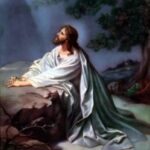


_-_James_Tissot.jpg)

"And now, Father, glorify me in your presence with the glory I had with you before the world began." John 17:5, NIV
"Now, Father, glorify Me together with Yourself, with the glory which I had with You before the world was." John 17:5, NASB
"And now, Father, glorify me in your own presence with the glory that I had with you before the world existed." John 17:5, ESV
"I am the LORD, that is My name; I will not give My glory to another, nor my praise to graven images." Isaiah 42:8, NASB
For My own sake, for My own sake, I will act; For how can My name be profaned? And My glory I will not give to another." Isaiah 48:11, NASB
"For the Son of Man is going to come in the glory of His Father with His angels, and will then repay every man according to his deeds." Matthew 16:27, NASB
"For the Son of Man is going to come in his Father's glory with his angels, and then he will reward each person according to what he has done." Matthew 16:27, NASB
God makes it clear that He will not exalt others to be worshiped with Him. He will not share His glory with others. If Jesus had His glory with God before the world began, and will come in the Father's glory at the end, then it must be because He is God. Notice that when people worship Jesus, He never tells them,"Stop that, I am only a created being like you are," as Paul does. Instead, He accepts it: "Thomas answered and said to Him, 'My Lord and my God!' Jesus said to him, 'Because you have seen Me, have you believed? Blessed are they who did not see, and yet believed.' " John 20:28-29, NASB Some other references are: Matthew 14:33, "And those who were in the boat worshiped Him, saying, 'You are certainly God's Son!' ", Matthew 28:9, "And behold, Jesus met them and greeted them. And they came up and took hold of His feet and worshiped Him.", Luke 24:50-53, "And He led them out as far as Bethany, and He lifted up His hands and blessed them. While He was blessing them, He parted from them and was carried up into heaven. And they, after worshiping Him, returned to Jerusalem with great Joy, and were continually in the temple praising God."
John 9:35-39 is particularly interesting in that it combines the ideas that the Son of Man will come in the Father's glory, that God says He will not give to any one but Himself, with the idea of worshiping, and that Jesus accepted worship, something that should be wrong for anyone but God to do: "Jesus heard that they had put him out, and finding him, He said, 'Do you believe in the Son of Man?' He answered, 'Who is He, Lord, that I may believe in Him?' Jesus said to him, 'You have both seen Him, and He is the one who is talking with you.' And he said, 'Lord, I believe.' And he worshiped Him. And Jesus said, 'For judgment I came into this world, so that those who do not see may see, and that those who see may become blind.' "
All of these references use the same word for worship as is used throughout the Revelation of John to describe what is done to God. And when John falls at the feet of the angel to worship in chapter 22, the angel tells him not to do it, but to worship God, something Jesus never did anytime someone bowed to worship Him. Jesus accepted it as something that ought to be done.
It seems that in conclusion, either Jesus is a false prophet who leads the people to idolatry and ought to be rejected completely (GOD FORBID!) or else He is God.
Christ was not entitled to worship before he proved his obedience . After he proved his obedience on the cross read what happened in Philippians 2:9-11 Therefore God exalted him to the highest place and gave him the name that is above every name, that at the name of Jesus every knee should bow,in heaven and on earth and under the earth, and every tongue acknowledge that Jesus Christ is Lord,to the glory of God the Father.
Hello Thelma, that is not what was said in Philippians 2. Verse 6 explicitly states that He was equal to God the father, and verse 9 establishes what He is to be called, which is revealed in verse 11. Verse 11 is a terrible translation from the Greek. The peshitta has “And every tongue shall confess that Yeshua The Messiah is THE LORD JEHOVAH* to the glory of God his Father. “ Jehovah being an anglicized transliteration of the Tetragrammaton YHWH or Yahweh.
Jesus is YHWH, which declares over and over in the New Testament.
Robert, don't write your own bible, buddy. Read the Holy Bible. Nowhere does it say anything like that. Jesus is the Son of YHWH. That's what it clearly says. Trinity is a 5th century concept. Read your church history, bro.
Philippians 2:5-8 KJV Let this mind be in you, which was also in Christ Jesus: Who, being in the form of God, thought it not robbery to be equal with God: But made himself of no reputation, and took upon him the form of a servant, and was made in the likeness of men: And being found in fashion as a man, he humbled himself, and became obedient unto death, even the death of the cross.
A better translation of verses 6&7 is "who, though he was in the form of God, did not count equality with God a thing to be grasped, but emptied himself, by taking the form of a servant, being born in the likeness of men." This is from the ESV, and other transitions agree (ASV, Darby, Rotherham, WEB, Webster Weymouth, RVIC2000, and others).
This is consistent with Jesus' own words, "my father is greater than I." (John 14:28)
You are wrong
We have already been judged guilty all are sinners and fall short of the glory of God our punishment death , when dead our sins are forgiven , (Rom 6:7) For he that is dead is freed from sin , But after 1000 yrs satan will be released and those who follow him then will be judged, this will be the second death
Filipljanima 2:6 govori da je Isus bio jednak Bogu Ocu i da se toga na zemlji drekao.
The question is, do the passages which say the Almighty God will not share His glory refer to anyone or anything or does it refer to other gods which shall not be put before Him? Why is this the question? It is because Jesus claims that he has given the glory the Father gave him to his disciples. Not only is God the Father's glory being shared with Jesus, but it is being shared with all those who will be His children.
Joh 17:22-24 "The glory which You have given Me I have given to them, that they may be one, just as We are one; (23) I in them and You in Me, that they may be perfected in unity, so that the world may know that You sent Me, and loved them, even as You have loved Me. (24) "Father, I desire that they also, whom You have given Me, be with Me where I am, so that they may see My glory which You have given Me, for You loved Me before the foundation of the world.
Philippians 2 is a fulfillment of what was said in Isaiah 53 where the LORD said He would exalt His righteous one, his servant, if he would render himself as a guilt offering.
Isa 53:10-12 But the LORD was pleased To crush Him, putting Him to grief; If He would render Himself as a guilt offering, He will see His offspring, He will prolong His days, And the good pleasure of the LORD will prosper in His hand. (11) As a result of the anguish of His soul, He will see it and be satisfied; By His knowledge the Righteous One, My Servant, will justify the many, As He will bear their iniquities. (12) Therefore, I will allot Him a portion with the great, And He will divide the booty with the strong; Because He poured out Himself to death, And was numbered with the transgressors; Yet He Himself bore the sin of many, And interceded for the transgressors.
Likewise the Father anointed him above his companions because he loved righteousness and hated lawlessness.
Heb 1:9 "YOU HAVE LOVED RIGHTEOUSNESS AND HATED LAWLESSNESS; THEREFORE GOD, YOUR GOD, HAS ANOINTED YOU WITH THE OIL OF GLADNESS ABOVE YOUR COMPANIONS."
Thanks for this article. Great verse selection. Jesus could not be God because God is eternal and cannot die but someone had to die to pay the wages of sin and qualify as our kinsman redeemer under the law. Jesus is our brother that had a full measure of the spirit.
Romans 8, ESV
29 For those whom he (A)foreknew he also (B)predestined (C)to be conformed to the image of his Son, in order that he might be (D)the firstborn among many brothers.
How is Jesus not God? I mean like you're quoting Biblical scripture so I'm assuming you're a Christian (correct me if I'm wrong) but if you don't believe Jesus is God then that's closer to Islam. Muslims don't believe Jesus is God and they think that if they do they're going to hell. Jesus is God in human form, the physical "manifestation" – if you will – of the Word, God's Son, who is God. (John 1:1, KJV)
Yes, God cannot die since He is eternal and had no beginning and has no end, BUT He is omnipotent so it wouldn't be impossible for Him to come to earth as a human and let His physical flesh be killed while still being alive. I think you're trying to fit God in a box, maybe accidentally. Technically what you're saying (or at least how I'm understanding it) is that because God is eternal and can't die, it would be completely impossible for Him to send His Son (who's literally God too) to die and provide the way for redemption and salvation.
Y'all are confusing me here. The Trinity is a real thing, y'know.
Matthew 28:19 – "Go therefore and make disciples of all nations, baptizing them in the name of the FATHER, SON, and HOLY SPIRIT."
2 Corinthians 13:14 – "The grace of the Lord Jesus Christ, and the love of God, and the fellowship of the Holy Spirit, be with you all."
Also, in case y'all missed this…
Philippians 2:6 – "Though he was God, he did not think of equality with God as something to cling to. Instead, he gave up his divine privileges; he took the humble position of a slave and was born as a human being."
Sooo it looks to me that Jesus is God. As far as I can explain without making it too complicated, there is God the Father, Christ the Son, and the Holy Spirit. God is the sovereign Creator of this world, He is the one Judge of this world, and He loves each and every one of us living on this earth. Jesus (Christ) is God in the flesh, so He is God. The Holy Spirit is who comes to us when we accept the salvation that Jesus provides to us and serves as (what I would call right now) a "spiritual conscience." He convicts us and comforts us. It's really as simple as that, it's a mutualistic relationship.
This is a clear and thoughtful explanation, thank you for sharing! The verses you referenced beautifully highlight the unity and distinct roles within the Trinity. It’s amazing how God’s love is revealed through the Father as Creator, Jesus as Redeemer, and the Holy Spirit as our guide and comforter. The idea of the Trinity may seem complex, but as you said, it’s ultimately about a deep relationship with a God who is with us in every way.