
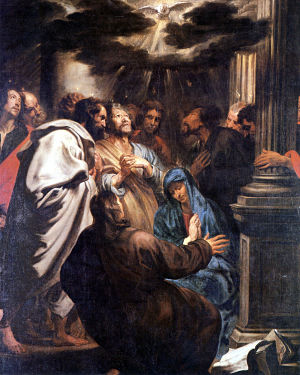
Theme Text– ‘Where there are prophecies, they will cease; where there are tongues, they will be stilled.’ 1Corinthians 13:8.
In many parts of the world today, Pentecostal and Charismatic churches are among the most vibrant expressions of Christian worship. They are often marked by heartfelt prayer, expectation of God’s nearness, and a strong emphasis on the gifts of the Holy Spirit, especially speaking in tongues. For many people, this kind of worship can bring real comfort: it offers a sense of hope, belonging, and spiritual warmth when life feels heavy.
Because this is also a history story, it helps to ask two questions side by side: (1) how did Pentecostalism emerge in the modern era, and (2) how does the New Testament describe spiritual gifts, including why Paul could say that some gifts would one day “cease”?1
How Pentecostal churches emerged
Pentecostalism is relatively modern as a global movement. Its roots are often traced to revival currents linked to the late nineteenth-century Holiness tradition, where believers emphasized intense prayer, spiritual renewal, and the expectation of God’s active presence.2
The first widely discussed “tongues” reports associated with early Pentecostal identity are commonly connected with a Bible school setting in Topeka, Kansas, at the beginning of the twentieth century, under the influence of Charles Parham and his circle.3 A few years later, the Azusa Street meetings in Los Angeles (led by William J. Seymour) became a major catalyst, drawing attention across racial and social lines and shaping what would become many Pentecostal denominations worldwide.4
Today, Pentecostal and Charismatic Christianity is not a single church but a wide family of churches and renewal movements, spread across continents, languages, and cultures, with many independent and denominational expressions.5
What the New Testament means by “gifts of the Spirit”
The New Testament describes several kinds of gifts given by God’s Spirit, not as medals for the spiritually elite, but as grace given for service. Paul lists a range of gifts like wisdom, knowledge, faith, healings, prophecy, tongues, and interpretation:
‘To one there is given through the Spirit a message of wisdom, to another a message of knowledge by means of the same Spirit, to another faith by the same Spirit, to another gifts of healing by that one Spirit, to another miraculous powers, to another prophecy, to another distinguishing between spirits, to another speaking in different kinds of tongues, and to still another the interpretation of tongues’ (1Cor 12:8-10).
Notice the shape of Paul’s argument: these gifts were given “freely,” and they were meant to build up others, not to create spiritual competition. That is exactly why, in the very same letter, Paul pushes the church beyond fascination with experiences and back toward the “most excellent way” of love.
Tongues at Pentecost: languages, understanding, and mission
The book of Acts describes an event at Pentecost that sounds very different from what many people picture today. The emphasis is not on unintelligible speech, but on intelligible witness across language barriers:
‘When the day of Pentecost came, they were all together in one place… All of them were filled with the Holy Spirit and began to speak in other tongues as the Spirit enabled them… When they heard this sound, a crowd came together in bewilderment, because each one heard their own language being spoken… “Aren’t all these who are speaking Galileans? Then how is it that each of us hears them in our native language?” (Acts 2:1-8)
In other words, the first “tongues” moment highlighted understanding. It served the gospel’s outward movement, so that people from “every nation under heaven” could actually hear and comprehend the message.
Why God gave these gifts in the first generations
In the New Testament, gifts often function in two overlapping ways.
1) As public confirmation of the gospel
The New Testament repeatedly connects signs to witness. Even Jesus’ critics could recognize the logic of signs:
- He came to Jesus at night and said, “Rabbi, we know that you are a teacher who has come from God. For no one could perform the signs you are doing if God were not with him.” John 3:2.
- The disciples went out and preached everywhere, and the Lord worked with them and confirmed his word by the signs that accompanied it – Mark 16:20. Paul and Barnabas spent considerable time there, speaking boldly for the Lord, who confirmed the message of his grace by enabling them to perform signs and wonders. Acts 14:3.
Acts also records dramatic healings among unbelievers. Paul exhibited extraordinary power among unbelievers and healed them.
- ‘God did extraordinary miracles through Paul, so that even handkerchiefs and aprons that had touched him were taken to the sick, and their illnesses were cured.’ Acts 19:11-12.
2) As edification for young communities
Early believers lived in a period when the Jesus movement was still taking shape across many cities, languages, and cultures. Letters circulated, teachings were remembered and shared, and communities depended on apostolic instruction as they learned what it meant to follow Christ. Later, Christian communities would recognize and collect a set of writings as the New Testament, but that recognition and consolidation was a process that unfolded over time, not an instant event.6
That context helps explain why Paul could say:
‘When you come together, each of you has a hymn, or a word of instruction, a revelation, a tongue or an interpretation. Everything must be done so that the church may be built up’ – 1Cor 14:26.
The apostolic connection and the question of continuity
Several New Testament passages connect spiritual gifts with apostolic presence and prayer. Paul wrote to the Roman believers:
- ‘I pray that now at last by God’s will the way may be opened for me to come to you. I long to see you so that I may impart to you some spiritual gift to make you strong’ – Romans 1:10-11.
Acts narrates stories of apostles going in-person, laying hands on new believers, and delivering the gift of the Spirit:
- ‘The circumcised believers who had come with Peter were astonished that the gift of the Holy Spirit had been poured out even on Gentiles. For they heard them speaking in tongues and praising God’ – Acts 10:44-46.
- Acts 8 describes Philip, the Evangelist’s ministry in Samaria and highlights the apostolic arrival of Peter and John for the laying on of their hands to bestow the gifts of the Spirit to the community.
Because of passages like these, believers have long debated how to describe the relationship between the apostolic foundation of the church and the later life of the church. Some conclude that certain sign-gifts were especially tied to the church’s foundational period, while others argue that the Spirit’s gifts remain available in every generation. The New Testament itself presses believers in every age to avoid using gifts as status markers and to measure spiritual life by love.
What early Christian writers report after the first generations
When later Christian writers looked back on the earliest period of the church, their reports were not all identical. That variety matters for a fair historical picture.
For example, Irenaeus (late second century) speaks as though prophetic gifts and languages were known in some churches of his time.7 By contrast, John Chrysostom (fourth century), commenting on 1 Corinthians, describes certain gifts as difficult to “see” in his own day, precisely because they were no longer occurring in the same way.8 Augustine (late fourth to early fifth century) famously describes tongues at the beginning as a sign “adapted to the time,” and says “it passed away,” while also continuing to affirm that God still acts in the world in many ways.9
So, historically, many believers concluded that some gifts had become rarer over time, while others insisted that the Spirit’s gifts can reappear wherever God chooses. Modern Pentecostalism largely understands itself as a renewal of New Testament vitality, not as a rejection of Scripture.1
Why Pentecostal worship can feel deeply comforting
Even where believers disagree about how to interpret certain spiritual experiences, it is still possible to acknowledge what many people are seeking, and what many people receive, in Pentecostal and Charismatic spaces.
For some, the comfort is immediate and personal: grief finds tears, anxiety finds prayer, isolation finds community, shame meets dignity, and despair meets songs of hope. For others, the comfort is communal: a church becomes a family, especially for those carrying economic pressure, work-related stress, or social marginalization. Historians and sociologists have often noted that Pentecostal spirituality has spread widely among ordinary people precisely because it speaks to everyday needs and offers a strong sense of belonging and expectancy.101112
That comfort can sometimes be temporary, in the sense that a powerful service does not automatically solve the deeper burdens a person carries into the next week. But temporary comfort is not nothing. When people are in pain, a moment of hope can be a lifeline. The New Testament’s invitation is to let every moment of comfort move toward something lasting: faith, hope, and love, with love as the greatest. In Paul’s world, that meant faith anchored in Jesus Christ rather than in Caesars or the kings of the world, hope set on the Kingdom of God arriving on the Earth rather than on the promises of oppressive human rule, and love expressed as devotion to God and active care for neighbor.
A careful New Testament test: intelligibility, order, and love
In 1 Corinthians 14, Paul gives practical guidance about tongues and worship order. His concern is not to embarrass anyone, but to protect the church from turning worship into confusion or spiritual performance. He says that without interpretation, outsiders may not understand what is happening, and the gathering may fail to strengthen people. He also insists that worship should not become disorderly:
‘If I speak in tongues, what good will I be to you, unless I bring you some revelation or knowledge? Unless you speak intelligible words, how will anyone know what you are saying? You will just be speaking into the air… Tongues, then, are a sign, not for believers but for unbelievers; So if the whole church comes together and everyone speaks in tongues, and unbelievers come in, will they not say that you are out of your mind? … The spirits of prophets are subject to the control of prophets. For God is not a God of disorder but of peace.” 1Cor 14:6-33.
This is a wise anchor for every generation. Experiences should never replace character. Signs should never replace love. And no church should measure spiritual life by volume, spectacle, or pressure to perform.
Where the story lands
Pentecostalism’s modern rise is one of the most significant religious developments of the last century. The New Testament’s teaching on gifts reminds believers that God can empower his people in remarkable ways, but also that gifts were never meant to become a hierarchy inside the church. Paul’s “most excellent way” keeps pulling the attention back to what lasts: faith, hope, and love, with love as the greatest.
Those three “greater gifts” are not vague feelings. In the New Testament, faith is trust and allegiance directed toward Jesus Christ rather than toward Caesars or the kings of the world; hope is the longing and confidence that the Kingdom of God will arrive on the Earth and set things right, in contrast with the short-lived “peace” offered by oppressive empires of men; love is the lived, practical devotion that binds believers to God and trains them to seek the good of neighbor. This is the steady center Paul keeps returning to when communities become fascinated with experiences and begin to measure spirituality by display.
If a church practice, a spiritual experience, or a worship culture genuinely increases love for God and neighbor, strengthens humility, and brings intelligible encouragement to others, it is moving in the direction Paul wanted. If it creates rivalry, confusion, or pressure to perform, it may be time to return to Paul’s simple center and rebuild from there.
Footnotes
- Allan Anderson, An Introduction to Pentecostalism: Global Charismatic Christianity, 2nd ed. (Cambridge: Cambridge University Press, 2014). Cambridge Core. ↩ ↩
- Vinson Synan, The Holiness-Pentecostal Tradition: Charismatic Movements in the Twentieth Century (Grand Rapids: Eerdmans, rev. ed. 1997). Eerdmans. ↩
- David G. Roebuck, “PARHAM, CHARLES FOX (1873–1929),” Encyclopedia of the Great Plains (University of Nebraska–Lincoln), overview of the Topeka origins and early tongues reports. UNL (Plains Humanities). ↩
- Encyclopaedia Britannica, “Azusa Street Revival” (Los Angeles, 1906), and “William J. Seymour,” for historical overview of Azusa Street’s influence. Azusa Street Revival; William J. Seymour. ↩
- Pew Research Center, “Global Christianity: A Report on the Size and Distribution of the World’s Christian Population” (2011), for global categories and scale of Pentecostal/Charismatic Christianity. Executive Summary (PDF: full report). ↩
- Bruce M. Metzger, The Canon of the New Testament: Its Origin, Development, and Significance (Oxford: Oxford University Press, 1987); see also Encyclopaedia Britannica, “Muratorian Fragment,” for a late-second-century canon list witness (Britannica), and Athanasius’s Festal Letter 39 (367) for the first surviving list naming the 27-book New Testament (CCEL). OUP. ↩
- Irenaeus, Against Heresies (Book V, 6.1), for his references to prophetic gifts and “all kinds of languages” in the church of his day. CCEL (ANF). ↩
- John Chrysostom, Homilies on First Corinthians (Homily 29 on 1 Corinthians 12), where he says the passage is obscure because the realities it describes have ceased and “now no longer take place.” CCEL (NPNF). ↩
- Augustine, Homilies on the First Epistle of John (Homily 6.10), describing tongues as signs “adapted to the time” that “passed away,” in English translation. CCEL (NPNF). ↩
- Grant Wacker, Heaven Below: Early Pentecostals and American Culture (Cambridge, MA: Harvard University Press, 2001), for historical description of Pentecostal practices and everyday religious life. Harvard University Press. ↩
- Harvey Cox, Fire from Heaven: The Rise of Pentecostal Spirituality and the Reshaping of Religion in the Twenty-first Century (Reading, MA: Addison-Wesley, 1995), for a sympathetic account of Pentecostal spirituality’s global appeal. Da Capo Press. ↩
- David Martin, Tongues of Fire: The Explosion of Protestantism in Latin America (Oxford: Basil Blackwell, 1990; later editions with Wiley-Blackwell), for sociological analysis of Pentecostal growth and its significance among the poor in Latin America. Wiley. ↩





A very, very well said post. Thank you. I have long since likewise commented and posted to many addresses on Usenet answer's to this same subject in much the same way. In fact, it's interesting to go to youtube and see a video posted there of someone " speaking in tongues."
After so doing, by testing out what is said in the interpretation given by the same speaker comparing such against Holy Scripture, it's ever so obvious these preach a ' different ' Jesus… one who died for everyone of the " whole world " but failed to save anyone for whom He died in their place. Well, not unless a person of intelligence " accept Jesus as his personal Savior " thus making salvation apply to the smart, only. Those of brain damage and disease, the mentally incompetent and the insane, can not possibly become saved for lack of the wit and wisdom as has by the Co-Redeeming and Gnostic Christian.
Furthermore, God redeemed 4 of His prophets while they were yet fetuses thus concluding for all time that election to salvation is un-conditional. The Gnostic Co-Redeeming of Christendom have placed anywhere from 4 to 12 conditions to fill become any one can become saved. These prophets are Jacob; David; Jeremiah and John the baptist… all redeemed while in a fetal state of being.
So then, we see 2 Thes.2:1-12 and 2 Tim.4:3,4 coming to pass in our day. Satan must oust Christ from all Christian churches for him to take Christ's vacant seat of authority there and preaching Jesus Christ is a failure of a Savior by his ambassador's is Satan's way of getting that empty seat… through the " strong delusion " God is sending on all the pretender's to the " one faith," Eph.4:5.
But how do we not know that certain people wont be given these spiritual gifts before Christs final return? Wont there be people living in the season knowing that something great and miraculous is near? If it is Gods will that he bestows these gifts on those called to His purpose then couldnt the gifts appear to select chosen people in the latter days to inform and warn? God didnt quit working wonders for humankind because the last book of the Bible concluded did He? I am intersted in some insight into these questions! Wisdom and knowledge are still attributes given by the Most High to this day arent they?
Interesting comments. I was raised in Pentecostal churches and attend one weekly now, where I play piano for them, though I don’t believe as they do. I had a profound thought recently concerning Pentecostalism’s preoccupation with “signs” and the miraculous. Remember this verse?
“And they went forth, and preached every where, the Lord working with them, and confirming the word with signs following” (Mark 16:10)
Hopefully most of us can agree that miraculous gifts were given to confirm the truth of the words that were being spoken, as they were with Moses, with Elijah the prophet as he turned Israel back to the Lord, and with Jesus as he came doing his father’s will and warning the people that if they did not believe his words that they should believe him for the miracles sake (John 14:11). The miraculous power of God is given to confirm the authority of the one working the miracles as speaking for God.
I think that it is safe to say that the greatest sign of the last days is contained in the word “deception”. A quick glance through Matthew chapter 24 will show this. And ironically enough, it is Pentecostalism‘s preoccupation with the miraculous that sets them up for great deception. Now, with the new apostolic reformation, and with the charismatic’s recent alliance with Rome displayed by Ken Copeland, we can see that the miraculous is dragging them into open biblical error. Rather than “evil men waxing worse and worse“ we are told that there is going to be a great revival. We are told that it is the Christians mission to rebuild the world, (NAR- 7 mountains theology) to usher in godly government and prepare of the world for the return of Jesus Christ. But isn’t this precisely Rome’s ideology?
My point? If God were to confirm the words that these biblically illiterate people were speaking, he would be confirming error and leading the world to deception. God would never do this. He cannot lie. I personally believe that God can still work the miraculous. But I also believe that overwhelmingly these lien profits are not performing miracles. They are actually performing lying signs and wonders. And I thank God for not attending their errors with the miraculous –
Sorry, I cannot repair the typos-
Tematski redak:
“Proročanstva? Ona će biti ukinuta. Jezici? Završit će. ” (1. Kor. 13:8
=====================================
za KOJE je to vrijeme?
NE ZA SADA nego – na kraju VREMENA
kad SIN od Boga Jedinoga Oca JHVH – G Jehoshua
opet dođe
Oni vjeruju u pogansko mučenje u paklu
===================================
OGNJENO JEZERO VJEČNE MUKE
—————————————————–
ONDJE ĆE SE MUČITI
DANJU I NOĆU U VIJEKE VJEKOVA.
…………………………………………………………………………………………
OTKRIVENJE 19,20
I ZVIJER bi uhvaćena, a s njom i LAŽNI PROROK koji je u njenoj nazočnosti činio znamenja i njima zavodio one što su primili žig Zvijeri i klanjali se njezinu kipu.
Živi su oboje BAČENI U OGNJENO JEZERO što gori sumporom.
—————————————————————————————
OGNJENO JEZERO VJEČNE MUKE
—————————————————–
ONDJE ĆE SE MUČITI
DANJU I NOĆU U VIJEKE VJEKOVA.
…………………………………………………………………………………………
OTKRIVENJE 20,10
A njihov zavodnik, ÐAVAO, BAČEN BI U JEZERO OGNJENO i sumporno,
gdje se nalaze i ZVIJER I LAŽNI PROROK:
ONDJE ĆE SE MUČITI DANJU I NOĆU U VIJEKE VJEKOVA.
================================================
OGNJENO JEZERO VJEČNE MUKE
—————————————————–
ONDJE ĆE SE MUČITI
DANJU I NOĆU U VIJEKE VJEKOVA.
…………………………………………………………………………………………
OTKRIVENJE 20,15
TKO SE GOD NE NAĐE ZAPISAN U KNJIZI ŽIVOTA,
bio je BAČEN U JEZERO OGNJENO.
=================================
svatko onaj koji neće biti uskrsnut na prvi uskrs za Raj
bit će uskrsnut na drugi uskrs za sud i vječnu kaznu
vječnu muku
OGNJENO JEZERO VJEČNE MUKE
—————————————————–
ONDJE ĆE SE MUČITI
DANJU I NOĆU U VIJEKE VJEKOVA.
ne treba na glas pričati te jezike
osim ako nema tumača
,,,,,,,,,,,,,,,,,,,,,,,,,,,,,,,,,,,,,,,,,,,,,,,,,,,,,
1. KORINĆANIMA 14,28
ako pak ne bi bilo tumača, neka šuti u Crkvi,
neka govori sam sebi i Bogu.
——————————–
1. KORINĆANIMA 14,14
Jer ako se drugim jezikom molim,
moj se duh moli, ali um je moj neplodan.
————————————————
Govoriti u jezicima NIJE Biblijom zabranjeno
,,,,,,,,,,,,,,,,,,,,,,,,,,,,,,,,,,,,,,,,,,,,,,,,,,,,,,,,,,,,,,,,,,,,,,,
1. KORINĆANIMA 14,5
A HTIO BIH DA VI SVI GOVORITE DRUGIM JEZICIMA, ali većma da prorokujete. Jer veći je tko prorokuje, negoli tko govori drugim jezicima, osim ako protumači Crkvi radi
1. KORINĆANIMA 14,39
Zato, braćo moja, težite prorokovati i
NE PRIJEČITE DA SE GOVORI DRUGIM JEZICIMA!
,,,,,,,,,,,,,,,,,,,,,,,,,,,,,,,,,,,,,,,,,,
ali uz zadovoljenje uvjeta – ne na glas,
ili na glas ako ima tumač.
—————————————————–
1. KORINĆANIMA 14,27
Ako tko govori drugim jezikom –
dvojica, najviše trojica, i to jedan za drugim –
jedan neka tumači;
———————————————-
Zašto je dozvoljeno i ne treba braniti?
_______________________________
1. KORINĆANIMA 14,28
ako pak ne bi bilo tumača, neka šuti u Crkvi,
NEKA GOVORI SAM SEBI I BOGU.
1. KORINĆANIMA 14,2
Jer tko govori drugim jezikom, NE GOVORI LJUDIMA NEGO BOGU:
NITKO GA NE RAZUMIJE JER DUHOM GOVORI STVARI TAJANSTVENE.
1. KORINĆANIMA 14,4
TKO GOVORI DRUGIM JEZIKOM, SAM SEBE IZGRAĐUJE,
a tko prorokuje, Crkvu izgrađuje.
1. KORINĆANIMA 13,1
Kad bih sve JEZIKE ljudske govorio i ANĐEOSKE,
a ljubavi ne bih imao, bio bih mjed što ječi ili cimbal što zveči.
——————————–
MARKO 16,17
A ovi će znakovi pratiti one koji uzvjeruju:
u ime će moje izganjati zloduhe, NOVIM ĆE JEZICIMA ZBORITI,
DJELA APOSTOLSKA 19,6
pa kad Pavao položi na njih ruke, dođe Duh Sveti na njih
te stanu govoriti drugim jezicima i prorokovati.
DJELA APOSTOLSKA 2,4
Svi se napuniše Duha Svetoga i počeše govoriti drugim jezicima,
kako im već Duh davaše zboriti.
Super