
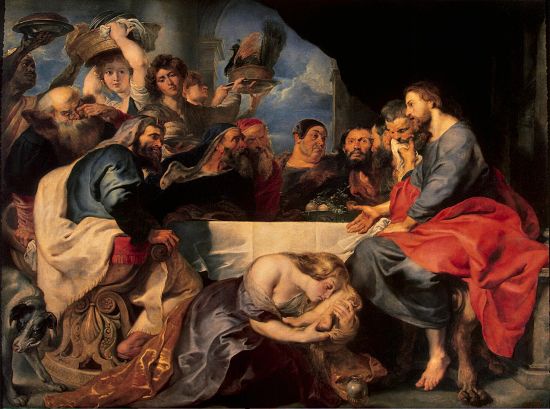
Theme Text: “On hearing this, Jesus said to them, ‘It is not the healthy who need a doctor, but the sick. I have not come to call the righteous, but sinners.’” (Mark 2:17)
When holiness becomes a stumbling block
Across many modern churches, at times people often feel that faith has been reduced to a posture of moral superiority: the righteous over here, the sinners over there, and an anxious need to monitor who belongs and who does not. That posture can look like spiritual seriousness, but it usually functions more like a boundary marker, a way to sort people into clean and unclean, safe and unsafe, respectable and suspicious.
History helps us name what is happening. In the first century, Judea and Galilee lived under heavy political pressure, layered taxation, and local systems of control that pushed ordinary people into vulnerability and shame.1 In those settings, communities naturally reach for visible markers of “goodness” to stabilize identity and manage fear. The problem is that these markers can quietly become a tool of Man’s empire: they train people to police one another, not because God needs surveillance, but because anxious systems of power do.
Jesus at the wrong table
The Gospels show that Jesus repeatedly stepped across the very lines that respectable religion used to protect itself. When religious observers questioned why he ate with “tax collectors and sinners,” the issue was not only personal morality. Meals in the ancient world signaled social boundaries, honor, and belonging, so table fellowship was a public statement about who counted.3
That is why Jesus’ response in Mark 2:17 matters. He does not applaud the performance of righteousness as a badge of honor. He describes his mission as healing and restoration: the sick need a physician. The point is not to romanticize sin, but to refuse the habit of treating “respectability” as a ladder to God.
What the Pharisees were guarding
This is also where a history article needs to be fair. The Pharisees were not a cartoon villain group. Josephus portrays them as a major “school” within Jewish life, influential among the people, respected for discipline, and deeply concerned with faithful practice under pressure.2 Their emphasis on purity and careful observance can be read, in part, as an attempt to safeguard identity and covenant life in a world that constantly threatened it.
But the same safeguards can harden into social sorting, especially when purity talk moves from temple and worship into everyday ranking and exclusion. Second Temple debates about purity show how contested these boundaries were, and how easily “keeping things clean” could become an argument over who is acceptable and who is not.5
Why Man’s empire loves moral policing
Man’s empire does not always rule through soldiers. Very often, it rules through training: teaching communities to prove their worth, fear contamination, and display virtue as a social weapon. In first-century Israel, tax collection itself was intertwined with local power and public resentment, which helps explain why “tax collectors” became a morally loaded category in the social imagination.4
When churches inherit that same training, the result is predictable: the community becomes skilled at identifying offenders, but slow to heal the wounded; quick to label outsiders, but hesitant to practice mercy. Jesus interrupts that pattern by relocating holiness in the direction of restoration, not ranking.
The original faith and restoration
The original faith does not begin with “we are better than them.” It begins with truth: all of Adam’s family is in need of healing, and God’s aim is restoration. That is why the call is not to become moral police, but to become a community where repentance is real, humility is normal, and mercy is practiced.
Read Next: Prosperity Theology
Footnotes
- On taxation structures, local elite oversight, and the burden of indirect taxes and tax-farmers in Early Roman Palestine, see Anthony Keddie, “Taxation (Chapter 3),” in Class and Power in Roman Palestine (Cambridge University Press, 2019), Cambridge Core. Source ↩
- For Josephus’s description of Pharisaic influence and public esteem (and his summary of their outlook), see “Josephus, Antiquities XVIII, 11–17: More About the Pharisees and Sadducees,” Center for Online Judaic Studies. Source ↩
- On meals and table fellowship as social boundary markers in the Jesus tradition and early Christian communities, see Jerome H. Neyrey, “Meals, Food and Table Fellowship,” University of Notre Dame. Source ↩
- For historical discussion of why “tax collectors” were socially charged figures and why the category frequently appears linked with “sinners,” see Wm. O. Walker Jr., “Jesus and the Tax Collectors,” Journal of Biblical Literature 97, no. 2 (1978): 221–238, JSTOR. Source ↩
- On contested purity systems and Second Temple debates around impurity and boundary-making (including Pharisaic halakhah and disputes with other groups), see Yair Furstenberg, “Controlling Impurity: The Natures of Impurity in Second Temple Debates,” Dinei Israel 30 (2013): 163–196 (PDF). Source ↩





Might also consider I Corinthians 5:9-13…
9 I have written you in my letter not to associate with sexually immoral people–10 not at all meaning the people of this world who are immoral, or the greedy and swindlers, or idolaters. In that case you would have to leave this world. 11 But now I am writing you that you must not associate with anyone who calls himself a brother but is sexually immoral or greedy, an idolater or a slanderer, a drunkard or a swindler. With such a man do not even eat.
12 What business is it of mine to judge those outside the church? Are you not to judge those inside?
13 God will judge those outside. "Expel the wicked man from among you."
In other words, Christians have no authority to judge the "outsiders" (non-Christians) as God is their judge. It seems to me when "Christians" do this – especially through politics and the law system – that they are arrogantly usurping God's authority. Also, Christians are to only judge immoral fellow Christians and disassociate with those practicing unrepentant immoral acts – which, please note, include many immoral behaviors that are not sexual (ex. greed, slander, etc.). It seems that only sexual sins matter to many of those judging of the outsiders.
Good analysis, Kurt.
Good passage Kurt. We judge the insiders not the outsiders but that is problematical today because Christian community seems to have been lost a long time ago. The emphasis was suppose to be on evangelism to change more hearts not regulate human behavior through government but Christianity doesn’t seem to produce enough Gospel delivering disciples these. Most people no longer seem to know to guard their hearts and eyes and ear gates from corruption and there is a lot of that on television and radio and social media and public places.
Berean Study Bible
2 John 1:10
If anyone comes to you but does not bring this teaching, do not receive him into your home or even greet him.
The tv and media let anyone in your house night or day and most no longer know to shut them off.
Watch the Kinsey Syndrome on youtube the corruption is everywhere these days.
Luke 11:34 "Your eye is a lamp that provides light for your body. When your eye is good, your whole body is filled with light. But when it is bad, your body is filled with darkness. 35 Make sure that the light you think you have is not actually darkness. 36 If you are filled with light, with no dark corners, then your whole life will be radiant, as though a floodlight were filling you with light."
Philippians 4
8 Finally, brethren, whatsoever things are true, whatsoever things are honest, whatsoever things are just, whatsoever things are pure, whatsoever things are lovely, whatsoever things are of good report; if there be any virtue, and if there be any praise, think on these things.