
Theme Text
‘Son of man, set forth an allegory and tell it to the Israelites as a parable’ (Ezekiel 17:2 NIV)
His disciples asked him what this parable meant. He said, ‘This is the meaning of the parable’ (Luke 8:9-11 NIV)
1) We studied the actual meaning of the various words translated as hell in the Bible – Sheol/Hades, Gehenna and Tartaroo. But some take the Parable of the Rich Man and Lazarus literally and preach torment. Is that correct?
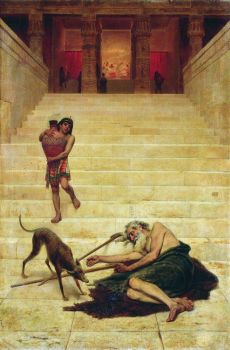
‘There was a certain rich man, which was clothed in purple and fine linen, and fared sumptuously every day: and there was a certain beggar named Lazarus, laid at his gate, full of sores, desiring to be fed with the crumbs which fell from the rich man’s table: moreover the dogs came and licked his sores. And it came to pass, that the beggar died, and was carried by the angels into Abraham’s bosom: the rich man also died, and was buried; And in hell he lift up his eyes, in torments, seeth Abraham afar off, and Lazarus in his bosom’ (Luke 16:19-31).
We know parables are stories with symbolic messages. In a parable the thing said is never the thing meant (See Luke 8:9-11 NIV).
Was the Parable of the Yeast a bread-making recipe? In the Parable of the Sower, was Jesus talking farming techniques? Not really. We know what yeast and the different seeds symbolized. And in the Parable of the Weeds, he said wheat signifies God’s children, and weeds symbolize children of the devil.
We know he used a whole set of symbols in other parables too.
2) If taken literally, the Rich Man and Lazarus parable seems to imply some absurdities. What are they?
- Lazarus is blessed not because of faithfulness, but simply because he was sick and poor. Say what?
- So if this is taken literally, we can assume that only the poor and sick will be saved!
- If this hell is literal, mustn’t Abraham’s bosom also be a literal place where millions of poor will reside?
3) Jesus told this parable as a symbolic lesson to the Jewish Pharisees. What really was his message?
- The Rich Man symbolized the Jewish nation – Israel had inherited God’s promise to Abraham (Genesis 22) through Isaac and Jacob (father of the 12 Israeli tribes).
- Israelites had ‘fared sumptuously’- Paul said they enjoyed advantage much every way: chiefly, because to them were committed the oracles of God [Law and Prophecy]’ Romans 3:2.
- The sacrifices of the Law made them holy, signified by the Rich Man’s fine linen (Rev 19:8)
- They were God’s royal nation shown by the Rich Man’s purple (Mark 15:17-18).
- The beggar Lazarus represented Gentiles.
- At that time, the Gentiles were outsiders – not under divine favor, not under the Law.
- Sick with sin, they hungered for righteousness. They lay at the gate of the Rich Man.
- In those days, many Israelites, as they had the privilege to worship the true God, considered the ungodly idol-worshipping Gentiles as heathen/dogs, and wouldn’t have anything to do with them (Galatians 2:15, John 4:9).
How did Gentiles eat of the crumbs of God’s favor that fell from Israel’s table of riches?
- The conversation between Jesus and the Syro-Phoenician woman gives us a key: ‘First let the children [Israelites] eat all they want, for it is not right to take the children’s bread and toss it to the dogs [Gentiles].
- ‘Lord,’ she replied, ‘even the dogs under the table eat the children’s crumbs.’ (Mark 7:27-28 NIV). Jesus healed her daughter, thus giving the desired crumb of favor.
4) What do the events that happen after the death of the Rich man and Lazarus signify?
- Israel underwent a change in era after some of their leaders at that time rejected and handed over God’s Messiah to be killed by the Romans. As the Apostles wrote, the kingdom of God that had been theirs exclusively till then, was taken and given to a nation who will produce its fruits i.e. the ‘Church’ – believers in Christ (including both Jews and Gentiles), ‘a holy nation, a peculiar people’ (1Peter 2:9; Matthew 21:43).
Thus, the Rich Man died to all his special privileges.
- The beggar Lazarus also died – i.e. the Gentiles too experienced a great change & died to their poverty.
Angels i.e. messengers/Apostles carried them to what is symbolized by Abraham’s bosom – heirship to the promises made to Abraham. Apostle Paul declared to the Gentiles, ‘If you belong to Christ, then you are Abraham’s seed and heirs according to the [Abrahamic] promise’ (Galatians 3:29 NIV).
- ‘In hell [hades/grave/pit] he [the Rich Man] lifted up his eyes, being in torments, and seeth Abraham afar off’ –
This depicted the torments that the Israelites underwent. It showed them pleading from a lowered state (pit) to the formerly low Gentiles (Lazarus), starting with the ruthless Roman Empire.
And for almost two-thousand years Israelites have been unfairly persecuted by Gentile nations.
A veil (2 Cor. 3:13-16) of predisposition still exists, but it will be taken away. Paul assures us that ‘Israel has experienced a hardening in part until the full number of the Gentiles has come in [to make up the body of Christ – the ‘Church’], then…the deliverer will come from Zion [the heavenly Church]; he will turn godlessness away from Jacob [earthly Israel] (Romans 11:25-26 NIV).
Yes, this is a parable of the (Old & New Testament) ages indeed. Scriptures show its fulfilment.
Read Next: A History of…What the Hell!






Thank you for explaining this parable. What does the dogs mentioned in this parable mean??
Dogs refers gentiles
LUKA 16,19 – 31 – LAZAR – BOGATAŠ
===============================
Da li je jasno da je OVO prispodoba?
————————————————–
Luka 15,3
Nato im Isus kaza ovu prispodobu:
==========================
LUKA 16,19 – 31 – LAZAR – BOGATAŠ
PRISPODOBA – NE REALNO u svemu!
======================================
LUKA 16,19
"Bijaše neki BOGATAŠ.
Odijevao se u grimiz i tanani lan i danomice se sjajno gostio.
,,,,,,,,,,,,,,,,,,,,,,,,,,,,,,,,,,,,,,,,,,,,,,,,,,,,,,,,
Bogataša – Bog Otac Jedini Jahve pušta da uživa kratko na Zemlji.
———————————————————————————-
LUKA 16,20
A neki SIROMAH, IMENOM LAZAR,
ležao je sav u čirevima pred njegovim vratima
,,,,,,,,,,,,,,,,,,,,,,,,,,,,,,,,,,,,,,,,,,,,,,,,,,,,,,,,
Lazara – Bog Otac Jedini Jahve pušta da se muči kratko na Zemlji.
———————————————————————————-
———————————————————————————-
LUKA 16,22
"Kad umrije SIROMAH, odnesoše ga anđeli
U KRILO ABRAHAMOVO.
Umrije i BOGATAŠ te bude pokopan.
,,,,,,,,,,,,,,,,,,,,,,,,,,,,,,,,,,,,,,,,,,,,,,,,,,,,,,,,
TO je prispodoba –
po smrti – se do uskrsa ide u stanje spavanja
i čeka se ili prvi ili drugi uskrs.
Tako da nitko nije odnesen kod Abrahama,
jer Biblija kaže da je Abraham umro – a ne da je uskrsnut.
Još ne postoji RAJ – jer će Raj biti na Novoj Zemlji.
Još nema Ognjenog Jezera – jer nije bio Sud.
LUKA 16,23
Tada U TEŠKIM MUKAMA U PAKLU,
podiže svoje oči te izdaleka
ugleda ABRAHAMA I U KRILU MU LAZARA
,,,,,,,,,,,,,,,,,,,,,,,,,,,,,,,,,,,,,,,,,,,,,,,,,,,,,,,,
Konačno mjesto za zle je mjesto vječne muke – Vječno Ognjeno Jezero.
TO je prispodoba –
jer nema komunikacije niti vidljivosti između ta dva mjesta.
2. Solunjanima 1,9
Oni će biti kažnjeni vječnom propašću,
DALEKO OD LICA GOSPODNJEGA i od slave njegova veličanstva,
———————————————————————————-
LUKA 16,24
pa zavapi: `Oče Abrahame, smiluj mi se i
pošalji Lazara da umoči vršak svoga prsta u vodu i rashladi mi jezik
JER SE STRAŠNO MUČIM U OVOM PLAMENU.`
,,,,,,,,,,,,,,,,,,,,,,,,,,,,,,,,,,,,,,,,,,,,,,,,,,,,,,,,
U vječnom Ognjenom Jezeru u kojem je vječni plamen
je vječna strašna muka kao kazna zlima.
———————————————————————————-
LUKA 16,25
Reče nato Abraham: `Sinko! Sjeti se da si za života
PRIMIO DOBRA SVOJA,
a tako i LAZAR ZLA.
SADA SE ON OVDJE TJEŠI, A TI SE MUČIŠ.
,,,,,,,,,,,,,,,,,,,,,,,,,,,,,,,,,,,,,,,,,,,,,,,,,,,,,,,,
To je za buduće vrijeme kako će biti Vječno –
za dobre RAJ
za zle – MUKA vječna u Ognjenom Jezeru.
Jer sada još nema ni Raja ni OJ.
———————————————————————————-
LUKA 16,26
K tome IZMEĐU NAS I VAS ZJAPI PROVALIJA GOLEMA
TE KOJI BI I HTJELI PRIJEĆI ODAVDE K VAMA,
NE MOGU,
A NI ODATLE K NAMA PRIJELAZA NEMA.`
,,,,,,,,,,,,,,,,,,,,,,,,,,,,,,,,,,,,,,,,,,,,,,,,,,,,,,,,
TO je jedna od poruke ove PRISPODOBE!
Kad se jednom dođe u RAJ ili u OJ
nema više mogućnosti promjene mjesta.
———————————————————————————-
———————————————————————————-
LUKA 16,28
Imam petero braće pa neka im posvjedoči
da i oni ne dođu U OVO MJESTO MUKA.`
,,,,,,,,,,,,,,,,,,,,,,,,,,,,,,,,,,,,,,,,,,,,,,,,,,,,,,,,
U vječnom OJ vječne muke je VJEČNA MUKA
kao kazna za ZLE.
LUKA 16,29
Kaže Abraham: `Imaju Mojsija i Proroke! Njih neka poslušaju!`
,,,,,,,,,,,,,,,,,,,,,,,,,,,,,,,,,,,,,,,,,,,,,,,,,,,,,,,,
Vjeruj ONOME što je napisano jasno i glasno na više mjesta!
Vječna Muka U Vječnom Ognjenom Jezeru Vječne Muke.
O TOME govori Bog Otac Jahve,
O TOME govori G Isus
O TOME govore apostoli
u mnogo stihova.
———————————————————————————-
LUKA 16,30
A on će: `O ne, oče Abrahame!
Nego dođe li tko od mrtvih k njima, obratit će se.`
,,,,,,,,,,,,,,,,,,,,,,,,,,,,,,,,,,,,,,,,,,,,,,,,,,,,,,,,
Bogataš zna da je moguće buđenje duhova mrtvih ljudi.
———————————————————————————-
LUKA 16,31
Reče mu: `Ako ne slušaju Mojsija i Proroka,
neće povjerovati sve da i od mrtvih tko ustane.`
,,,,,,,,,,,,,,,,,,,,,,,,,,,,,,,,,,,,,,,,,,,,,,,,,,,,,,,,
Potvrda – duhovi mrtvih se mogu probuditi,
ali TO je za smrtnu kaznu.
———————————————————————————-
For those prosperity preachers who use the rich man and Lazarus to scare people of hellfire, they seem to miss a very important point if taken literally. As you pointed out, Lazarus' only merit was that he was sick and poor – no other behavior is mentioned for him to be blessed. The only behavior addressed of the rich man was that he was rich and lived well (had material wealth). So if we take it literally, simply having wealth and living well – regardless of other behaviors good or bad – puts you in hellfire.
Praise God
Discovering the correct literary form of this account is critical. It certainly is not historical narration. Nor can it be a parable. The intense suffering of sinners in the afterlife as illustrated in Luke 16 is exactly what the Pharisees believed and taught (and threatened) at the time of Christ. Certainly then, it was needless for Christ to teach frightening truths about the suffering of those in hell in parabolic form to the literal hellfire preachers of the day. The Rich Man and Lazarus then does not readily fit the mold of parable.
The Rich man and Lazarus as well as the preceding account of the dishonest steward were told to discredit the Pharisees in the eyes of the common people. They were covetous, they would not help the poor. They would say LAZARUS (God is your help) to them. The Lazarus account is a parody of Pharisaic teaching. They would say to the oppressed who approached them:
"We would really like to help you. But it is God who created the gulf between us. God is punishing you for your sins and the sins of your Fathers. If we traverse the gulf and even lift a finger to help you my son, we will be contraveening His judgment and you will suffer far worse in Hades in the afterlife. LAZARUS, God is your help my friend. So Jesus turned the Pharisees own hellfire teaching against them undermining their self-righteousness by turning the tables on them in the afterlife much to the amusement of the common people in the audience.