
Theme Text
Savage wolves will come in among you. Even from your own number men will arise and distort the truth in order to draw away disciples after them. (Acts 20:29-30 NIV)
1) We studied the actual meaning of the various words translated as hell in the Bible – Sheol/Hades, Gehenna and Tartaroo. So how did hell fire and eternal torment creep into Christianity?
The first question to ask would be – What did ancient pagan religions believe in terms of death and afterlife?
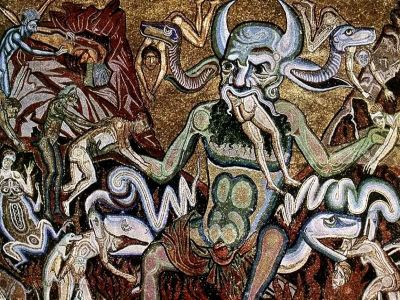
- Pagan ideas of a fiery netherworld date back as far as Egypt’s Nimrod. Way before Christ, in the 6th century BC, Zoroaster taught the Persians of a Lord of Lies who lived in the dark reaches under the earth recording the deeds of men as debits and credits. After death, souls went to be judged, and if found evil, would be doomed to torment.
- By the 3rd century AD, many biblical doctrines were corrupted as the church started allowing such pagan theories to blend with the original teachings of the disciples.
2) Why did the church establishment allow these pagan beliefs to creep into Christianity?
- To easily win pagan converts, the church adopted these theories and began relating Zoroastic meanings to symbolic verses. Apostle Paul predicted such distortions (apostasy) would occur (Acts 20:29-30 NIV).
- By the 4th century AD, this morphed into church dogma and got enshrined in a creed.
Catholic Encyclopedia: ‘The church professes her faith in the Athanasian Creed [4th century AD]: ‘They that have done good shall go into life everlasting, and they that have done evil into everlasting fire…the church expressly teaches the eternity of the pains of hell as a truth of faith which no one can deny or call in question without manifest heresy’.
3) Why has this non-biblical hell theory been maintained throughout so many years?
The fear of burning in hell has terrified Christian churchgoers for more than 1600 years. For centuries through the Dark Ages, in the name of religion, every means of oppression and torture has been used to frighten the common man and make him a ‘believer’.
What’s more effective?Fear of a cessation of existence at death? Or fear of everlasting torture?
Professor Harold O.J. Brown [Trinity Evangelical Divinity School] writes:
‘Annihilationism [non-existence as a penalty for sin] takes some of the punch out of Gospel preaching.
To tell the unrepentant that the worst fate that could befall them is extinction makes continuing in sin seem less risky’.
4) What did the English word hell originally mean?
Originally, the word hell simply meant to conceal, to hide, to cover. In old English literature, we see:
the helling of potatoes – hiding potatoes in pits
the helling of a house – covering/thatching a house
So it was an apt word to label the grave where the dead are hidden. But as the church started mixing pagan theories, it started being associated with Zoroaster’s underworld of torment, and ended up being re-defined.







why they believe the lies
To answer your question (not implying it was directed at me) : see Revelation 12:9
That about sums it up.
தேவன் நமக்கு தவறான வேதாகமத்தை கொடுத்து விட்டாற்போல. தயவு செய்து தவறாக பதிவிடாதீர்கள். அக்கினி கடலில் பங்கடைவீர்கள்.