




Category Do we know What we worship?

The Confession

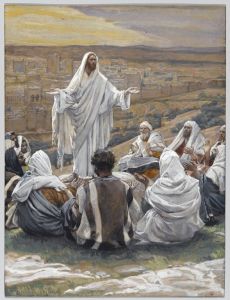
Jesus did not teach worship as a puzzle. He taught prayer with a clear address: “Our Father…” (Matthew 6:9). And the apostles keep that same clarity: “Yet for us there is but one God, the Father… and there is but one Lord, Jesus Christ” (1 Corinthians 8:6). Scripture also says, “God so loved the world that he gave his one and only Son…” (John 3:16). So Christians praise “the God of our Lord Jesus Christ, the glorious Father” (Ephesians 1:17) and confess “Jesus Christ is Lord, to the glory of God the Father” (Philippians 2:11).
But why does returning to this simple pattern matter so much?

Creeds under Empire

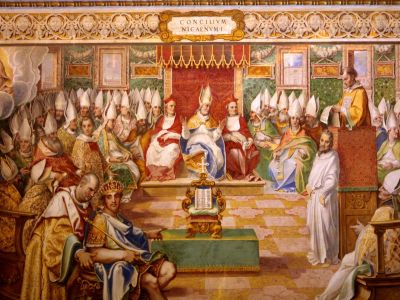
The earliest believers confessed Jesus as God’s Son inside a world where “lord” and “savior” were imperial titles, and that confession carried real social cost. Under pressure, the church fought distortions on more than one front: some denied that Jesus truly came “in the flesh,” and John’s letters answered by insisting on the concrete, touchable reality of Jesus’ life, suffering, and love. But as Christianity moved from persecution to imperial protection, the conditions of debate changed. Questions once worked out through Scripture and pastoral persuasion increasingly traveled through councils, votes, and, at times, penalties. Let us trace that shift, from contested confession to creeds under empire, and ask what Rome gained when it learned to speak Christian, and what the church risked losing when unity became a public project.

The True Son

Rome called its rulers “sons of god.” In that world, Jesus says, “Anyone who has seen me has seen the Father” (John 14:9 NIV) and “I and the Father are one” (John 10:30 NIV). He even speaks of a life that reaches back before Abraham (John 8:58 NIV). What do these claims mean, and why does Acts so often describe baptism “in the name of Jesus Christ” (Acts 2:38 NIV) alongside Matthew 28:19?

John 1:1 – The Word & God

John 1:1 opens with words that echo Genesis: “In the beginning was the Word, and the Word was with God, and the Word was God” (John 1:1 NIV). In a world where empires trained people to call rulers “son of god” and to treat power as sacred, John redirects our eyes to an earlier beginning, before coins, slogans, and thrones. What does this opening line reveal about Jesus? Let us listen carefully to John’s own language, so our worship vocabulary is formed by Scripture rather than by empire.

The Holy Spirit

The Bible presents the Holy Spirit not as a side-topic for theologians, but as God’s own holy power at work, strengthening ordinary believers to witness to the Kingdom in a world shaped by empires. How does Scripture define “spirit” (breath, life, influence)? Why is God’s Spirit called holy? And what kind of power did Jesus promise: power that rules by taking, or power that heals and gathers? We will follow the text from Samuel’s warning about kings to Jesus’ promise at Pentecost.

The Origin Question

Where does Jesus come from, and what does that mean for how we honor him? The Bible speaks of God as “from everlasting to everlasting,” and it also portrays Jesus as no ordinary man: the one placed at the head of God’s work, who then comes down from heaven into the world. But how do passages like “beginning,” “firstborn,” “sent,” and “Father” and “Son” fit together as one coherent story?

The Father and the Son

Jesus is not presented as an “ordinary” teacher who built authority by self-exaltation. He is the One sent from heaven, who receives honor from the Father and yet keeps directing worship back to God. In a world where empires trained loyalty through sacred titles and public “good news,” the Gospels show a different kind of lordship: the Son who obeys, serves, and teaches the world what true allegiance looks like. If even Jesus says, “the Father is greater than I,” what does that reveal about worship and the Kingdom of God?

Who is Jesus Christ?

‘…for us there is but one God, the Father… and one Lord, Jesus Christ…’ (1Corinthians 8:5-6 NASB)
In a world of “many gods” and “many lords,” Paul draws a clear confession: the Father is the one God, and Jesus Christ is the one Lord. This “Lord” is not the covenant name printed as LORD (all capitals) for Yahweh; it is kurios, a title of rightful authority. Yet the New Testament presses beyond titles to public meaning: Jesus is God’s anointed king who proclaims the Kingdom of God over against the empires of man. If Caesar’s rule trained loyalty through propaganda and power, what kind of Master is Jesus, and what kind of kingdom does he bring?

Who is God Almighty?

In the ancient world, empires did not only rule through armies and taxes. They also ruled through the public imagination, attaching sacred titles to rulers and powers and training people’s loyalty through worship. In that world, Scripture speaks with steady clarity about whom worship belongs to, while also acknowledging that the word “god” is sometimes used more broadly for mighty beings and authorities. Paul names the reality directly: “indeed there are many gods and many lords” (1Corinthians 8:5 NASB). Let us follow the Bible’s own vocabulary, especially elohim in the Old Testament and theos in the New Testament, to see where “god language” is applied beyond the Creator and ask: how does Scripture guide worship back to the singular God Almighty?

Whom to worship?

The Athanasian Creed is a classic confession from church history that speaks of the Father, the Son, and the Holy Spirit, and calls the “Unity in Trinity” to be worshipped. Its wording can feel dense, even when it is familiar. Let us begin one step earlier, with Jesus’ own words: “Ye worship ye know not what: we know what we worship” (John 4:22 KJV). In the first-century world, worship was never just a private feeling; it could also be a public language of loyalty shaped by empire. So we will study the Scriptures carefully, to learn whom the Bible calls us to worship, and how true worship resists every empire’s claim to ultimate honor.

Scriptures, unless otherwise indicated, are taken from THE HOLY BIBLE, NEW INTERNATIONAL VERSION®, NIV® Copyright © 1973, 1978, 1984, 2011 by Biblica, Inc.® Used by permission. All rights reserved worldwide. Scriptures indicated NASB are taken from the NEW AMERICAN STANDARD BIBLE®, Copyright © 1960,1962,1963,1968,1971,1972,1973,1975,1977,1995 by The Lockman Foundation. Used by permission. Scripture quotations marked (NLT) are taken from the Holy Bible, New Living Translation, copyright © 1996, 2004, 2007 by Tyndale House Foundation. Used by permission of Tyndale House Publishers, Inc., Carol Stream, Illinois 60188. All rights reserved. Scripture quotations marked HCSB are taken from the Holman Christian Standard Bible®, Copyright © 1999, 2000, 2002, 2003, 2009 by Holman Bible Publishers. Used by permission. Holman Christian Standard Bible®, Holman CSB®, and HCSB® are federally registered trademarks of Holman Bible Publishers. Wherever indicated NCV, scripture taken from the New Century Version®. Copyright © 2005 by Thomas Nelson, Inc. Used by permission. All rights reserved.

Image Credits - Praying Girl: christian-graphics.net; Hands praying by the Bible: Photo by kevin carden(creationswap.com/cardensdesign) in creationswap.com; Stars and quasar: By ESO/L. Calçada (http://www.eso.org/public/images/eso1247a/) [CC-BY-3.0], via Wikimedia Commons; Jesus' Sermon on the Mount: By Carl Heinrich Bloch [Public domain], via Wikimedia Commons; Jesus Praying in the Garden: By Waiting For The Word (www.flickr.com/photos/waitingfortheword/) [CC-BY-2.0], via flickr; Holy Spirit at the Pentecost: By Jean II Restout [Public domain], via Wikimedia Commons; Christ taking leave of the Apostles: By Duccio [Public domain], via Wikimedia Commons; Council of Nicea: By Fresco in Capella Sistina, Vatican [Public domain], via Wikimedia Commons; The Lord's Prayer: James Tissot [Public domain], via Wikimedia Commons; Transfiguration of Christ: Giovanni Gerolamo Savoldo [Public domain], via Wikimedia Commons