










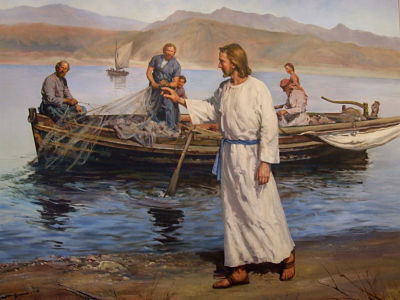



The Origin Question

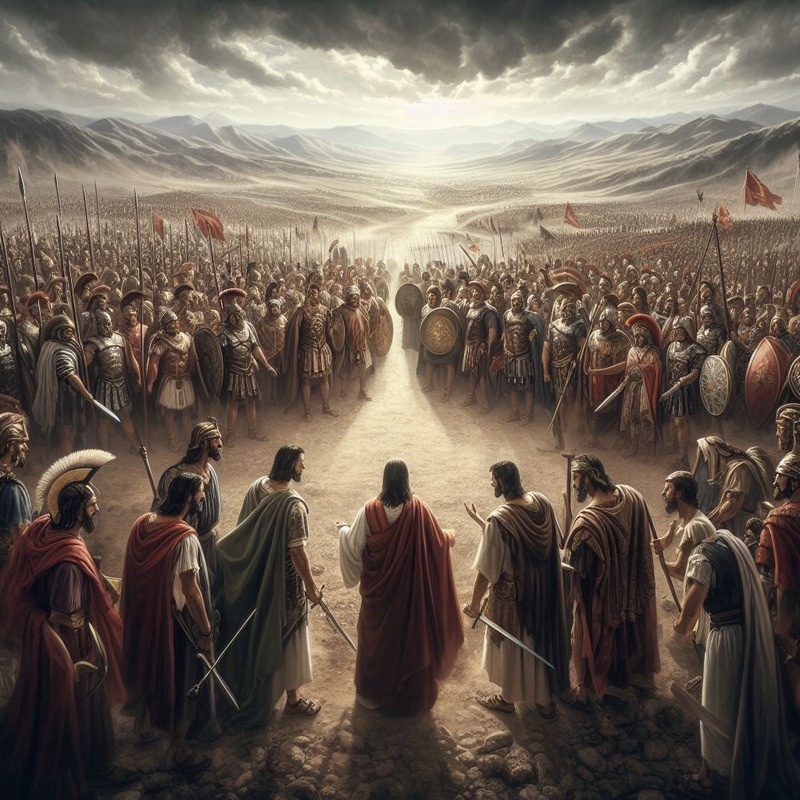
Where does Jesus come from, and what does that mean for how we honor him? The Bible speaks of God as “from everlasting to everlasting,” and it also portrays Jesus as no ordinary man: the one placed at the head of God’s work, who then comes down from heaven into the world. But how do passages like “beginning,” “firstborn,” “sent,” and “Father” and “Son” fit together as one coherent story?
The Father and the Son
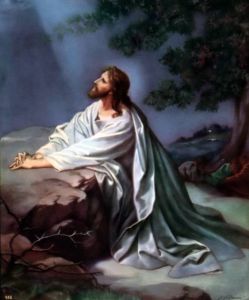
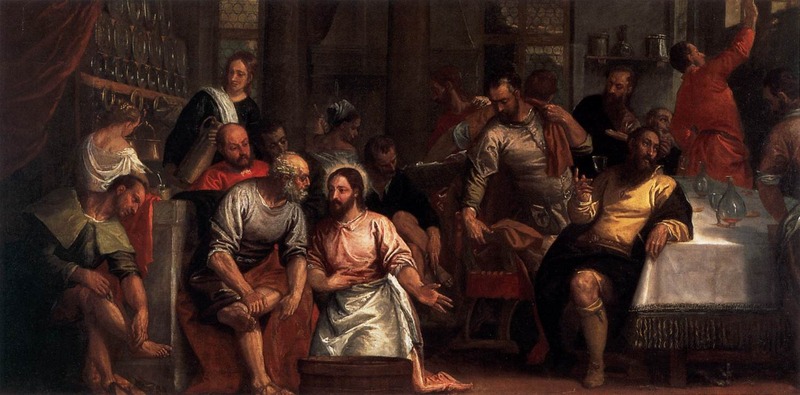
Jesus is not presented as an “ordinary” teacher who built authority by self-exaltation. He is the One sent from heaven, who receives honor from the Father and yet keeps directing worship back to God. In a world where empires trained loyalty through sacred titles and public “good news,” the Gospels show a different kind of lordship: the Son who obeys, serves, and teaches the world what true allegiance looks like. If even Jesus says, “the Father is greater than I,” what does that reveal about worship and the Kingdom of God?
Who is Jesus Christ?
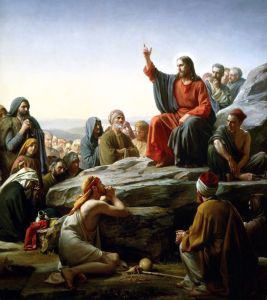
‘…for us there is but one God, the Father… and one Lord, Jesus Christ…’ (1Corinthians 8:5-6 NASB)
In a world of “many gods” and “many lords,” Paul draws a clear confession: the Father is the one God, and Jesus Christ is the one Lord. This “Lord” is not the covenant name printed as LORD (all capitals) for Yahweh; it is kurios, a title of rightful authority. Yet the New Testament presses beyond titles to public meaning: Jesus is God’s anointed king who proclaims the Kingdom of God over against the empires of man. If Caesar’s rule trained loyalty through propaganda and power, what kind of Master is Jesus, and what kind of kingdom does he bring?
Who is God Almighty?

In the ancient world, empires did not only rule through armies and taxes. They also ruled through the public imagination, attaching sacred titles to rulers and powers and training people’s loyalty through worship. In that world, Scripture speaks with steady clarity about whom worship belongs to, while also acknowledging that the word “god” is sometimes used more broadly for mighty beings and authorities. Paul names the reality directly: “indeed there are many gods and many lords” (1Corinthians 8:5 NASB). Let us follow the Bible’s own vocabulary, especially elohim in the Old Testament and theos in the New Testament, to see where “god language” is applied beyond the Creator and ask: how does Scripture guide worship back to the singular God Almighty?
Whom to worship?

The Athanasian Creed is a classic confession from church history that speaks of the Father, the Son, and the Holy Spirit, and calls the “Unity in Trinity” to be worshipped. Its wording can feel dense, even when it is familiar. Let us begin one step earlier, with Jesus’ own words: “Ye worship ye know not what: we know what we worship” (John 4:22 KJV). In the first-century world, worship was never just a private feeling; it could also be a public language of loyalty shaped by empire. So we will study the Scriptures carefully, to learn whom the Bible calls us to worship, and how true worship resists every empire’s claim to ultimate honor.
Who’s the God of History?

“I declared the former things long ago and they went forth from My mouth, and I proclaimed them. Suddenly I acted, and they came to pass… Therefore I declared them to you long ago, Before they took place I proclaimed them to you” (Isaiah 48:3,5). Here Israel’s God claims to tell history in advance, challenging rival gods and empires. Where does this God make such declarations, how were they shaped in history, and which seem to match the rise and fall of real cities and kingdoms?
Who’s the God of Science?

Science is a disciplined way of listening to how the universe works through observation, measurement, and testing. Ancient sacred texts also speak about the natural world: sometimes in ways that simply echo the fears and superstitions of their empires, and sometimes in ways that resonate strikingly with what science later discovers. When a text’s descriptions of creation repeatedly line up with the broad contours of the modern scientific picture, without claiming to be a science manual, it can strengthen the case that we are hearing not just human imagination, but the voice of a Creator whose Kingdom stands over all powers.
Copyright Notice
This website and its content are copyright of ChristianityOriginal.com – © ChristianityOriginal.com 2013. All…
Disclaimer
The information contained in this website is for general information purposes only.…
Privacy Policy
This privacy policy sets out how ChristianityOriginal.com uses and protects any information…
Terms and Conditions
Welcome to ChristianityOriginal.com. By browsing this website you are agreeing to comply…
Who’s the God of All of Us?

How do we talk about God in a world where our neighbors may follow many religions or none at all? The Bible’s God claims to be the God of all humanity, not just by power, but by a character marked by justice, mercy, and truth. How might we begin to test that claim – exploring how the Bible’s vision relates both to what we learn from science and to the broad sweep of human history?
The Real ‘Hells’

Four words have been translated as hell in the Bible – Sheol, Hades, Gehenna and Tartaroo. The first one is Hebrew (Old Testament) and the rest are Greek (New Testament). Do all of these words mean the same? (At least that’s what many of the English bible translations imply). Or do they mean different things?
When we refer to Hebrew and Greek dictionaries and the Bible’s own descriptions of these words, we find deeper insight into their meanings.
And we also get clarity on many seemingly contradictory verses in the English bibles.
A Hell of a Story

Won’t it be alright to use hell fire (even if it’s false) as a threat to frighten people into submitting to God? Not really. A disappointed God says, ‘Their fear toward me is taught by the precepts of men’ (Isa 29:13). He rather desires a willingly obedient heart driven by love for Him and goodness – not by fear. And the idea of torment is abhorrent to God. God forbade torture in His Law. Would a God who commands us to love our enemies, wish to burn them forever?
Fate of Adam & the Bad Guys

Where are the dead at present? Is there any hope for them? There is a hell – SHEOL/HADES to which ALL our souls were condemned when Adam fell. That hell is the GRAVE. But there is hope! God promised to RANSOM us from the power of the grave [SHEOL] (Hosea 13:14). He sent Jesus (John 3:16) to die in place of Adam. Jesus paid Adam’s RANSOM and paved the way for the resurrection of all of Adam (Rom 5:12,18). Jesus is the RANSOM for ALL (1Tim 2:6). As in Adam ALL die, so in Christ ALL will be made alive (1Cor 15:22).
A History of What the Hell!
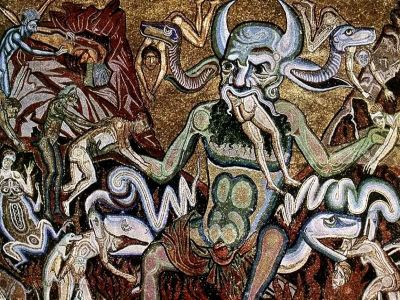
Pagan ideas of a fiery netherworld date back as far as Egypt’s Nimrod. Way before Christ, in the 6th century BC, Zoroaster taught the Persians of a Lord of Lies who lived in the dark reaches under the earth recording the deeds of men as debits and credits. After death, souls went to be judged, and if found evil, would be doomed to torment. To easily win pagan converts, the church adopted these theories and began relating Zoroastic meanings to symbolic verses. Apostle Paul predicted such distortions (apostasy) would occur (Acts 20:29-30).
A Parable for the Ages
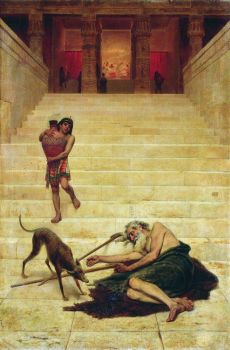
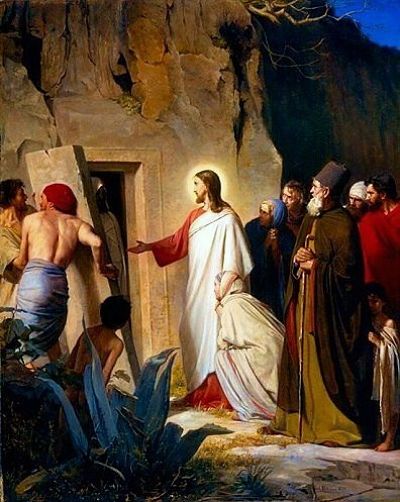
Some take the Parable of the Rich Man and Lazarus literally to preach torment. But if taken literally, the parable seems to imply absurdities — Lazarus is blessed not because of faith, but just because he was sick and poor. So will only the poor/sick will be saved? And if this hell is literal, mustn’t Abraham’s bosom also be a real place where millions of poor will reside? Jesus told this story as a symbolic lesson to the Pharisees. What really was his message?
Weeping & Gnashing of Teeth

Didn’t Jesus talk about a place where there would be weeping and gnashing of teeth? This expression is found in seven places – Matthew 8:12; 13:42, 50; 22:13; 24:51; 25:30, Luke 13:28. This is heavily symbolic as Jesus uses it only in a parable or a symbolic statement all seven times. Its meaning differs based on the context. But its general sense in all the places is – a finite period of punishment/trial for a group of people who have erred in God’s sight.
Tartaroo – Bad Angel Lockdown

The Greek word tartaroo occurs only once in the Bible and has been translated as hell. “God spared not the angels that sinned, but cast [them] down to hell, and delivered them into chains of darkness, to be reserved unto judgment.” (2 Peter 2:4). – Here, the entire phrase ‘cast down to hell’ is translated from the one Greek word tartaroo. Some misuse this verse to support a netherworld where fallen angels and sinners are held forever. But there are obvious problems with that view.
Gehenna – Eternal Lake of Fire

The Greek word Gehenna is translated as hell 12 times. If Gehenna denotes hell, we can actually book a flight and go to hell! Yes, it’s a real place in Israel. That’s why translations like YLT render it as Gehenna instead of hell. When Jesus says ‘the fire in Gehenna’, it’s like a New Yorker saying ‘the water in Brooklyn’! The Valley of Hinnom, named Gehenna in Greek, lies just outside the city of Jerusalem. During Jesus’ time, it was the city’s garbage burner. Its fires were kept continually burning (everlasting fire).
Sheol/Hades – Translators Gone Rogue

Translators of the King James Bible rendered the Hebrew word SHEOL (65 occurrences) in English as grave (31 times), pit (3 times) and hell (31 times). They translated SHEOL as grave/pit when it was to be the resting place for good people, but rendered the same word as hell when referring to a bad person. Job actually prays to go to SHEOL (Job 14:12). And any Hebrew expert or even Wikipedia would confirm that SHEOL means grave/pit. The Bible actually describes what kind of a place SHEOL is!
‘Burn in Hell’ Theory

Preachers warn from their pulpits – ‘If you don’t accept Christ as your Savior, you are condemned for your sins! When you die, you would be sent alive to hell to be tortured forever in raging fire!’ Eternal torment is the ominous warning. Many claim that a fire-proof Satan rules this underworld and that his demons torture the people cast down there. On what basis is this preached? What is the soul’s punishment for sin according to the Bible? Does the Bible preach eternal torment?
The Times of Restitution of All Things

God is the Savior of ALL men, SPECIALLY of those that believe (1Tim 4:10). This scripture promises God’s redemption for ALL humans and also a SPECIAL salvation for the believers. How does that work? And Jesus says, ‘To the one who does my will to the end, I will give authority over the nations’ (Rev 2:26). What are these nations and why are they going to be ruled by the followers of Christ?
The Ransoming of Humankind

If every human falls asleep in death due to Adamic sin, how can the Bible (1Cor 15:22) promise ‘in Christ all will be made alive’? God declares in the Bible – ‘I will RANSOM them [mankind] from the power of the grave; I will redeem them from death (Hosea 13:14). 1Timothy 2:3-6 describes how Jesus Christ fulfilled God’s promise. In that explanation, what do these phrases mean – ‘ransom for all’, ‘to be testified in due time’ and ‘to be saved and to come unto the truth’?
The Death Problem

Why do people die? Was it supposed to be this way? Were human beings destined to live and die as a natural order of things that atheists claim to be the case? Animals die, don’t they? What happens when a man dies? What did Jesus Christ say about death? Does science agree with the bible on the state of death? What is a soul according to the Bible? Can the soul die? What about the spirit? Won’t that live on after death?
Bible Study – Best Practices

Bible study becomes clearer when Scripture is read with care, context, and patience. This guide gathers practical principles for reading well: paying attention to literary and historical setting, seeking harmony across Scripture, weighing doctrine carefully, comparing translations, and listening closely to key Hebrew and Greek terms. It also offers guidance for reading parables, symbolic language, and epistles in ways that respect their form and purpose. What might change if familiar passages were read in their fuller context?
Who are we?

We are fellow explorers seeking wisdom in the Scriptures that have stood the test of time. Here, faith makes room for thought, honest questions, and careful study of God’s Word. We are inspired by the Bible’s vision of a just and compassionate world, where people care for one another and all of creation. At the heart of that vision is the good news proclaimed by Jesus: healing, restoration, and the coming Kingdom of God on earth. Join us on this journey as we seek to rediscover that original good news and share the hope of the Kingdom of God with all humanity.




.jpg)


