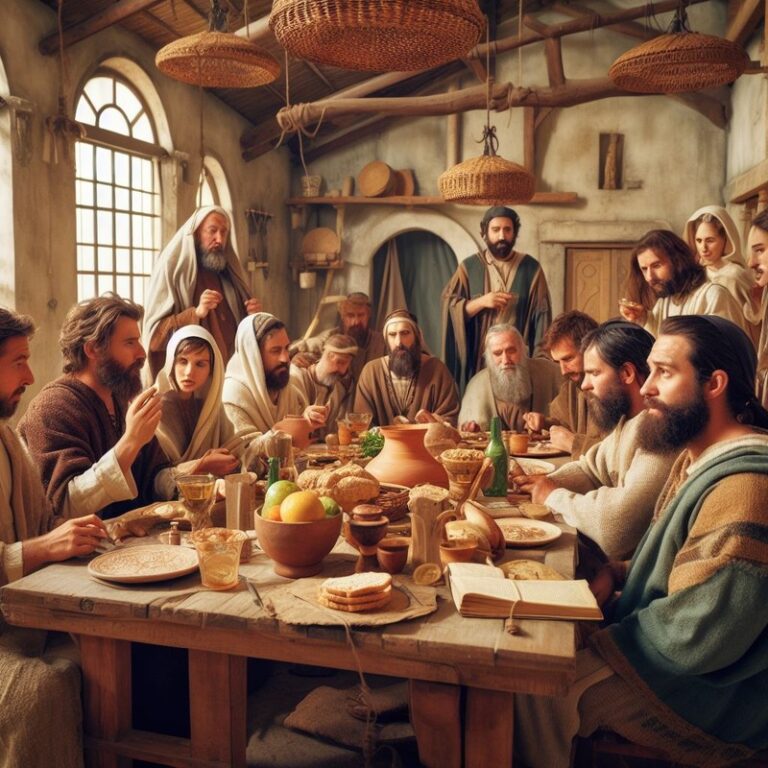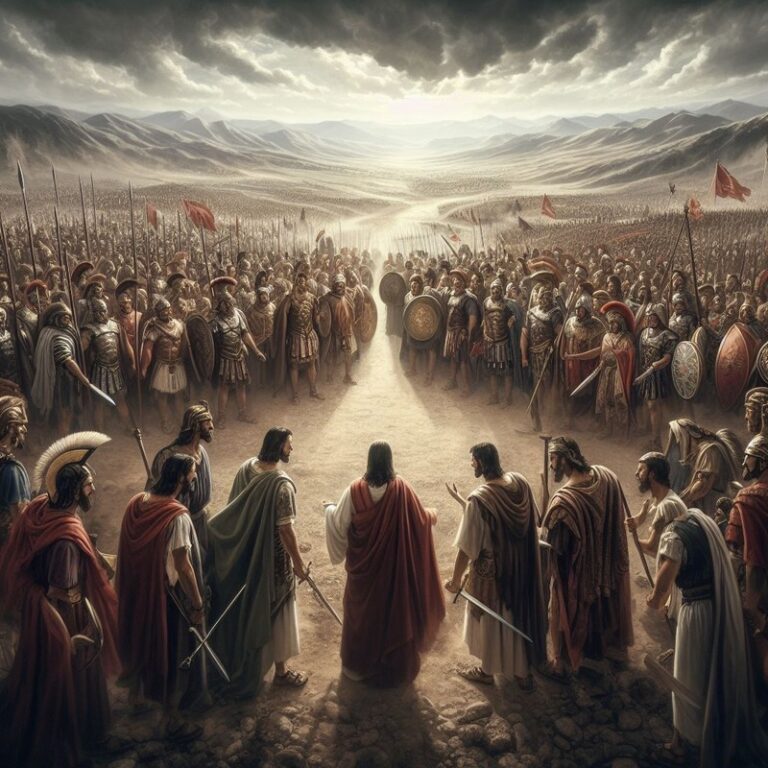
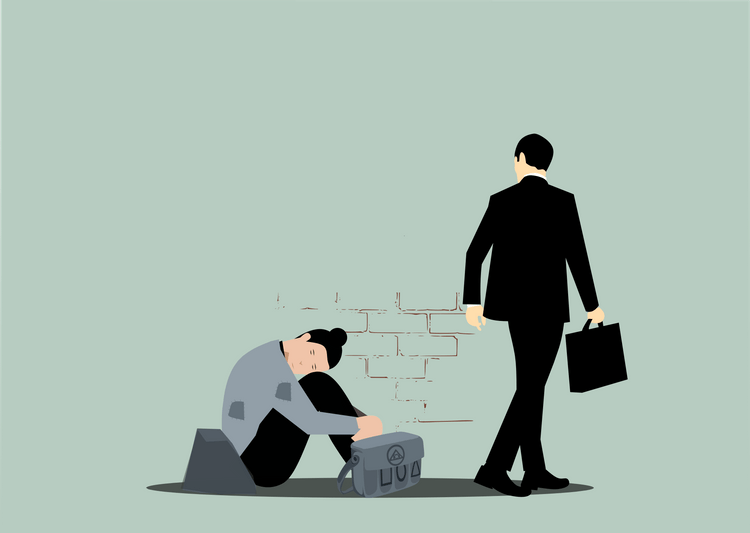
Theme Text: “Teacher, which is the greatest commandment?” Jesus replied: “‘Love the LORD your God with all your heart and soul and mind.’ This is the first and greatest commandment. And the second is like it: ‘Love your neighbor as yourself.'”
Matthew 22:36-39
When human societies are organized around fear, ranking, and rivalry, something basic begins to collapse. People stop expecting care from one another. Communities lose the habits of trust. Neighbors become competitors, threats, or strangers. In that kind of world, “love your neighbor as yourself” sounds like a beautiful slogan, but it does not feel realistic.
Yet the Bible treats neighbor-love as more than private kindness. It is the social foundation that makes human life livable. And when neighbor-love grows cold, the damage spreads outward, not only through households and streets, but through institutions, economies, and even the land itself.1
Empires of Men do not usually forbid love of neighbor with a law. They make it feel impractical by rewarding the opposite. They reward suspicion as “wisdom,” competition as “strength,” and scapegoating as “unity.” They teach people to secure themselves by ranking others, to protect their group by distrusting outsiders, and to treat relationships as transactions rather than covenantal care. In that climate, trust becomes risky, mercy looks like weakness, and neighbor-love gets pushed into private life instead of shaping public life.
What Happens When Neighbor-Love Breaks Down
What follows is not saying that every tragedy has one simple cause. It is naming what becomes normal, what becomes tolerated, and what becomes harder to repair when societies are trained to divide, distrust, and rule through fear rather than shared care.2, 3
The earth and fellow creation
The damage begins with the ground under our feet. When people and land are treated as expendable, and when protection is reserved for the already-secure, ordinary hazards harden into catastrophes. Droughts become famines. Storms become mass displacements. Hostile climates become permanent crises.4, 5, 6 At the same time, fear solidifies into cycles of retaliation, and the word “security” becomes a reason to sacrifice other people’s lives and futures. Wars multiply. Civilian populations are ground between rival powers. Entire generations inherit conflict as a way of life.7
The rest of creation fares no better. When a society loses the instinct of shared care, it treats ecosystems as raw material to be extracted rather than living communities to be tended. Habitats are cleared faster than they can regenerate. Species disappear at rates that outpace the planet’s capacity to adapt. The interconnection between human health, animal health, and environmental health frays at every seam.14, 15, 16
Social structures
Within the institutions that shape daily life, the erosion runs just as deep. Justice systems that were meant to restore begin protecting status instead, and punishment grows faster than repair.8, 9 The lines of “us” and “them” harden along race, gender, and class until whole groups of people must prove their worth before they can be treated as fully human. When shared care is weak, ordinary life becomes precarious: poverty becomes entrenched, healthcare becomes a privilege, homelessness becomes chronic, and stress settles into a permanent atmosphere rather than a temporary season.10, 11, 12 Families fracture under these pressures. Isolation increases. Trust thins out. People carry grief without the supportive bonds that make grief bearable.2, 3
Human bodies and lives
The toll is not only structural. It is physical. Bodies bear the cost of social stress, disrupted care, and environmental harm. Chronic disease proliferates. Pandemics expose how tightly bound our health is to one another and to the living world.13, 14, 16 Once a culture learns that some lives matter less than others, exploitation becomes easier to justify and harder to stop, whether directed at human beings or at animals.9, 10 And death itself becomes more than a biological end. It becomes a daily shadow: through violence, neglect, preventable suffering, and the slow wearing down of hope.7, 14
More Than Rulers and Armies
That is why the Bible’s call to neighbor-love is not sentimental. It is a serious invitation to rebuild trust, practice justice as repair, and treat the earth as a shared home rather than a storehouse for the strong. This is also why “empire” is not only about rulers and armies. It is a way of training ordinary people to accept division as normal.
Economic gaps can be one visible symptom, but the deeper problem is relational. When a society loses neighbor-love, it loses the instinct to see another person’s pain as “my concern.” It loses the will to protect the vulnerable. It loses the patience to share, to listen, to forgive, and to repair.
Is this a new phenomenon? Not really. History shows that human empires repeatedly produce cultures of fear and division. That is why the Bible’s older stories still feel surprisingly current. One of them is the story of Joseph in Egypt, where a crisis becomes the occasion for hoarding, consolidation, and eventually the loss of freedom for an entire population. What follows after that is a counter-story: a God who liberates the enslaved and begins building an alternative society shaped not by accumulation but by shared provision, rest for all, and periodic restoration of what empire takes away.
Read Next: Joseph in the Egyptian Empire
Footnotes
- Pew Research Center (Pew Charitable Trusts), “Americans’ Deepening Mistrust of Institutions,” October 17, 2024. Source. ↩
- U.S. Surgeon General, Our Epidemic of Loneliness and Isolation: The U.S. Surgeon General’s Advisory on the Healing Effects of Social Connection and Community (2023). PDF. ↩
- World Health Organization, “WHO Director-General’s opening remarks at the launch of the report of the WHO Commission on Social Connection, ‘From Loneliness to Social Connection'” (June 30, 2025). Source. ↩
- United Nations Office for Disaster Risk Reduction (UNDRR), “Global Assessment Report (GAR) 2025.” Source. ↩
- World Meteorological Organization (WMO), State of the Global Climate 2024 (report landing page). Source. ↩
- Intergovernmental Panel on Climate Change (IPCC), Climate Change 2023: Synthesis Report (AR6 SYR), Longer Report (PDF). PDF. ↩
- Uppsala University / Uppsala Conflict Data Program (UCDP), “Sharp increase in conflicts and wars” (press release, June 11, 2025). Source. ↩
- U.S. Bureau of Justice Statistics (BJS), Prisoners in 2023 – Statistical Tables (PDF). PDF. ↩
- U.S. Department of Housing and Urban Development (HUD), The 2024 Annual Homelessness Assessment Report (AHAR) to Congress, Part 1: Point-in-Time Estimates of Homelessness (PDF, December 2024). PDF. ↩
- International Labour Organization (ILO), “Global Estimates of Modern Slavery: Forced Labour and Forced Marriage” (publication page; estimates for 2021, released 2022). Source. ↩
- World Bank, “Poverty, Prosperity, and Planet Report 2024” (report page). Source. ↩
- World Health Organization, “Anxiety disorders” (fact sheet, September 8, 2025). Source. ↩
- World Health Organization, “Noncommunicable diseases” (fact sheet, September 25, 2025). Source. ↩
- World Health Organization, “One Health” (fact sheet, October 23, 2023). Source. ↩
- Intergovernmental Science-Policy Platform on Biodiversity and Ecosystem Services (IPBES), “Global Assessment Report on Biodiversity and Ecosystem Services” (2019). Source. ↩
- World Wide Fund for Nature (WWF), Living Planet Report 2024 (report page). Source. ↩