
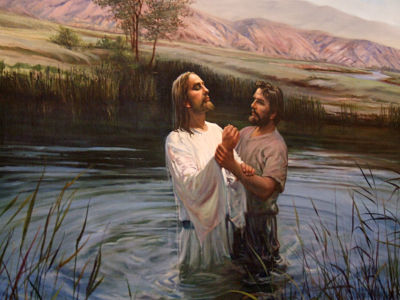
Theme Text: “You don’t know what you are asking,” Jesus said. “Can you drink the cup I drink or be baptized with the baptism I am baptized with?” (Mark 10:38)
Biblical baptism is for those who receive the good news of Christ’s ransom and his Kingdom with understanding, who have repented of futile self-justification and turned to God for justification by faith in His Christ, and who want to dedicate their lives to prove that faith.
Biblical baptism is not merely a religious rite. It is a public turning away from the old order of self-rule, self-justification, rivalry, and fleshly ambition, and a turning toward the reign of God through His Christ. It marks a transfer of allegiance from the kingdoms of this world to the Kingdom that God is bringing to earth.
Yet how has baptism1 often been understood in mainstream tradition? Since the second century CE, water baptism has frequently been treated as a ritual that cleanses past sins and establishes a relationship with God.2 In many traditions, even infants are baptized by sprinkling water, as though the rite itself could secure spiritual safety.3 Scripture, however, presents baptism not as a ritual shortcut, but as a conscious response to the good news of the Kingdom and to God’s call into a new life.
John’s Baptism and the Call to Repent
The Old Testament prescribed various washings and sprinklings for ritual purification, but there was no baptism until John appeared with something altogether new. As the Gospel of Mark records:
“John the Baptist appeared in the wilderness, preaching a baptism of repentance for the forgiveness of sins”
Mark 1:4.
Paul later summarized John’s mission:
“John’s baptism was a baptism of repentance. He told the people to believe in the one coming after him, that is, in Jesus”
Acts 19:4.
John’s water baptism was meant to prepare the people for the Messiah. The repentance (change of mind) expected of them was to give up their trust in sacrificial rituals for the forgiveness of sins and to place their faith in the coming Messiah. The water itself did not cleanse. It symbolized repentance: a turning away from misplaced trust in ritual performance and religious self-assurance, and a turning toward the Messiah for salvation.
Christ’s Baptism
Jesus himself asked to be baptized, though he “knew no sin.” When John questioned this, Jesus replied:
“It is proper for us to do this to fulfill all righteousness.”
Matthew 3:15.
Jesus did not seek baptism because he needed repentance. He came to dedicate himself fully to his Father’s will. At about thirty years of age, by the shores of the Jordan river, he openly relinquished his earthly interests, ambitions, and claims to an ordinary life, and committed himself to the work the Father had given him: to proclaim the Kingdom of God in opposition to the empires of this world.
From that baptism onward, this was the course of his entire life. He went from town to town announcing God’s reign, calling people to repentance, healing, teaching, confronting hypocrisy, and gathering a people shaped not by domination or status, but by faith, justice, mercy, and obedience to God. His baptism marked the beginning of a life publicly poured out for the Kingdom.
Later Jesus spoke of his baptism as something still awaiting its fulfillment:
“I have a baptism to be baptized with, and how am I pressed till it may be completed!”
Luke 12:50 YLT.
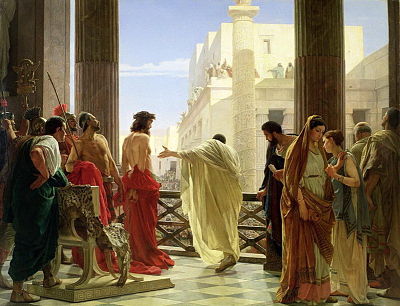
His baptism was ultimately a baptism into death, fulfilled when he died on the cross saying, “It is finished!” Jesus did not come to seize power in the manner of the kingdoms of this world. He did not rise by domination, coercion, or self-exaltation. His path was obedience, suffering, and self-giving. In that sense, his baptism stands against every order that trains people to rule through fear, competition, and control. The baptism of Christ points to the way of the Kingdom of God, where life comes through faithfulness and love rather than through grasping and force.
To Die and Be Born Again
If Christ’s baptism was a baptism into death, what about the baptism of his church? Why does Peter ask believers (Acts 2:38) to be baptized in Christ? What does it mean to be immersed into Jesus Christ?
Paul addresses this directly:
“Don’t you know that all of us who were baptized into Christ Jesus were baptized into his death? We were therefore buried with him through baptism into death in order that, just as Christ was raised from the dead through the glory of the Father, we too may live a new life. For if we have been united with him in a death like his, we will certainly also be united with him in a resurrection like his”
Romans 6:3-5.
Baptism includes the believer’s death. An early Christian letter states this with striking directness:
“For you died, and your life is now hidden with Christ in God”
Colossians 3:3.
Believers die to all that belongs to the old Adamic way of life: earthly goals, ambitions, even lawful desires. They rise with Christ, born again, dedicating their lives to deeds of faith and to suffer for the sake of his gospel. Christ’s baptism is to die and be born again. And it is a necessity:
“Very truly I tell you, no one can see the kingdom of God unless they are born again.”
John 3:3.
To be baptized into Christ is therefore to die not only to personal sin, but to the entire old order shaped by pride, rivalry, possessiveness, and the pursuit of earthly glory. It is to renounce the present system that teaches people to climb over others, justify themselves, and seek life through power. It is to rise into a new life formed by the coming Kingdom of God.
Sharing in Christ’s Suffering and Reign
Why should believers be willing to give up all claims to their earthly lives? When James and John asked to sit at his side on the Kingdom thrones, Jesus asked them:
“Can you drink the cup I drink or be baptized with the baptism I am baptized with?”
“We can,” they answered. Jesus said to them, “You will drink the cup I drink and be baptized with the baptism I am baptized with”
Mark 10:38-39.
Those who hope to share in Christ’s reign in his Kingdom offer their present lives, as he did, for the sake of his gospel. Paul writes:
“If we are children, then we are heirs—heirs of God and co-heirs with Christ, if indeed we share in his sufferings in order that we may also share in his glory”
Romans 8:17.
A New Testament letter affirms:
“If we endure, we will also reign with him.”
2 Timothy 2:12.
Yet the thrones of Christ’s Kingdom are not thrones of domination like the thrones of human empires. They belong to those who suffer with him, serve with him, and share in God’s work of restoring the world. Jesus’s ransom for Adam is to bring all of Adam back to life (Romans 5:12, 18; 1 Timothy 2:6; 1 John 2:2; 1 Corinthians 15:22).
At his return, all the dead will rise. His faithful church will receive heavenly eternal life, while those who did not follow him in this age will awaken to a “krisis” i.e. a judgment trial (a learning period) on earth (John 5:28-29, Isaiah 26:9). With Satan bound, humanity will have a genuine opportunity to learn righteousness (Acts 3:21; Micah 4:1-3) under the reign of Jesus and his glorified church (Revelation 20:3-4). Those are the thrones James and John longed for. That is the hope baptism points toward.
Foreshadowed in Israel’s Deliverance
Paul draws a direct line from Israel’s exodus to the church’s baptism:
“Our ancestors were all under the cloud and they all passed through the sea. They were all baptized into Moses in the cloud and in the sea. They all ate the same spiritual food and drank the same spiritual drink; for they drank from the spiritual rock that accompanied them, and that rock was Christ”
1 Corinthians 10:1-4.
Israel, foreshadowing the church, forsook the Egyptian Empire, a system of bondage and forced labor, to follow Moses. When they came to the great trial at the Red Sea, God saved them through Moses, and they were all typologically baptized into Moses (who represented Christ) in the sea and in the cloud.
This pattern matters. Baptism is linked to deliverance from an oppressive order and to entry into a new way of life under God’s rule. Egypt was not simply a location on a map. It represented the imperial machinery of bondage, domination, and extraction.4 Passing through the sea marked a decisive break with that order. In the same way, Christian baptism marks a break with the present age and a commitment to walk in the freedom and practices of God’s Kingdom.
Baptized for the Dead
Paul raises a striking question in his letter to the Corinthians:
“If there’s no resurrection, what will those do who’re baptized for the dead?”
1 Corinthians 15:29.
This verse has been misread across the centuries, and various groups have practiced proxy baptism for the dead as a result.5 But Paul’s argument here is about the resurrection of the dead. Those who are baptized are baptized for the sake of the unbelieving dead (considered “dead” even now, as Jesus suggests in Luke 9:60) who will one day rise to receive the good news of eternal life from the reigning church in the Kingdom.
Baptism, then, is never only about private salvation. It prepares a people for God’s future work of restoration, when the good news will reach all who rise. The church is being formed now for that coming age, not to mirror the present world’s systems of exclusion, but to take part in the healing, teaching, and renewal that belong to God’s Kingdom on earth.
Who Should Be Baptized?
Is the symbolic baptism (immersion) necessary? The record of the early church is clear. The book of Acts describes believers being baptized upon receiving the good news:
“When they believed Philip as he proclaimed the good news of the kingdom of God, they were baptized.”
Acts 8:12.“Philip and the eunuch went down into the water and Philip baptized him.”
Acts 8:38.“Surely no one can stand in the way of their being baptized with water.” So he ordered they be baptized in the name of Jesus Christ.
Acts 10:47-48.
The record also includes the baptism of the Corinthians (Acts 18:8), of Lydia in Thyatira (Acts 16:14-15), of the Philippian prison jailer (Acts 16:33), and of the household of Stephanus (1 Corinthians 1:16). In every case, adults were baptized after gaining knowledge of Christ and his Kingdom. Nowhere does the New Testament describe infants being baptized. Biblical baptism is only for those who can receive the good news of the Kingdom with understanding, believe in it, and respond to it.
This makes sense, because baptism is not a passive ritual performed on an unaware person. It is a conscious confession that one is leaving the old life behind and entering the path of Christ. It is a public oath that one’s hope is no longer in flesh, status, inherited religion, or the present order, but in the Kingdom God will establish through His Son.
When Baptism Should Be Taken Again
If someone has been sprinkled or immersed before coming into the knowledge of the original good news, is there a need to be baptized (immersed) again?
Although baptism is symbolic, it is an important symbol. On receiving the true gospel of Christ’s Kingdom, a person dedicates their life to Christ and displays that commitment through the act of immersion, not only before God, but also before fellow believers, who in turn welcome them into the race of faith.
Any prior sprinklings or immersions performed without knowledge of the foundational biblical gospel of Christ’s Kingdom and the church’s High Calling would not meet the biblical standard. Even those who had received John’s baptism were told to be baptized again in the name of Christ:
Paul asked, “Then what baptism did you receive?” “John’s baptism,” they replied. Paul said, “John’s baptism was a baptism of repentance. He told the people to believe in the one coming after him, that is, in Jesus.” On hearing this, they were baptized in the name of the Lord Jesus.
Acts 19:3-5.
The baptism they had previously taken was not a baptism of dying to the flesh and rising in Christ. So Paul directed them to take it again in its full meaning.
Most significantly, when a person takes this true baptism, God adopts them into His family as His child and anoints them with His Holy Spirit (Acts 2:38). This is also what happened when Jesus was baptized:
Heaven was opened and the Holy Spirit descended on him in bodily form like a dove. And a voice came from heaven: “You are my Son, whom I love; with you I am well pleased.”
Luke 3:21-22.
True baptism, then, is not a denominational formality. It is a deliberate response to the original good news. It is a sign that one has turned from the old world’s claims and has yielded oneself to God’s coming order of restoration, justice, and life. In baptism, the believer openly declares: my life is no longer my own, but is given to Christ and to the Kingdom he will bring to earth.
Read Next: Anointment of the Holy Spirit
Footnotes
1 The Greek word baptizō (βαπτίζω) means “to dip, immerse, submerge.” See BDAG, A Greek-English Lexicon of the New Testament and Other Early Christian Literature, 3rd ed., s.v. “βαπτίζω.” ↩
2 By the second century CE, texts such as the Didache (7.1-4) and Justin Martyr’s First Apology (ch. 61) began describing water baptism as a rite that confers forgiveness of sins and spiritual rebirth. ↩
3 References to infant baptism appear from the late second century onward, notably in Tertullian’s De Baptismo 18 (where he actually advises delay) and Origen’s Commentary on Romans 5.9. ↩
4 On Egypt as a scriptural symbol of imperial oppression, see Walter Brueggemann, The Prophetic Imagination, 2nd ed. (Minneapolis: Fortress Press, 2001), ch. 1. ↩
5 Proxy baptism for the dead was practiced by certain groups as early as the second century. Tertullian mentions the Marcionites performing this rite (Adversus Marcionem 5.10). ↩






_-_James_Tissot_-_overall.jpg)
.jpg)


.jpg)
_Vermeer_-_Christ_in_the_House_of_Martha_and_Mary_-_Google_Art_Project.jpg)

How does one who is physically disabled & can now barely stand & walk with a walker be baptized?
Hi Carolyn, how are you? I wonder if the disabled person (you?) got baptized yet. The paralytic had friends to carry him and lower him to Jesus, so I'm sure with enough help, a disabled person can be baptized, too, by immersion, or, if necessary, by another mode of baptism. God bless you.
how can a disabled person be baptized?
Jedno krstenje i jedan duh,onda ne opravdavaj ponovno krstenje jer si ponovno krsten kazi neznam ili ne pisi sta ti mislis jer tako isto ucinise i oni od kojih se ti i vi ogradjujete
Hello! It's symbolic of the true Baptism into Jesus, so I would think that any act of any form of "immersion" that one can do along with the willful act of that person's heart to die to self and rise to Christ is what's important! Right? It's that person's heart's desire to rule itself and the worldly desires of their heart that die in that person when they decide to live for Christ and His Kingdom alone, so the water part is just symbolic… but necessary to the faith, almost as an act of accountability and in accordance to what the father's of our faith in the early church did and even Jesus Himself!
(1 Cor. 4:14-16) (1 Cor. 11:1)These scriptures are not exactly about this, and even though they are not here with us, Paul and the other Apostles are our fathers of Faith and examples in Faith with Jesus being our top example in Faith. 🙂 Also, how does the person you are asking for bathe? Water Baptisms do not have to be in a lake, pool or baptismal. That person can definitely be baptized in their tub or shower with the same clothes on that someone would wear at a public baptism. They could even have it taped by a loved one and shown publicly at a celebration party! I really believe that it's the "heart" of the person that's judged in this matter, not "how" it's actually performed. But, that said… if Christ did it, then I think every person who wants to follow Him to the fullest will have it in their heart to get baptized as close to the "death by emersion" way as possible. 🙂 I so hope this helped and is in line with your beliefs! Wish I could see the creative way you or your friend or loved one come up with to be baptized!!!
God bless you! Andrea 🙂