Theme Text– ‘Savage wolves will come in among you, and from among your own selves men will arise, speaking perverse things, to draw away the disciples after them.’ Acts 20:29-30 NASB.
1) What was the Bible’s prediction on the future of Christianity after the departure of the Apostles?
‘I know that after my departure savage wolves will come in among you, not sparing the flock; and from among your own selves men will arise, speaking perverse things, to draw away the disciples after them.’ Acts 20:29-30 NASB.
Yes, the Apostle was unambiguous and dead certain on what will happen after his departure. He predicted the perversion of scriptural truth, and forecast the deception of many believers.
2) How has this prediction been fulfilled?
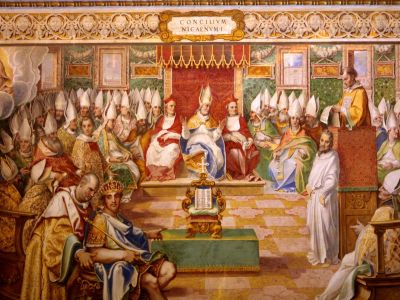
All the Apostles died by the end of the 1st century. Then many unbiblical doctrines were brought into Christianity through the course of the rise of the Catholic Roman Empire. Some of them were:
Belief in an Immortal Soul
The Bible says the dead are really dead. They sleep (1Kings 2:10, Acts 7:60, 1Thess 4:14 etc.), awaiting the promised resurrection. It talks of neither consciousness, nor pain nor any feeling whatsoever in the grave (Psa 146:4, Eccl 9:5,10). But as pagans started converting into Christianity, beliefs in an immortal soul were brought in gradually.
The Theory of Eternal Conscious Torment in Hell
Biblical penalty for sin is clear – ‘the soul that sinneth, it shall die’ (Ezekiel 18:20). God sentenced Adam to death for his sin of disobedience. Neither was there a mention of Adam having an immortal soul, nor any threat of it burning eternally. We all die because of the sin and death inherited from Adam (Romans 5:12). Yes, death is our punishment. But Zoroastrian hell theories were blended into Christianity as the terror threat of eternal torment proved effective in maintaining a loyal flock.
Promotion of A Trinitarian God
Even hardcore Trinitarians openly admit that neither the Old Testament’s prophets nor the New Testament’s Apostles believed in any Trinitarian God. They claim it as some latter day revelation. Catholic scholar John L. McKenzie S. J. writes in a book officially approved by the Catholic Church – ‘the trinity of God is defined by the Church as the belief that in God are three persons who subsist in one nature. That belief as so defined was reached only in the 4th and 5th centuries AD and hence is not explicitly and formally a biblical belief.’ – Dictionary of the Bible, Page 899.
Renowned historian Edward Gibbon (Preface to History of Christianity) lays it down – ‘If Paganism was conquered by Christianity, it is equally true that Christianity was corrupted by Paganism. The pure Deism of the first Christians …was changed, by the Church of Rome, into the incomprehensible dogma of the trinity. Many of the pagan tenets, invented by the Egyptians and idealized by Plato, were retained as being worthy of belief’.
English Mistranslations of the Bible
When the Bible was translated into English (eg. the popular King James version of 1611 AD), there were biased translators at work because they had been influenced by centuries of widespread distortion of biblical truths. They mistranslated various words into Hell, not only words that meant grave (Sheol / Hades), but even a proper noun Gehenna – the name of a place in Jerusalem! And they abused Greek’s formal gender as natural gender, applying it to the Holy Spirit (the power of God), and somehow tried to turn that power/influence into a person to help with the 4th century trinity idea.
Hijacking the Kingdom of God
The Bible predicts God’s kingdom to come upon the earth, where Christ and his proven followers reign over all mankind resurrected by Jesus’ ransom for Adam. But two centuries after Christ, ‘dreams about the glorious kingdom of Christ began to disturb the organization which the churches had seen fit to introduce. Augustine was the first to teach that the Catholic Church was the kingdom of Christ’ (Encyclopedia Britannica). During 413-426 AD, Augustine proposed the theory that the Catholic Church integrated with Imperial Rome would be God’s Kingdom on earth. That made Roman Emperors very happy.